
Reviewed · HISTORICAL TOURS
Riga Jewish History Tour
Riga’s Jewish story is written in stone and silence. This private tour links elegant Art Nouveau buildings, former ghetto streets, forest memorials, and the city’s synagogue into one thoughtful morning. With private transport and a guide at your side, you can ask questions freely and spend more time where the subject calls for it.
I like the way the tour connects Jewish cultural life with Riga’s architecture, rather than treating the Holocaust as an isolated chapter. I also like the flexible pace. Several people found that guide Armands allowed extra time at important sites and even added a stop when needed.
The main consideration is emotional weight. Rumbula Forest and the Great Choral Synagogue Memorial are quiet, painful places, and the tour gives you little room for light sightseeing once the subject turns to murder and loss. You also need to budget for a required synagogue donation and a €5 donation to the Holocaust museum.
In This Review
- Key points to know before booking
- Why this tour gives Riga’s Jewish past a clear shape
- Art Nouveau Riga and the Jewish architects behind it
- Latgale Suburb and the former Jewish ghetto
- The Great Choral Synagogue Memorial
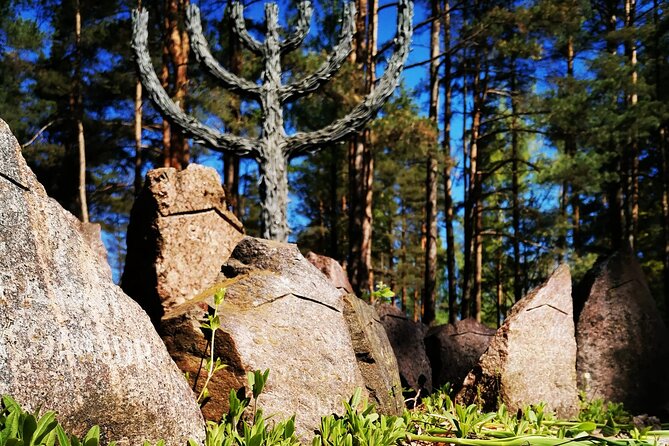
- Rumbula Forest Memorial and the scale of the killing
- The Riga Ghetto and Latvian Holocaust Museum
- Peitavas Street Synagogue, an Art Nouveau place of worship
- What the private format really adds
- Armands as your guide
- Practical details that affect your morning
- Who should book this Riga tour?
- Final verdict: book it for context, care, and private access
- FAQ
- How long does the Riga Jewish History Tour last?
- What time does the tour start?
- Is hotel pickup available?
- Is the tour private?
- What language is the tour offered in?
- Are donations included in the price?
- What should I wear for the synagogue visit?
Key points to know before booking
- Mikhail Eisenstein’s Art Nouveau buildings provide an unusual opening, showing Jewish contributions to Riga’s culture and design.
- Rumbula Forest Memorial is the longest stop, with about an hour set aside for reflection at the site of mass murder.
- Private transport saves time, especially because the tour covers several places outside central Riga.
- Armands sets a flexible pace, answering questions and allowing extra time when a site deserves it.
- The Riga synagogue requires a donation, and the Holocaust museum asks for €5 per person.
- Saturday visits may need adjustments, since some Jewish sites can be closed for Shabbat.
Why this tour gives Riga’s Jewish past a clear shape
Riga’s Jewish story is not confined to one museum. It reaches from grand city-center buildings to modest streets, from a working synagogue to places tied to the destruction of Riga’s Jewish community.
That range is the tour’s greatest strength. You begin with achievement and daily life, then move toward persecution, deportation, and murder. The order matters. It reminds you that Jewish Riga was not created by the Holocaust story. It had architects, scholars, religious institutions, neighborhoods, and families long before the war.
The tour lasts about three to four hours, with the listed stops adding up to roughly three and a half hours. Since it is private, your group does not have to match a large bus schedule. You can ask Armands to explain a detail, pause at a memorial, or spend less time at a place that does not interest you.
The service is offered in English. Pickup is available from your hotel or apartment, but you should wait outside because vehicles cannot park in Old Riga. That small detail matters if you are staying inside the historic center. Arrange a clear meeting point before the 9:00 am start.
More history tours in Riga:
- Riga: Canal & Daugava Cruise on a Historic Wooden Boat
★ 4.4 · 496 reviews - Old Riga in Italian: History&Legends
★ 4.8 · 125 reviews - Riga: 2-Hour History of Art Nouveau Walking Tour
★ 4.8 · 118 reviews
Art Nouveau Riga and the Jewish architects behind it
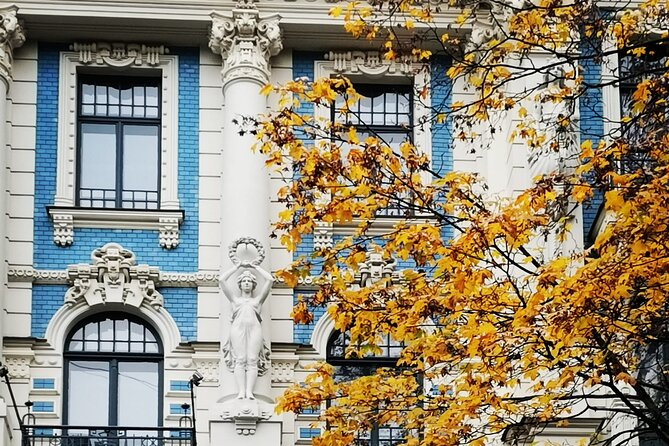
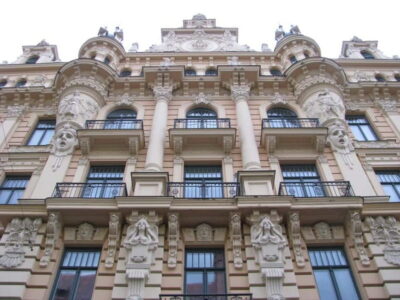
The first stop lasts about 30 minutes and costs nothing to enter. Here, the tour looks at several striking buildings connected to Jewish architect Mikhail Eisenstein.
Riga is famous for its Art Nouveau streets, but architecture can feel detached from the people who made it. This stop adds a human and cultural layer. You will see decorative facades while learning about Eisenstein and Jewish life in a city known for its changing population and influences.
One particularly interesting detail is that philosopher Isaiah Berlin was born in one of these buildings. That link broadens the story beyond bricks and ornament. Riga’s Jewish contribution included architecture, ideas, education, trade, religion, and ordinary family life.
This is also the most visually easygoing part of the morning. Bring your phone or camera, since the facades offer some of the tour’s best photo opportunities. Still, do not expect a full architecture walk. The focus is not every decorative detail or every famous Art Nouveau street. It is the cultural context behind selected buildings.
I like this opening because it avoids beginning with tragedy. You first meet Riga as a place where Jewish people helped shape the city.
Latgale Suburb and the former Jewish ghetto
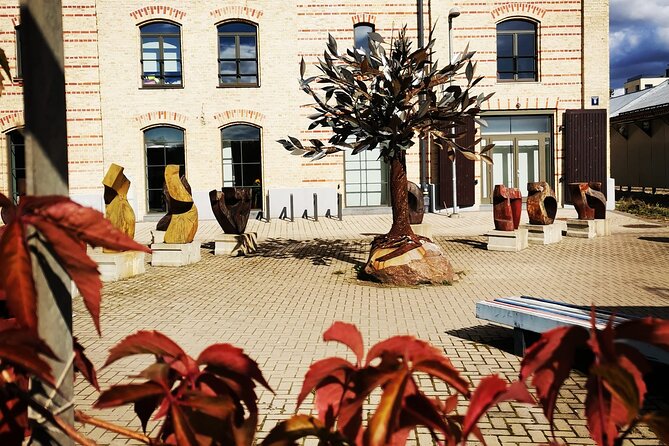
The next stop moves to the Latgale Suburb, once the territory of the Riga Jewish Ghetto. About 30 minutes is set aside here, again without an admission charge.
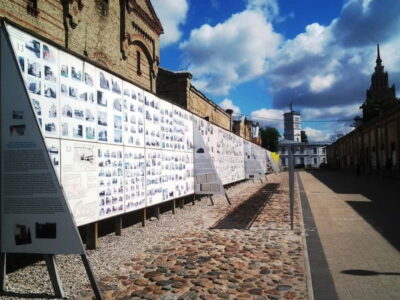
The power of this area comes from its physical character. Some buildings remain in much the same condition as they were around 80 years ago, during the Second World War. You are not simply looking at a new monument explaining an old event. You are seeing streets and structures that help you picture the setting in which the ghetto existed.
That can also be the limit of the stop. Old buildings alone do not explain forced removal, hunger, violence, or the lives of the people who were confined there. This is where a good guide matters. Armands can connect what you see to the wider story, rather than leaving you to guess from the architecture.
Keep your expectations grounded. This is not presented as a restored historical quarter or a polished museum setting. Its value lies in the unchanged, ordinary appearance of the area. The plainness makes the history harder to package neatly.
The Great Choral Synagogue Memorial
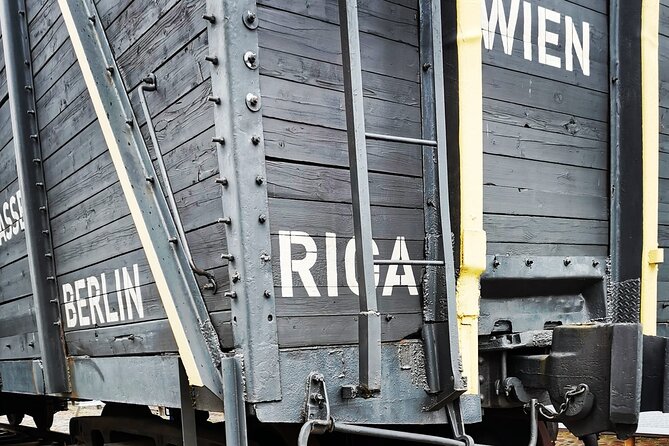
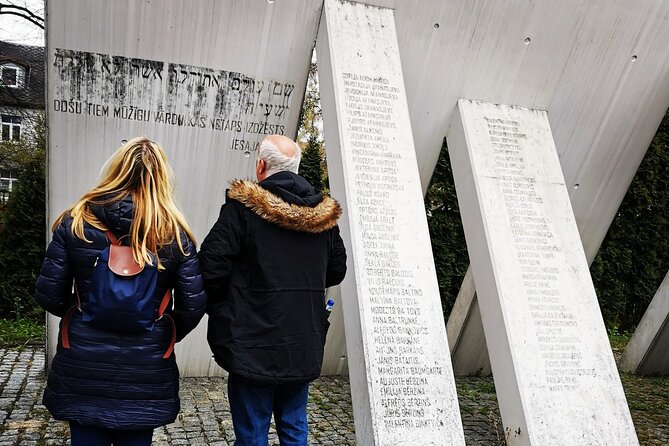
The 15-minute visit to the Great Choral Synagogue Memorial is brief but severe. On July 4, 1941, more than 300 Jewish refugees from Lithuania and local Latvian Jews were forced into the synagogue basement. The building was then deliberately burned.
Today, the memorial marks that crime. There is no grand interior to explore, and that absence is part of the meaning. A synagogue that once served a community was destroyed, leaving a place of remembrance rather than a functioning house of worship.
You will want to slow down here. Fifteen minutes may sound short, but the site calls for quiet attention more than a long presentation. Armands’ role is especially useful because he can explain the event and answer questions without turning the memorial into a rushed checklist.
This stop also shows why the tour is not simply an architectural outing. The morning keeps asking you to compare what Riga was with what happened to it during Nazi occupation.
Other Riga days to weigh up
- Riga: Canal Boat Sightseeing Tour With Audio guide
★ 4.5 · 1,827 reviews - Riga: Entrance Ticket – House of the Black Heads
★ 4.6 · 1,096 reviews - Riga: Guided Old Town Walking Tour
★ 4.8 · 1,049 reviews - From Riga: Hill of Crosses and Jelgava Gems Tour
★ 4.8 · 1,040 reviews
Rumbula Forest Memorial and the scale of the killing
The Rumbula Forest Memorial receives about an hour, the longest single stop. That time allows the place to breathe.
In November 1941, the Nazis decided to destroy the Riga ghetto’s Jewish population. On November 30 and December 8, more than 25,000 people were killed in Rumbula Forest, including about 1,000 Jews deported from Germany.
A memorial was opened on November 29, 2002. The setting is away from the central streets, which is one reason private transport is so useful. You are not trying to piece together a difficult journey by public transportation while watching the clock.
The forest setting may feel deceptively calm. You might hear little and see no city activity. That quiet can make the numbers and dates harder to absorb, not easier. Give yourself time to read, think, and ask questions.
This is the emotional center of the tour. If you want a cheerful morning of city sights, this visit will not suit you. If you want to understand the scale of the Holocaust in Latvia, it is essential.
I appreciate that the tour allows a full hour here. A quick photo stop would fail the place. You should wear practical clothing and shoes suited to an outdoor memorial setting, although no special dress code is required for the tour overall.
The Riga Ghetto and Latvian Holocaust Museum
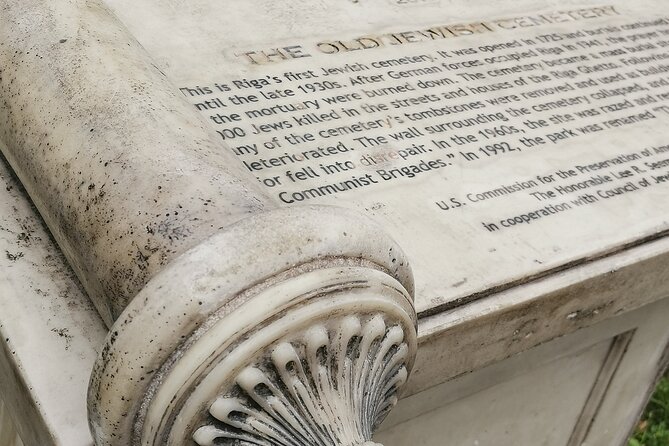
The Museum of Riga Ghetto and Holocaust in Latvia gives the morning its main indoor history stop. The museum covers Jewish life in Latvia before the Holocaust, the Riga Ghetto, and the destruction of Jewish communities during the Nazi period.
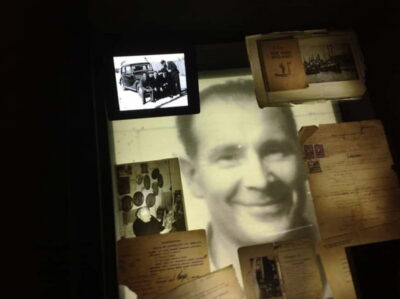
That first part matters. A museum that only presents victims at the moment of death can make a community seem to appear out of nowhere. By including Jewish life before the Holocaust, the museum restores some sense of the people behind the figures.
The visit is planned for about 30 minutes. That is enough for an introduction and focused viewing, but you should not expect to read every item at length. If museums usually take you longer, tell Armands. The private format gives you a better chance of adjusting the pace than a fixed group tour.
The museum requests a €5 donation per person. That cost is not included in the tour price, so add it when comparing the total expense. You may also find books for sale. One person specifically purchased a book at the museum, which could be useful if you want to continue learning after the morning ends.
Peitavas Street Synagogue, an Art Nouveau place of worship
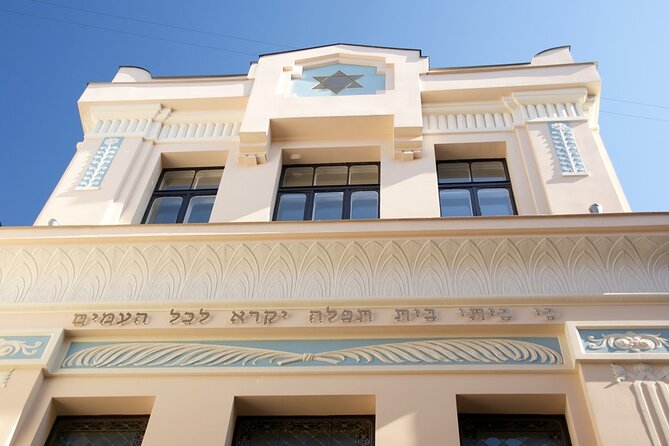
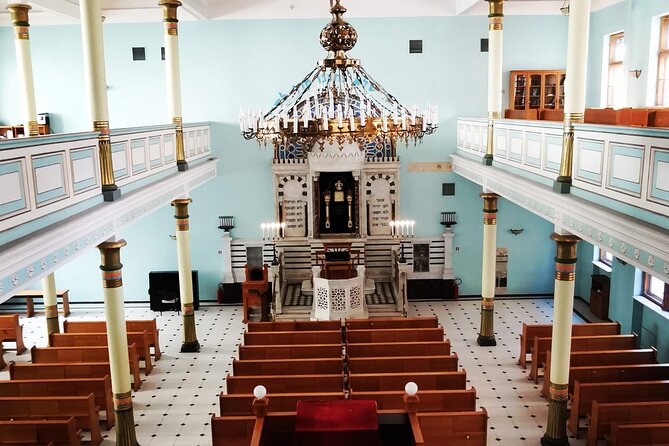
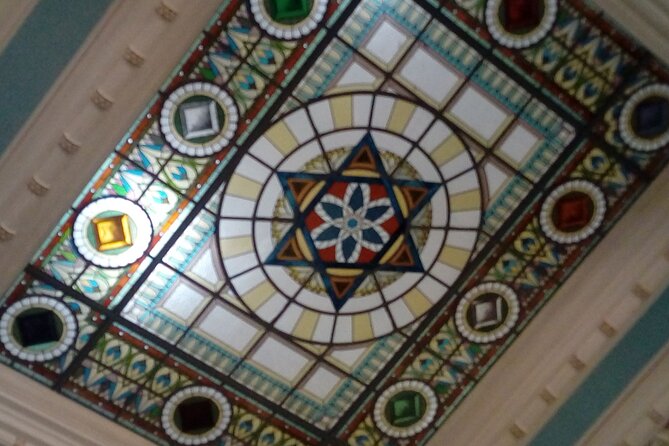
The final major stop is the Riga synagogue on Peitavas Street, with about 45 minutes planned. Built between 1903 and 1905, it is an Art Nouveau building with Ancient Egyptian motifs and is regarded as an important cultural monument.
Its position at the end of the route works well. You have seen Jewish contributions to Riga’s public architecture, then the places tied to destruction. The synagogue brings the story back to Jewish religious life in the city.
A donation at the synagogue is required, and the amount is not specified in the tour details. Carry some money for this, along with the €5 museum donation. The tour price covers the guide and private transportation, not these on-site contributions.
Dress is casual. If your head is not covered by a cap, hat, or scarf, a kipa will be provided. You do not need a special outfit, and the stated dress code is simply respectful everyday clothing.
The synagogue may be affected by Shabbat closures. A Saturday booking can still work, but you should expect the plan to change if a site is closed. Armands has shown flexibility in this situation, bringing people to another place of interest instead. If visiting the synagogue is your central reason for booking, confirm the timing before you commit.
What the private format really adds
At $96.33 per person, this is not the cheapest way to see Riga. Its value depends on how much you want to learn and how many people share the vehicle.
The price includes private transportation and guide services. That is useful here because the route includes the central city, the former ghetto area, Rumbula Forest, the Holocaust museum, and the synagogue. You avoid arranging separate rides and can ask questions throughout the morning.
A private tour also gives you control over attention. You can ask about Jewish life before the war, Latvian involvement in the Holocaust, refugee movements, architecture, or synagogue customs. You are not limited to the guide’s prepared speech.
The value is strongest for a small group with a serious interest in Jewish history. Split the price among several people and the private vehicle becomes easier to justify. For one person, the cost is more substantial, especially after adding the synagogue donation and museum contribution.
The route can run beyond the planned duration. Armands has spent extra time at sites when the group wanted it, rather than cutting the morning off at exactly three hours. That generosity is useful, but leave some space in your schedule. Do not book a tight midday connection immediately afterward.
Armands as your guide
The guide can make or break a history tour, and Armands receives praise for being well informed, friendly, patient, and candid. One useful quality is his willingness to admit when he does not know an answer. That is far better than filling a gap with a guess.
He is also described as flexible. The tour can include extra places, and the route may change when Saturday closures affect the plan. You still get the main experience, but you should see the schedule as adaptable rather than fixed down to the minute.
The strongest praise centers on explanation. Armands covers Jewish culture, the history of Jews in Riga, the accomplishments of the community, and the Holocaust. He also gives you time to explore at stops instead of keeping you beside the car at every moment.
The tone is important. This is a somber subject, and the tour is presented with care and respect. That does not make the history easier, but it helps keep the morning from becoming either coldly academic or needlessly theatrical.
Practical details that affect your morning
The tour starts at 9:00 am. Pickup is offered, but if you stay in Old Riga, meet outside your hotel or apartment because the vehicle cannot park within the old town.
The experience is private and available in English. Only your group participates, which makes it easier to discuss family connections or sensitive questions without speaking in front of strangers.
Most people can participate, and no special dress code is required. For the synagogue, cover your head with a cap, hat, or scarf, or use the kipa supplied there.
The tour offers free cancellation if you cancel at least 24 hours before the local start time. Cancellations or changes made less than 24 hours before departure are not refunded or accepted.
Who should book this Riga tour?
I would choose this tour if you want a focused introduction to Riga’s Jewish past and prefer a guide-led visit to several scattered sites. It suits people with family connections, students of European history, and anyone who wants more than a quick museum visit.
It also works well early in a Riga stay. The tour gives you context for the city’s architecture, neighborhoods, refugee story, and wartime memorials. You can then return to places that deserve more time.
I would not book it if you want a light sightseeing morning, a long Art Nouveau photography walk, or a museum visit with unlimited time. The route is serious, and the Holocaust sites occupy much of its emotional space.
Final verdict: book it for context, care, and private access
This is a strong choice for a meaningful half-day in Riga. I like its full arc: Jewish achievement in Art Nouveau Riga, the former ghetto, the synagogue memorial, Rumbula Forest, the Holocaust museum, and a living synagogue.
The main drawbacks are the added donations, the difficult subject matter, and the possibility that a three-hour plan may stretch when you ask good questions. For me, those are manageable concerns. If you want to understand how Jewish life shaped Riga and how brutally it was attacked during the war, book the tour and give the morning enough time.
FAQ
How long does the Riga Jewish History Tour last?
The tour lasts approximately three to four hours. The listed visits add up to about three and a half hours.
What time does the tour start?
The tour starts at 9:00 am.
Is hotel pickup available?
Yes. Pickup is offered from your hotel or apartment. If you are staying in Old Riga, wait outside because the vehicle cannot park in the old town.
Is the tour private?
Yes. Only your group participates in the activity.
What language is the tour offered in?
The tour is offered in English.
Are donations included in the price?
No. A donation to the synagogue is required on site, and the Riga Holocaust Museum requests €5 per person.
What should I wear for the synagogue visit?
Casual clothing is acceptable. If your head is not covered by a cap, hat, or scarf, a kipa will be provided.
New on the site around Riga
- Wooden Riga on foot -Ķīpsala★ 5.0 · 2 reviews
- Vilnius Day Trip or Airport Transfer★ 5.0 · 2 reviews
- Ultimate Art Nouveau Experience in Riga – Private Tour★ 5.0 · 4 reviews
- The Best Of Riga Walking Tour★ 5.0 · 2 reviews
- Tour from Riga to Vilnius: Bauska Castle, Rundale Palace and The Hill of Crosses★ 5.0 · 3 reviews
- Private Transfer to anywhere in Riga Center★ 5.0 · 2 reviews
- Taste Riga – Private Tour of Latvian Flavour★ 5.0 · 5 reviews
- Neigbourhoods of Riga: Honest tour through most beautiful and most unusual areas★ 5.0 · 2 reviews
Historical Tours, compared.
Canal & Daugava Cruise on a Historic Wooden Boat
Read our review →
Riga’s Jewish Heritage: A 2 h Walking Tour in a small group
Read our review →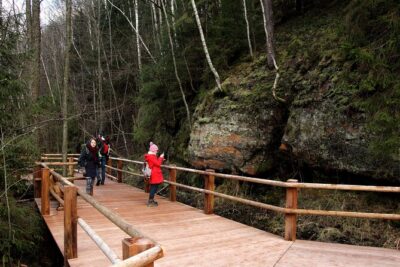
Flavours of Riga: Food, History & Hidden Gems Tour
Read our review →
All Inclusive Honest History Tour – Āraiši, Cēsis, Līgatne, Sigulda
Read our review →Browse the lists this tour appears in