
Reviewed · HISTORICAL TOURS
Old Riga in Italian: History&Legends
Riga tells its secrets one cobblestone at a time. This two-hour walk makes Old Riga easier to read, linking Hanseatic merchants, medieval churches, Swedish rule, Soviet years, and modern independence. I like the Italian-language storytelling and the small groups capped at 10 people, which should make it easier to ask questions and keep close to the guide.
I also like the tour’s playful focus on seven symbols of Vecriga, plus its legends about the people and streets of the old town. The main point to consider is its compact route: the tour ends at the Freedom Monument, and one person found it frustrating that Riga Castle was close by but neither visited nor mentioned.
In This Review
- Key details before you book
- Starting at Town Hall Square
- The House of the Blackheads and Riga’s merchant past
- The House of the Black Cats and Old Riga’s odd stories
- Medieval Riga at the cathedral and Three Brothers
- Swedish Gate and the narrow paved streets
- Seven symbols and the legends of Riga
- Finishing at the Freedom Monument
- Is $24 good value for two hours?
- Who will enjoy this Italian-language walk?
- Should you book Old Riga in Italian?
- FAQ
- Where does the tour start?
- Where does the tour end?
- How long does the experience last?
- What language is the tour conducted in?
- How much does the tour cost?
- Can children join the tour?
- How large is the group?
- Is the tour wheelchair accessible?
- What should I bring?
Key details before you book
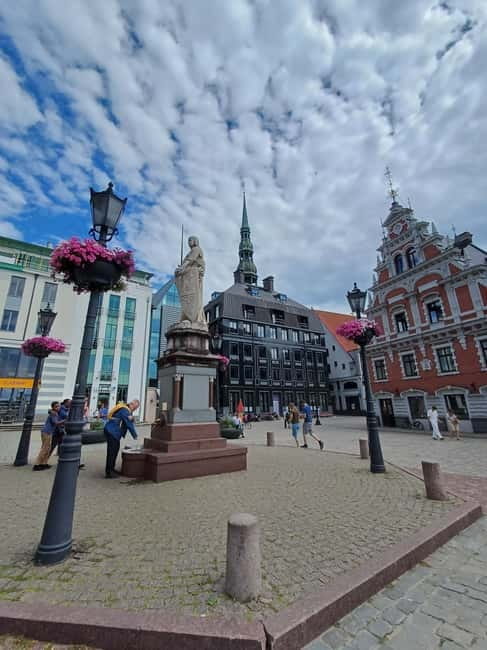
- Start at Riga’s Town Hall Square: Meet by the small metal Christmas tree near the House of the Blackheads, in the heart of Vecriga.
- Hear Riga’s story in Italian: Nelli Saraceno leads the walk, and the strongest praise centers on her preparation, warmth, and passion.
- See major Old Town landmarks: The route includes the House of the Blackheads, Bremen Town Musicians, House of the Black Cats, cathedral, Three Brothers, and Swedish Gate.
- Look for seven symbols: The tour gives you a simple way to notice the figures, buildings, and images that represent Riga.
- Plan for two hours on foot: Comfortable shoes matter on narrow paved streets and historic lanes.
- Children under 14 go free: The tour is wheelchair accessible, limited to 10 people, and costs $24 per paying person.
Starting at Town Hall Square
The meeting point is easy to place once you are in the center: look for the small metal Christmas tree near the House of the Blackheads. The tour begins in Piazza del Municipio, or Town Hall Square, a useful starting point because it puts you close to the core of Old Riga.
From here, the guide sets up the city’s long story. You hear about German, Polish, and Swedish periods, followed by the imperial era, Soviet rule, and Latvia’s return to independence. That broad timeline matters. Without it, Old Riga can look like a pleasant collection of church towers and decorated façades. With it, the same streets become evidence of changing rulers and competing identities.
I like this opening because it gives you a framework before the walking begins in earnest. You do not need to arrive with a detailed knowledge of Latvian history. The point is to understand why this small center contains so many different layers.
The tour is conducted in Italian, so it suits Italian-speaking visitors who want more than a basic list of dates. Recent feedback gives Nelli Saraceno especially strong marks for being prepared, kind, and passionate. One couple found that even with only two people in the group, she still delivered a full and useful two hours. That suggests the small-group format is not treated as a lesser version of the tour.
More history tours in Riga:
- Riga: Canal & Daugava Cruise on a Historic Wooden Boat
★ 4.4 · 496 reviews - Riga: 2-Hour History of Art Nouveau Walking Tour
★ 4.8 · 118 reviews - Riga: Jewish History and Heritage Tour
★ 4.9 · 25 reviews
The House of the Blackheads and Riga’s merchant past
The House of the Blackheads is one of the first major sights on the route. Its ornate appearance makes an immediate impression, but the guide’s historical context is what gives the building weight.
The name points to the Brotherhood of Blackheads, a merchant association connected with unmarried foreign traders. You can use this stop to begin thinking about Riga as a trading town tied to the wider Baltic and Hanseatic world. The building is not simply a pretty façade for photographs. It reflects the commercial groups that helped shape the city.
This is also a good place to appreciate the tour’s balance between physical sights and spoken stories. You will see the building directly, then place it within Riga’s political and commercial past. The tour description promises fragments rather than a full academic history, which is appropriate for a two-hour walk. You get the main ideas without spending the whole morning on one monument.
The route then brings you to the Bremen Town Musicians. The famous animal figures are a lighter stop, especially for families, but they also show how public art can carry a story beyond the original city. The figures are linked to the German tale of the donkey, dog, cat, and rooster, giving the walk a small connection between Riga and Bremen.
For children, this part can break up the historical material. Families also benefit from the fact that children under 14 can join free. That makes the $24 price more attractive when you are traveling with younger children.
The House of the Black Cats and Old Riga’s odd stories
The House of the Black Cats adds another dose of character. Its black cat figures are among the most recognizable details in the old town, and they fit the tour’s interest in legends and curious local stories.
I would not book this walk expecting only formal monument explanations. Its appeal lies in the mix: major buildings, small symbols, unusual tales, and the personalities attached to Riga. The legends are meant to create an urban kaleidoscope, with each street offering another piece of the city’s character.
That approach works well for anyone who remembers stories better than dates. You still get political history, but it is tied to visible places and memorable details. A good guide can turn a narrow lane or a statue into a clue, and the consistently high rating of 4.8 from 125 bookings points to strong satisfaction with that storytelling approach.
The word legend can mean different things on different tours, so keep your expectations sensible. This is not presented as a theatrical ghost show. It is a historical walk with mysterious tales and local color woven into the route.
Medieval Riga at the cathedral and Three Brothers
The cathedral, dating from the medieval period, provides one of the route’s central architectural stops. The tour also includes the Three Brothers, a group of historic houses that show how Riga’s buildings changed over time.
These sights are valuable because they let you compare public religious architecture with domestic buildings. The cathedral speaks to the city’s religious and civic importance. The Three Brothers give you a closer look at the scale of everyday urban life.
The supplied information identifies monuments from the 13th to 20th centuries, so this is not a tour limited to one medieval moment. You are following a city that developed, changed hands, suffered disruption, and rebuilt its identity. That makes the walk useful early in a Riga visit, when you are still working out how the old center fits together.
The route is also practical for orientation. After two hours, you should have a clearer sense of where the main Old Town streets and landmarks sit. I would still bring your own list of places you want to enter later, since this is a walking and storytelling experience rather than an advertised interior-access tour.
Other Riga days to weigh up
- Riga: Canal Boat Sightseeing Tour With Audio guide
★ 4.5 · 1,827 reviews - Riga: Entrance Ticket – House of the Black Heads
★ 4.6 · 1,096 reviews - Riga: Guided Old Town Walking Tour
★ 4.8 · 1,049 reviews - From Riga: Hill of Crosses and Jelgava Gems Tour
★ 4.8 · 1,040 reviews
Swedish Gate and the narrow paved streets
The Swedish Gate is another direct link to Riga’s past. Its name recalls the period of Swedish rule and gives the historical overview a physical point on the map.
Stops like this are where the opening timeline pays off. You first hear that Riga passed through German, Polish, Swedish, imperial, Soviet, and independent Latvian periods. Then you reach a surviving urban feature associated with one of those chapters. The history becomes easier to remember because it is attached to a real passage through the old city.
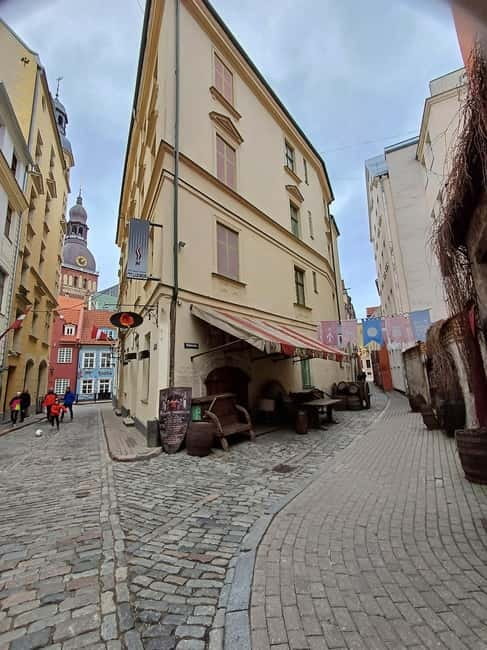
The walk also includes narrow paved streets, where the mood changes from grand squares to tighter urban spaces. The uneven surfaces are part of Old Riga’s charm, but they are also the reason to wear comfortable shoes. If you have limited mobility, the tour is listed as wheelchair accessible, though the historic paving may still affect comfort from one person to another.
The small group size helps here. A maximum of 10 participants should make it easier to hear the guide in a narrow lane and easier to stop without blocking the entire street. It also keeps the experience more personal than a large city tour.
Seven symbols and the legends of Riga
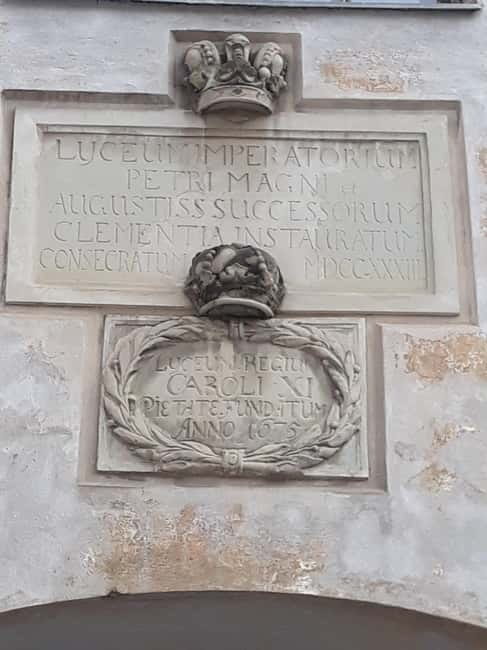
The seven-symbol idea gives the walk a simple game. Instead of passing through Old Riga and trying to remember every name, you can look for seven defining images or places and decide which one best represents the city.
I like this format because it asks you to form your own view. Riga is not reduced to one famous building. You are encouraged to compare the merchant center, medieval monuments, public art, legends, and national symbols. That makes the tour more engaging for families and for first-time visitors who want a clear way to organize what they see.
The legends add another layer. They may concern Riga’s residents, unusual events, or the mysterious side of the old streets. The information does not promise a fixed theatrical performance, so expect the guide’s spoken interpretation rather than costumes or staged effects.
Nelli’s strongest qualities, based on the available feedback, are her preparation, kindness, and enthusiasm. Several Italian-speaking participants singled out her ability to explain curiosities as well as the city’s beauty. That is important here because the tour depends heavily on the guide’s voice. The buildings are already present, but the meaning comes from how the guide connects them.
Finishing at the Freedom Monument
The walk ends at the Freedom Monument, which gives the tour a clear modern finish. You begin with Riga’s old merchant center and medieval streets, then move through its changing political eras before arriving at one of Latvia’s most important national symbols.
This ending helps prevent the tour from treating Old Riga as a museum sealed in the past. The old center is part of a country with a modern story of independence and political change. Ending at the monument gives that story a visible point.
It also makes the tour useful for planning the rest of your day. You finish outside the oldest core, near a major city symbol, rather than being returned to the starting point. If you want to continue exploring, confirm your next destination before you set off, since the experience does not advertise transport back to Town Hall Square.
One limitation deserves attention. A participant specifically felt that Riga Castle was close enough to include and was disappointed that it was not visited or mentioned. The castle is not listed among the planned stops, so you should not assume that every nearby landmark will be covered. If it matters to you, ask before the walk or plan a separate visit.
Is $24 good value for two hours?
At $24 per paying person, this is a fair price for a two-hour private-feeling introduction to Old Riga, especially when the group reaches no more than 10 people. The value comes less from the number of sights and more from the structure: the guide connects several historic periods, explains local symbols, and adds legends that you may not pick up by walking alone.
The price works particularly well for a first day in the city. You get your bearings, learn which buildings deserve a closer look, and finish with a stronger sense of Riga’s national story. It is also a good family calculation because children under 14 are free.
The value is weaker if you want long interior visits, a stop at Riga Castle, or a route focused on every major landmark. The experience is a compact overview, not a full-day city program. You should think of it as a guided introduction that helps you choose what to explore afterward.
The tour allows free cancellation up to 24 hours before the start and offers reserve-now, pay-later booking. Those terms are useful when your Riga schedule may shift. The duration is two hours, but you need to check the available starting time when booking.
Who will enjoy this Italian-language walk?
I would choose this tour if you want history explained in Italian and prefer a small group to a large city circuit. It should suit couples, families with children, and independent visitors who want a local introduction before exploring on their own.
It is especially useful for people who enjoy stories about buildings and residents, not just architectural labels. The mix of Hanseatic history, medieval monuments, political periods, strange legends, and public symbols gives you several ways into the city.
Families get two practical advantages: children under 14 are free, and the Bremen Town Musicians plus the seven-symbol idea can keep younger minds involved. The two-hour length is also easier to manage than a long historical walk.
You should think twice if your priority is a particular sight that is not named in the route. Riga Castle is the clearest example. Also, although wheelchair access is listed, historic paved streets can be demanding, so it is wise to consider your own comfort with old-town surfaces.
Bring comfortable shoes. Riga’s narrow paved streets may be picturesque, but they are not the place for flimsy footwear. In cold weather, the guide has shown care with the pace and avoided leaving people outside too long, according to one January participant, but you should still dress for a Baltic winter.
Should you book Old Riga in Italian?
Book it if you want an Italian-speaking guide, a manageable two-hour route, and a story-led introduction to Riga’s old center. Nelli Saraceno receives repeated praise for preparation, friendliness, passion, and attention to the group, which are exactly the qualities that make a compact walking tour worthwhile.
The tour is a strong match for first-time visitors, families, and anyone who likes legends mixed with serious history. At $24, it offers good value when you want context without committing half a day.
Skip it if you need a complete list of Riga’s landmarks, extensive interior visits, or a guaranteed stop at Riga Castle. For everyone else, this looks like a warm, focused way to meet Vecriga, with enough practical orientation to make your own discoveries afterward.
FAQ
Where does the tour start?
Meet at the small metal Christmas tree near the House of the Blackheads in Town Hall Square, known in Italian as Piazza del Municipio.
Where does the tour end?
The walking tour ends at the Freedom Monument.
How long does the experience last?
The tour lasts two hours.
What language is the tour conducted in?
The live tour is conducted in Italian by an Italian-speaking guide.
How much does the tour cost?
The listed price is $24 per person.
Can children join the tour?
Yes. Children under 14 years old can join for free.
How large is the group?
The tour is limited to 10 participants.
Is the tour wheelchair accessible?
Yes. The activity is listed as wheelchair accessible.
What should I bring?
Bring comfortable shoes for walking on Old Riga’s narrow paved streets.
New on the site around Riga
- Vilnius Day Trip or Airport Transfer★ 5.0 · 2 reviews
- Wooden Riga on foot -Ķīpsala★ 5.0 · 2 reviews
- Ultimate Art Nouveau Experience in Riga – Private Tour★ 5.0 · 4 reviews
- The Best Of Riga Walking Tour★ 5.0 · 2 reviews
- Tour from Riga to Vilnius: Bauska Castle, Rundale Palace and The Hill of Crosses★ 5.0 · 3 reviews
- Private Transfer to anywhere in Riga Center★ 5.0 · 2 reviews
- Neigbourhoods of Riga: Honest tour through most beautiful and most unusual areas★ 5.0 · 2 reviews
- Taste Riga – Private Tour of Latvian Flavour★ 5.0 · 5 reviews
Historical Tours, compared.
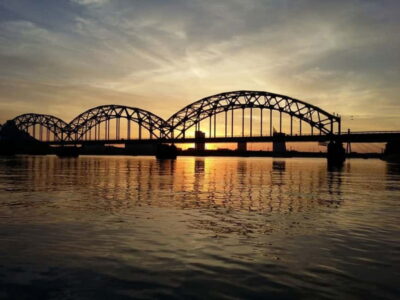
Canal & Daugava Cruise on a Historic Wooden Boat
Read our review →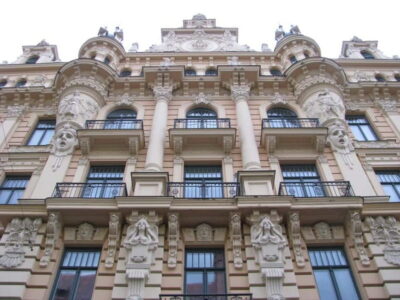
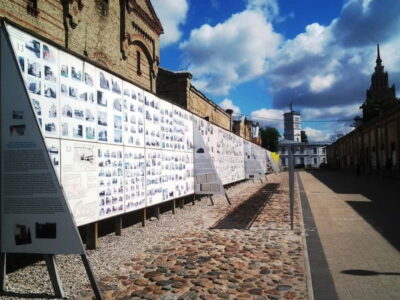
Riga’s Jewish Heritage: A 2 h Walking Tour in a small group
Read our review →
Flavours of Riga: Food, History & Hidden Gems Tour
Read our review →
All Inclusive Honest History Tour – Āraiši, Cēsis, Līgatne, Sigulda
Read our review →Browse the lists this tour appears in