
Reviewed · OLD TOWN TOURS
Riga: Guided Old Town Walking Tour
Riga rewards curious walkers. I like the way this two-hour tour connects major sights with local stories, instead of leaving you to admire church towers without context. I also like the practical food advice and the clear explanations of Art Nouveau, legends, politics, and Latvia’s difficult past. The main drawback is the weather: winter cobblestones can be slippery, and a very large group may make hearing the guide harder.
At $22, this is an inexpensive way to get your bearings on a first day in Riga. Guides such as Gita, Rita, Guna, Carlos, Baiba, and Normunds have earned praise for humor, strong voices, and lively storytelling. You should still dress for the season, arrive early at the transparent door near Grēcinieku Street 18, and wear shoes suited to uneven stone.
In This Review
- Key points to know before you book
- Why this two-hour walk works so well in Riga
- Finding the meeting point on Grēcinieku Street
- Town Hall Square and the House of Blackheads
- Saint Peter’s Church and Riga’s changing skyline
- Saint James’s Cathedral and the Swedish Gate
- Guild halls and the business of medieval Riga
- The Three Brothers and Riga’s older houses
- Art Nouveau, the Cat House, and a change in style
- Stories, politics, and Latvia beyond the façades
- Food advice that improves the rest of your stay
- Group size, sound, and the pace of the route
- Cold weather and cobblestones are serious considerations
- Who will get the most from this Riga walking tour?
- Should you book the Riga Old Town walking tour?
- FAQ
- How long does the Riga Old Town walking tour last?
- What is the price of the tour?
- Where does the tour start?
- Which languages are available?
- Is the tour wheelchair accessible?
- Can I cancel the booking?
Key points to know before you book
- An 800-year introduction: The walk links Riga Town Hall Square, medieval guild halls, churches, city gates, and the Three Brothers into one readable story.
- Gita is frequently praised: Her clear English, good humor, and strong voice have worked well even with groups of 30 or more.
- Architecture gets proper attention: You hear how Art Nouveau arrived in Riga, along with stories about the Cat House and older medieval buildings.
- A useful first-day activity: Guides point out places to revisit and suggest Latvian food and restaurants for the rest of your stay.
- Cold weather matters: Some winter tours have taken place in temperatures near minus 17 degrees Celsius, so warm clothing is not optional.
- The route is central and manageable: You walk for two hours, ending with drop-off options at Dome Square, with no transport included.
Why this two-hour walk works so well in Riga
Riga’s Old Town is compact, but its story is not. Within a short walk, you see signs of medieval trade, German influence, Swedish rule, church power, Soviet occupation, independence, and a later Art Nouveau boom. Without a guide, these pieces can feel disconnected.
This tour gives you a useful framework. You are not simply ticking off the House of Blackheads, Saint Peter’s Church, and the Swedish Gate. You are hearing why these places mattered, how Riga developed, and how the city’s identity changed over time.
I especially value the mix of formal history and smaller human details. Guides explain buildings and political events, but they also tell legends, local tales, and stories about daily life. That balance keeps the walk moving and helps younger visitors stay interested. Normunds, for example, was praised for stories that held the attention of teenage children, while other guides have used humor to make serious subjects easier to follow.
The result is a good orientation walk. You learn enough to recognize the Old Town’s main sights, but you also get clues about where you may want to return later.
More Old Town walks in Riga:
- Riga Package: Canal Boat Tour + Drink & Old Town Audio Guide
★ 4.3 · 659 reviews - Riga: Old Town Walking Tour with Art Nouveau Highlights
★ 4.7 · 332 reviews - Riga Old Town walking tour
★ 4.5 · 304 reviews
Finding the meeting point on Grēcinieku Street
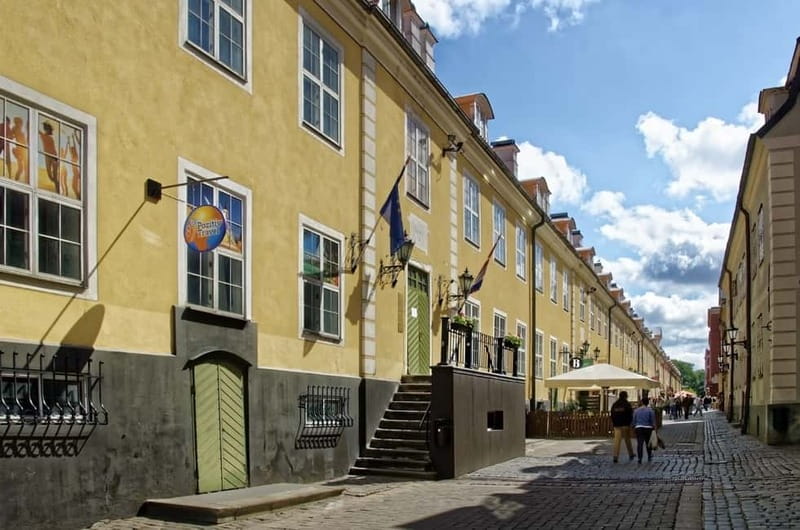
The tour begins at Grēcinieku iela 18, close to the Old Town. Look for the transparent door and a guide holding a Riga city guide sign.
This meeting point is practical, but do not rush past it. The guide is waiting close to the street rather than at a famous monument, so give yourself a few minutes to locate the entrance. The tour ends with two drop-off locations at Dome Square, or Doma laukums, which puts you in a handy part of the Old Town for further walking.
There is no bus, tram, or museum admission included. This is a walking experience from start to finish. That keeps the price low, but it also means you need to manage your own comfort in rain, cold, and wind.
The advertised languages are English, German, French, and Spanish. The English delivery has been particularly well received. Gita has been praised for speaking clearly enough for a mixed international group, even without headsets.
Town Hall Square and the House of Blackheads
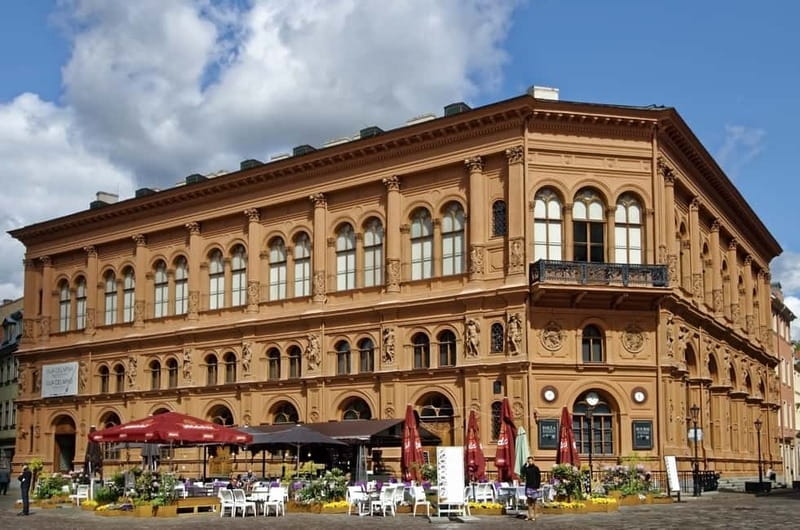
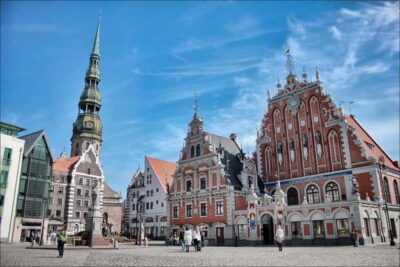
The first major stop is Riga Town Hall Square, with about 10 minutes of guided explanation. This is one of the best places to begin because it introduces Riga’s civic and commercial past in a single view.
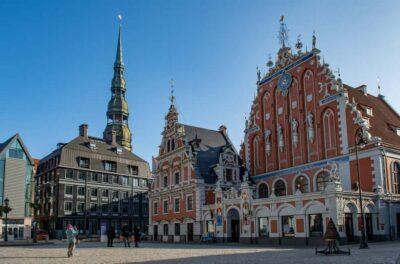
The square dates back to the 13th century. Here you can see the House of Blackheads, one of Riga’s most recognizable façades, and start to understand how the Old Town functioned as a center of public life and trade.
Allow yourself time to look above street level. Riga’s architecture often rewards a slow glance at gables, ornament, rooflines, and decorative details. Your guide points out what matters, which is useful when a grand building has several centuries of changes layered onto it.
This stop is not a long architectural lecture. It is a compact introduction, so expect the guide to select key details rather than cover every chapter of the square’s past. If you want extensive information about the House of Blackheads itself, you will need additional time on your own.
Saint Peter’s Church and Riga’s changing skyline
Saint Peter’s Church receives another 10-minute explanation. Its tall tower is one of the easiest landmarks to spot in Riga, and it gives the walk a sense of direction as you move through the narrow streets.
The value here is not simply looking up at a church. Your guide places the building within Riga’s long religious and political story, helping you see how churches served both spiritual and civic purposes.
The route through this part of town uses cobblestones and older streets. That is part of the appeal, but it is also where comfortable footwear becomes important. The stones may be awkward for anyone with limited mobility, especially after rain or during the colder months.
Saint Peter’s is a photo stop from the outside on this walking route. The tour does not include a church tower visit or other admission, so plan a separate visit if you want to go inside or seek views from above.
More walking tours in Riga:
- Riga: Old Town Walking Tour in a Small Group or Private
★ 4.7 · 254 reviews - Riga: Private Walking Tour with a Local
★ 4.7 · 168 reviews - Best of Riga Walking Tour – Highlights and Hidden Gems
★ 5.0 · 147 reviews - Riga Old Town Walking Tour in a Small Group
★ 4.5 · 132 reviews
Saint James’s Cathedral and the Swedish Gate
The walk continues to Saint James’s Cathedral, followed by the Swedish Gate. Each stop receives roughly 10 minutes of explanation, enough to keep the route lively while showing how different parts of the Old Town fit together.
Saint James’s Cathedral adds another layer to Riga’s religious history. The Swedish Gate, meanwhile, makes the city’s defensive past easier to picture. Passing through an old gate is more meaningful when you understand that the Old Town once had controlled points of entry and a very different street life.
This section is especially good for people who enjoy urban history. You are walking through a real city center rather than a preserved set built only for visitors. Streets, buildings, and public spaces still form part of Riga’s daily life.
Do not expect long pauses at each sight. Ten minutes goes quickly, especially if the group is large or the guide is answering questions. If a particular gate or church interests you, note its location and return after the tour.
Guild halls and the business of medieval Riga
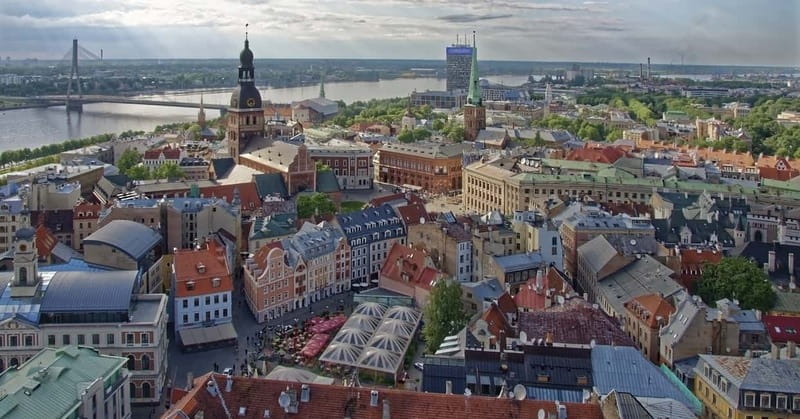
The Great Guild receives its own short guided stop, with the Small Guild and other medieval buildings included along the way. These halls help explain Riga as a trading city shaped by merchants, craft groups, and organized urban life.
The word guild can sound dry in a guidebook. In person, the buildings make the subject more tangible. Their size and decoration hint at the wealth and influence of the groups that used them.
This is one of the tour’s more useful history lessons because it moves beyond kings and battles. You learn about the people and institutions that made the city work. The guide also connects the buildings to Riga’s wider European ties, helping you see why the Old Town has a mixture of influences.
The stop is brief, so the focus remains on orientation. You will come away with a clear reason to notice these halls, not a full academic account of their membership and rules.
The Three Brothers and Riga’s older houses
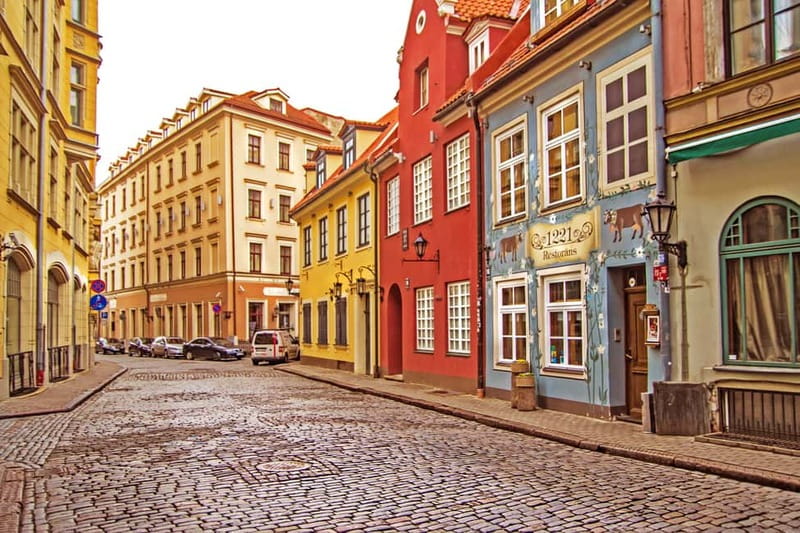
The Three Brothers building complex is one of the most photogenic stops. The three adjoining houses show how domestic architecture changed over time, and their narrow façades give you a strong sense of the Old Town’s medieval scale.
This is where the walk slows down visually. Instead of one grand public building, you are looking at ordinary houses and asking what life might have been like inside them. The cramped façades, irregular lines, and close-set streets make Riga feel older than its polished squares suggest.
Guides also use this area to explain building styles and the layers of restoration found around the Old Town. Pay attention to the contrast between the Three Brothers and the later Art Nouveau buildings discussed elsewhere. Riga’s appeal comes partly from that sudden shift in style.
The stop can become crowded, and the narrow street gives groups limited room. Stay close enough to hear, but do not block doorways or entrances. A little patience helps everyone get a clear view.
Art Nouveau, the Cat House, and a change in style
Riga is famous for Art Nouveau architecture, and this tour gives you an introduction to how the style entered Latvia’s cityscape. The Cat House is among the buildings highlighted along the route.
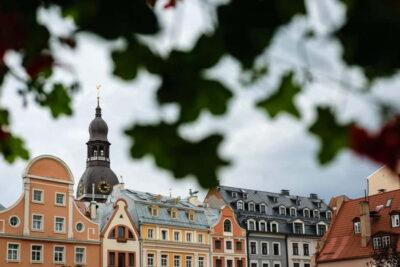
You may already know Art Nouveau as an ornamental style filled with curves, flowers, faces, and dramatic details. The guide adds the local story: Riga’s architectural scene changed quickly, and this newer style appeared alongside the much older medieval core.
That contrast is one of the most enjoyable parts of the walk. One minute you are studying a medieval street and the next you are hearing about a more modern architectural movement. The explanation helps you understand why Riga is often described as an important Art Nouveau city.
Keep your expectations in check. The main route focuses on Old Town highlights, not an extended tour of Riga’s full Art Nouveau district. If decorative façades become your main interest, ask your guide for suggestions about where to continue after the walk.
Stories, politics, and Latvia beyond the façades
The strongest part of this experience is often the commentary. Guides have been praised for explaining Latvia’s political past, foreign occupations, architecture, churches, and local customs in language that is easy to follow.
That matters because Riga’s past is complex. A quick stroll can leave you with a pretty picture but little sense of how the city and country changed. The guide helps connect the buildings to larger events without turning the outing into a heavy classroom lesson.
Guna has been praised for combining dates and political context with personal stories and tales that may be factual, legendary, or somewhere in between. Rita has been described as witty and clear, while Carlos has received praise for answering questions and adjusting the route for the group.
The exact style depends on who leads your departure. Names and guide assignments can change, so book this for the quality of the format rather than one guaranteed individual. Still, the repeated praise for clear delivery, humor, and local perspective is a good sign.
Food advice that improves the rest of your stay
The tour also includes suggestions about what to eat in Latvia and where to find it. This is a small detail, but I find it useful because food advice makes a city walk more practical.
You can ask your guide for recommendations while the places are still fresh in your mind. One guide’s suggestions were praised as especially helpful, with both recommended places turning out well for the person who tried them.
Do not expect a food tasting. Food and drinks are not allowed during the tour, and no meal is included. The value is in getting local direction, not in sampling dishes during the walk.
If you are visiting Riga for only a short time, this kind of advice can save you from choosing a restaurant at random after a long day. Write down names or locations before the tour ends.
Group size, sound, and the pace of the route
Group size can vary. One departure had 30 or more people, yet Gita was praised for projecting her voice without using headsets. That is a real advantage on busy streets, where audio equipment can be awkward and unreliable.
Still, a large group always requires some attention. Stay near the guide, especially at crossings and narrow corners. One person suggested that an earpiece would help in a group of around 20, so hearing conditions may depend on street noise, weather, and your position.
The pace is designed to cover a lot of ground in two hours. Stops are generally short, with the main Old Town area receiving about 20 minutes of broader explanation. You should expect steady walking rather than long periods of sitting.
This format suits you if you want an overview. It may feel rushed if you prefer to study every façade or take many photos. I would use the tour to mark places for a second, slower walk.
Cold weather and cobblestones are serious considerations
Riga can be brutally cold. A winter outing has taken place in conditions that felt close to minus 17 degrees Celsius, yet the guide still made the experience worthwhile by finding occasional warm spots and keeping the group moving.
For a winter booking, wear several warm layers, gloves, a hat, and shoes with dependable grip. The tour is wheelchair accessible in general, but accessibility is limited from the beginning of October through the end of March because of slippery cobblestones. Wheelchair users joining during that period should bring someone who can assist.
Food, drinks, smoking, alcohol, drugs, littering, large bags, and party groups are not allowed. The luggage rule is worth noting if you are coming directly from a station or hotel with bulky bags. Arrange storage before arrival.
The tour can be canceled up to 24 hours in advance for a full refund, and you can reserve now while paying later. Those terms are helpful when your schedule is still changing.
Who will get the most from this Riga walking tour?
I would recommend this tour most strongly for a first visit, a short stay, or your first morning in Riga. It gives you a map in your head, historical context, and ideas for what to see next.
It suits solo visitors, couples, families with older children, and anyone who prefers a guide to a phone screen. The humor and legends can make the history easier for teenagers to follow, while the route gives older visitors a clear look at the city’s main sights.
It is less suitable if you dislike group walks, need frequent indoor breaks, or want a specialist Art Nouveau tour. It is also not the best choice with large luggage or during icy weather unless you can handle the surface safely.
At $22, the value is strong. You receive two hours with a live guide, a broad introduction to the Old Town, practical food tips, and a route that covers many of Riga’s key landmarks. You do not receive admission tickets, transport, food, or a private guide, so the price reflects a shared introductory walk.
Should you book the Riga Old Town walking tour?
Book it if you want a clear first look at Riga, especially on your first day. The combination of medieval streets, major churches, guild halls, the Swedish Gate, the Three Brothers, and Art Nouveau details gives you far more than a simple photo walk.
I would skip it only if you already know the Old Town well or strongly dislike walking in groups. Otherwise, $22 is a fair price for the background and local direction you receive. Dress for the weather, protect your footing on the cobbles, stay close enough to hear, and keep the rest of the day open for revisiting the places that catch your eye.
FAQ
How long does the Riga Old Town walking tour last?
The tour lasts two hours. It includes guided stops at Riga Town Hall Square, Saint Peter’s Church, Saint James’s Cathedral, the Great Guild, the Swedish Gate, the Three Brothers, and the wider Old Town.
What is the price of the tour?
The price is $22 per person.
Where does the tour start?
The meeting point is at Grēcinieku iela 18. Look for the transparent door and a guide holding a Riga city guide sign.
Which languages are available?
Live guides are available in English, German, French, and Spanish.
Is the tour wheelchair accessible?
The tour is wheelchair accessible, but access is limited from the beginning of October through the end of March because slippery cobblestones can make the route difficult. Wheelchair users joining in that period should bring someone to assist them.
Can I cancel the booking?
You can cancel up to 24 hours in advance for a full refund. The tour also allows you to reserve now and pay later.
New on the site around Riga
- Vilnius Day Trip or Airport Transfer★ 5.0 · 2 reviews
- Wooden Riga on foot -Ķīpsala★ 5.0 · 2 reviews
- Ultimate Art Nouveau Experience in Riga – Private Tour★ 5.0 · 4 reviews
- The Best Of Riga Walking Tour★ 5.0 · 2 reviews
- Tour from Riga to Vilnius: Bauska Castle, Rundale Palace and The Hill of Crosses★ 5.0 · 3 reviews
- Private Transfer to anywhere in Riga Center★ 5.0 · 2 reviews
- Neigbourhoods of Riga: Honest tour through most beautiful and most unusual areas★ 5.0 · 2 reviews
- Taste Riga – Private Tour of Latvian Flavour★ 5.0 · 5 reviews
Old Town Tours, compared.

Riga Package: Canal Boat Tour + Drink & Old Town Audio Guide
Read our review →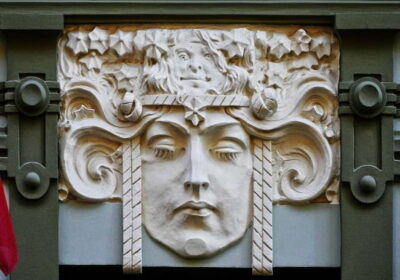
Old Town Walking Tour with Art Nouveau Highlights
Read our review →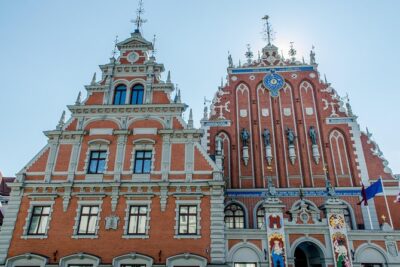
Old Town Walking Tour in a Small Group or Private
Read our review →
Old town pub & bar crawl, hidden gems, and local party
Read our review →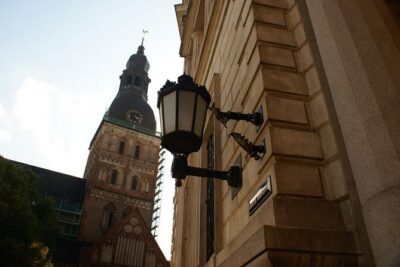
Browse the lists this tour appears in