Reviewed · RIGA TOURS
Wooden Riga on foot -Ķīpsala
Wooden Riga begins away from the postcard crowd. I like the chance to see Ķīpsala’s restored wooden houses and the island’s old fishing-village character, then pause for views across the Daugava toward Riga’s Old Town and port. I also like the small group size, capped at 20 people, with a guide praised for making the experience excellent. The main drawback is simple: this is a walking tour with no hotel pickup, and it is not suitable for people over 70.
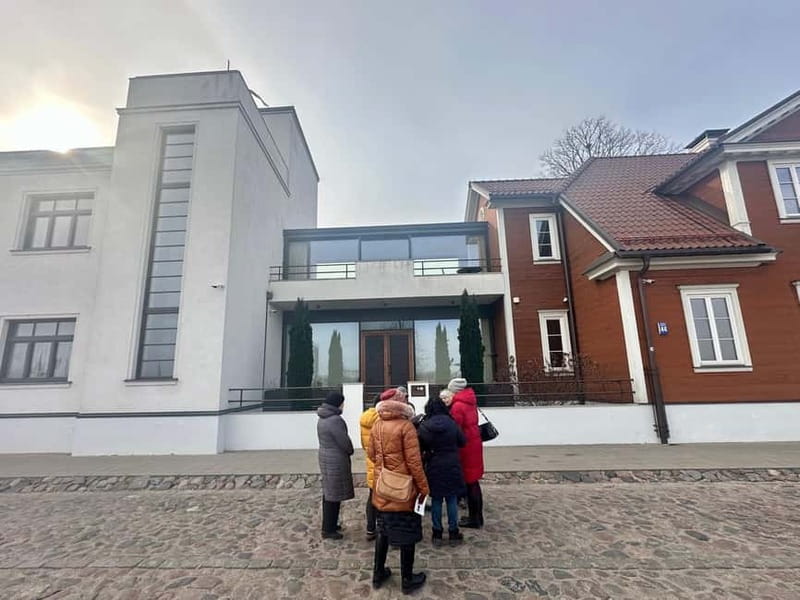
Ķīpsala gives you a slower, quieter side of Riga. You will see decorative wooden buildings, hear about structures moved from central Riga to save them from destruction, and walk along the riverbank. Bring comfortable shoes, since the tour lasts two hours and begins and ends at a bus stop on the island.
In This Review
- Key points to know before you go
- Why Ķīpsala feels different from central Riga
- Wooden houses saved from destruction
- The Kangaroo House and Captain’s House
- Walking beside the Daugava
- What the two-hour itinerary feels like
- The guide and group size
- Is the tour good value?
- Who should book this Ķīpsala walk?
- Practical tips for a smoother walk
- Should you book Wooden Riga on foot?
- FAQ
- Where does the tour start?
- Where does the tour finish?
- How long is the walking tour?
- What languages are available?
- Is hotel pickup included?
- What buildings can I expect to see?
- Will I see the Daugava River?
- How many people can join the group?
- Is an audio system provided?
- Can I cancel for a full refund?
Key points to know before you go
- Ķīpsala is a historic river island: The tour takes place on the central island of the Daugava, once known as a fishing village.
- The wooden architecture is the main event: Restored houses and buildings moved from central Riga show how the city protected fragile older structures.
- The Kangaroo and Captain’s houses add character: These unusual architectural names help make the walk more memorable than a standard city stroll.
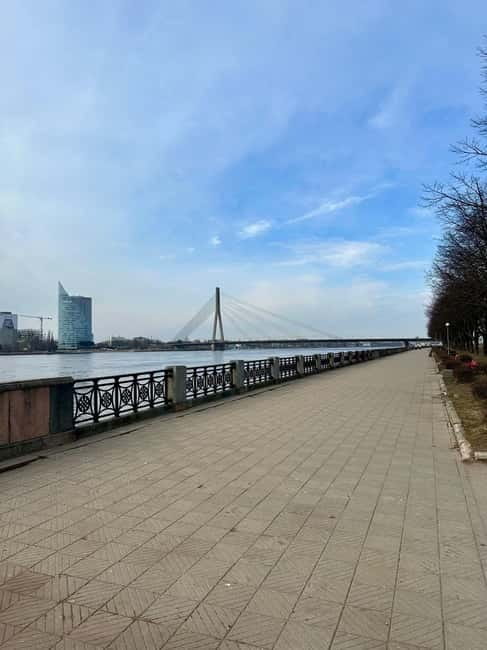
- The river views are part of the experience: Look across to the Old Town, the Suspension Bridge, Riga Port, and buildings on the right bank.
- It is a compact guided walk: The experience lasts two hours, with English, German, or Russian available.
- The meeting point needs attention: Meet the guide at the bus stop in Ķīpsala, in the direction from the city centre, under a yellow umbrella.
Why Ķīpsala feels different from central Riga
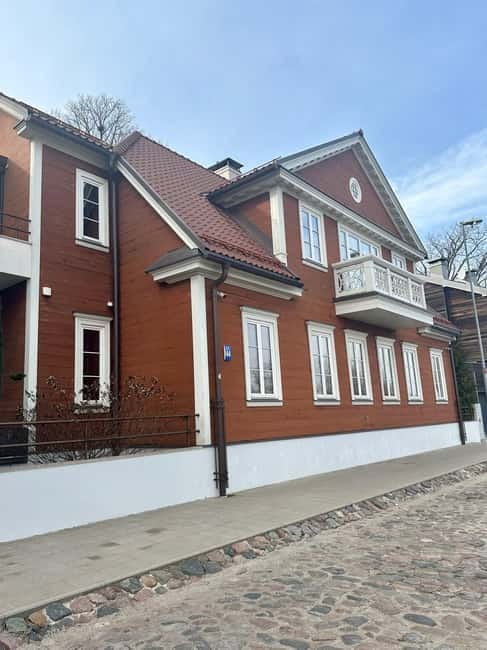
Central Riga is famous for grand streets, Art Nouveau facades, and busy pedestrian routes. Ķīpsala offers a different rhythm. You cross into a river-island setting where the buildings are lower, the pace is calmer, and the Daugava becomes part of the view instead of something you simply cross.
I like this tour because it connects architecture with place. You are not only looking at old wooden walls. You are seeing how a village-like district fits beside the capital, with the river, bridges, port, and Old Town all visible from the same walk.
The island’s past as a fishing village gives the tour a useful sense of scale. Riga can feel like a grand European capital in its central districts, but Ķīpsala reminds you that working communities once lived close to the water in much simpler surroundings.
That contrast is the real appeal. If you want a long list of major monuments, this is not the right outing. If you want to understand another layer of Riga, two hours here can be well spent.
Other Riga days to weigh up
- Riga: Canal Boat Sightseeing Tour With Audio guide
★ 4.5 · 1,827 reviews - Riga: Entrance Ticket – House of the Black Heads
★ 4.6 · 1,096 reviews - Riga: Guided Old Town Walking Tour
★ 4.8 · 1,049 reviews
Wooden houses saved from destruction
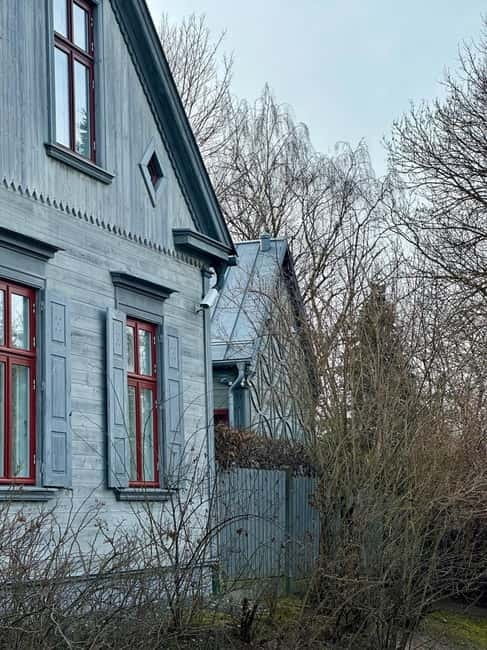
Riga’s wooden architecture has received UNESCO recognition as an important part of the city’s heritage. On Ķīpsala, you can see several buildings restored to their original appearance. Some were moved from central Riga to protect them from being lost.
That detail matters. A restored wooden house can look charming at first glance, but the story behind its survival gives it more weight. Moving an old structure is not a casual task. It shows that Riga has made a deliberate effort to preserve buildings that might otherwise have disappeared as the city changed.
I would pay close attention to the condition and decoration of the houses rather than rushing from one facade to the next. The tour highlights a highly decorative and intellectual architectural style, so this is a good setting for noticing details in the design.
The buildings are also useful reminders that wooden architecture is not automatically rustic or plain. The houses on Ķīpsala can have decorative features and a formal appearance, even though the material is wood. That mix of practical construction and artistic detail is what gives the neighborhood its visual appeal.
The information provided does not name every building visited, so you should think of the walk as a guided look at the area rather than a fixed checklist of famous interiors. The value comes from seeing the buildings in their setting and hearing the guide explain why they matter.
The Kangaroo House and Captain’s House
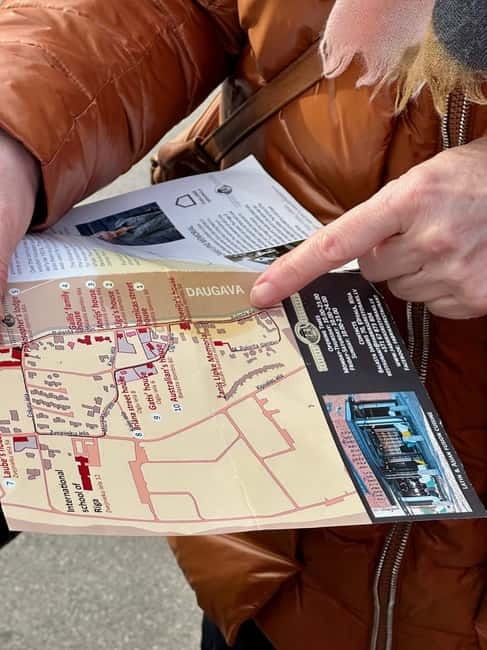
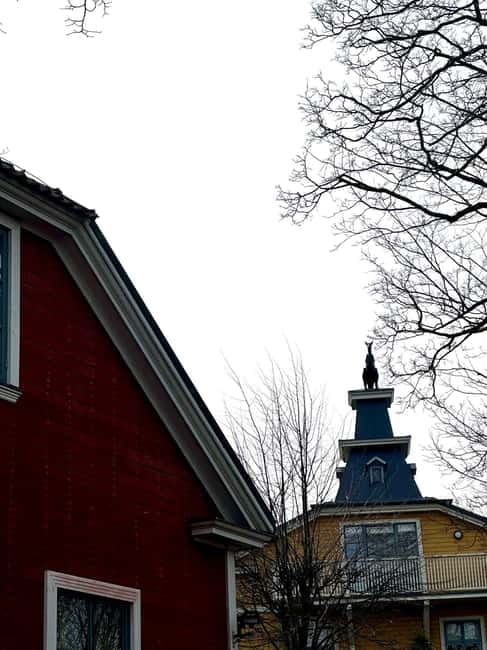
Two names give this walk a little extra personality: the Kangaroo House and the Captain’s House. Their inclusion helps turn the architecture into a series of memorable points rather than a blur of old wooden walls.
The names alone do not tell you exactly what the buildings look like, and no interior access is specified. Still, they are useful landmarks during the walk. Ask your guide what makes each one distinctive, how the names developed, and whether either building was moved from another part of Riga.
I especially like that the tour includes these individual houses instead of treating Ķīpsala as one broad architectural zone. Named buildings give you something concrete to remember after the walk. They also provide natural points for photographs, although you should follow the guide’s advice about where to stop and how close to get.
The architectural focus may appeal to you if you enjoy decorative design, building preservation, and unusual urban stories. It may be less satisfying if you prefer access inside historic houses, since the supplied details describe an outdoor walking tour and do not promise interior visits.
Walking beside the Daugava
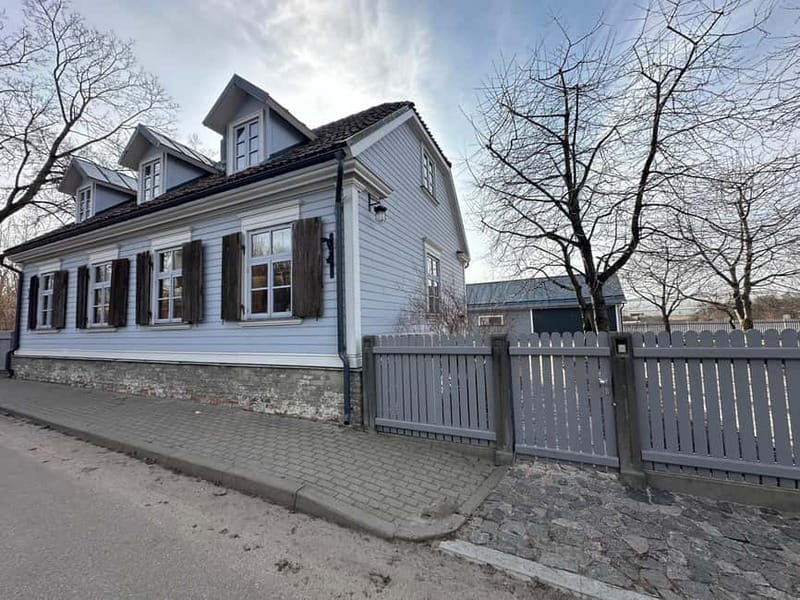
The riverbank gives the tour its best sense of place. During the walk, you can look toward Riga’s Old Town, the Suspension Bridge, Riga Port, and other buildings on the right bank of the Daugava.
These views make Ķīpsala more than an architecture stop. The island sits opposite the central city, so the river becomes a natural viewing platform. You get a broad picture of Riga while standing in a district with a much more local, village-like feel.
I would bring a camera, as requested, but keep your attention on the guide as well. The views are easy to enjoy independently, while the architectural explanations are the part you cannot recreate later as easily.
The river setting can also affect your comfort. The tour information does not promise shelter, indoor stops, or weather protection. Check the forecast and dress for an open walk. Comfortable shoes are specifically recommended, and that advice makes sense for a two-hour route.
Do not expect a major nature outing. The attraction is the combination of water, city views, and historic buildings. The walk is gentle in concept, but it still requires you to remain on foot for the full duration.
A different sort of day out of Riga altogether:
- From Riga: Hill of Crosses and Jelgava Gems Tour
★ 4.8 · 1,040 reviews - From Riga: Hill of Crosses & Jelgava Guided Tour
★ 4.9 · 685 reviews - Riga Package: Canal Boat Tour + Drink & Old Town Audio Guide
★ 4.3 · 659 reviews - Riga: Canal Boat Tour with Welcome Drink & Audio Guide
★ 4.5 · 565 reviews
What the two-hour itinerary feels like
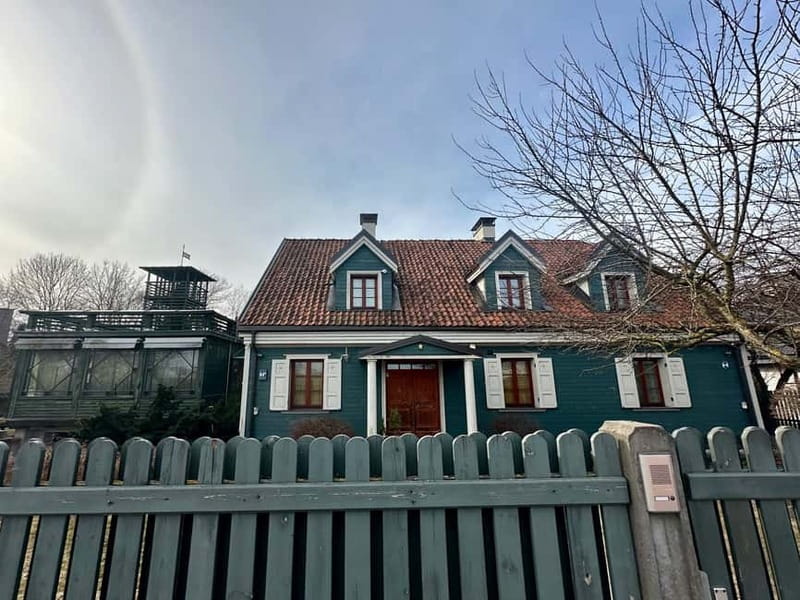
The route starts at Ķīpsala and returns to the same meeting point. That makes planning easier, since you are not left at an unfamiliar end point across the river.
You meet the guide at the bus stop in the direction from the city centre. Look for the yellow umbrella. This is an important detail, since a bus stop can be a busy or confusing meeting place, particularly if you arrive from the wrong direction.
From there, the tour introduces Ķīpsala as a historic fishing village on a river island. The early part of the walk should help you understand the setting before the focus turns to the wooden architecture.
The middle section is devoted to the preserved and restored buildings, including the Kangaroo and Captain’s houses. You can expect the guide to explain the architectural style and the story of buildings moved from central Riga.
The riverbank portion adds the wider city view. You will see the Old Town, Suspension Bridge, port, and right-bank buildings from across the Daugava. The tour then finishes back at the original meeting point.
The supplied information does not provide a minute-by-minute schedule, exact walking distance, or a list of every stop. I would not book this expecting a tightly scripted monument tour. Its appeal is the guided pace, the setting, and the chance to look carefully at a distinct part of Riga.
The guide and group size
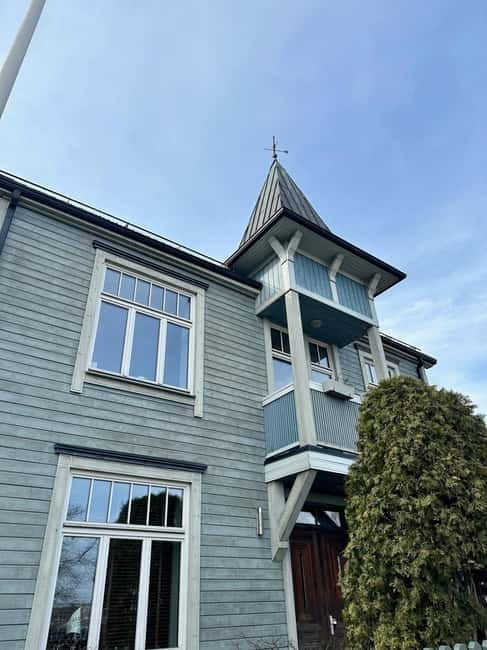
A local guide leads the walk, with tours available in English, German, or Russian. That language choice makes the experience practical for a wide range of visitors, but you should select your preferred language when checking availability.
The available feedback gives the guide especially strong praise, with the experience receiving a 5 out of 5 rating and the guide described as very good. That is worth emphasizing because this tour depends heavily on explanation. Wooden buildings can be attractive without a guide, but their preservation stories and architectural details become much more useful when someone points them out.
Groups range from a minimum of two to a maximum of 20 participants. A group of 20 is not tiny, but it is still more manageable than a large city tour. You should be able to hear the guide most of the time, and a tour guide system is provided if more than 10 people join.
That audio system is a practical benefit. On a river island, wind, traffic, and general city noise can make a normal speaking voice hard to follow. If your group is larger than 10, the system should help you keep up with the commentary while walking.
The guide agency is Smile Line. No individual guide name is provided, so you cannot request a particular person based on the available details. The positive guide feedback still suggests that the human side of the tour is one of its strongest features.
Is the tour good value?
No price is provided here, so I cannot judge the exact cost. I can explain what you are paying for: two hours with a local guide, a focused look at Ķīpsala’s wooden architecture, river views, and the convenience of a small organized group.
The value is strongest if you would otherwise pass through Ķīpsala without understanding what you are seeing. A self-guided walk can show you the houses, but it may not explain which buildings were restored, which were moved, or why the district matters to Riga’s architectural heritage.
The value is weaker if you want paid entry to historic interiors, a meal, transport, or a full overview of Riga. None of those are included. There is no hotel pickup or drop-off, and the tour begins and ends at the bus stop.
For a visitor who has already seen the Old Town and wants something more focused, this can be a sensible addition. It is also a good choice for an architecture-minded visitor who prefers a short outing instead of a full-day excursion.
Reserve and pay later is available, which helps if your Riga schedule is still shifting. You can also cancel up to 24 hours in advance for a full refund. Those terms reduce the risk of booking, though you should still confirm the current starting time and price before paying.
Who should book this Ķīpsala walk?
I would recommend it to you if you enjoy:
- Wooden architecture and building preservation
- Quiet urban walks beside water
- Seeing Riga beyond the Old Town
- Decorative design and unusual buildings
- Small-group tours with live commentary
- Photography, especially city views and building details
It should suit visitors who want a two-hour activity rather than a long day of sightseeing. The route returns to its starting point, so it is easy to fit before or after other plans.
I would think twice if you dislike walking, need frequent indoor breaks, or want a tour packed with major landmark interiors. The experience is also listed as unsuitable for people over 70, so that restriction should be taken seriously when planning for an older member of your party.
The tour is offered in English, German, and Russian. If you need another language, the provided information does not indicate that one is available.
Practical tips for a smoother walk
Arrive at the correct bus stop, in the direction from the city centre. The yellow umbrella is the visual marker for the guide, so keep an eye out for it rather than waiting for a sign on a building.
Wear shoes you can comfortably use for two hours. The tour is not presented as strenuous, but the full experience is on foot and includes a riverside stroll.
Bring a camera, but also leave room for listening. The best moments may be the explanations about restored buildings and structures moved from central Riga, not only the photographs.
If you are joining a group of more than 10, expect a tour guide system. That should make the commentary easier to hear, though you may still want to stay reasonably close to the guide.
Check the weather before leaving. The route includes the Daugava bank, and no indoor shelter or weather backup is specified. A little preparation will make the slow pace more enjoyable.
Should you book Wooden Riga on foot?
Book this tour if you want to see a quieter, more architectural side of Riga and you like the idea of connecting restored wooden houses with river views. The Kangaroo House, Captain’s House, and buildings rescued from demolition give the walk specific points of interest, while the guide adds the context you would likely miss alone.
Skip it if you are looking for interiors, hotel transport, or a fast tour of Riga’s major sights. For the right visitor, though, Ķīpsala offers a thoughtful two-hour change of pace, and the perfect 5 out of 5 score attached to the experience supports the guide’s appeal.
FAQ
Where does the tour start?
It starts at the bus stop in Ķīpsala, in the direction from the city centre. The guide will be carrying a yellow umbrella.
Where does the tour finish?
The activity ends back at the same meeting point in Ķīpsala.
How long is the walking tour?
The tour lasts two hours.
What languages are available?
Live guiding is available in English, German, and Russian.
Is hotel pickup included?
No. Hotel pickup and drop-off are not included.
What buildings can I expect to see?
The tour focuses on Riga’s wooden architecture and includes the Kangaroo House and Captain’s House. Several restored buildings are also part of the experience.
Will I see the Daugava River?
Yes. The walk includes time along the bank of the Daugava, with views toward Riga’s Old Town, the Suspension Bridge, Riga Port, and buildings on the right bank.
How many people can join the group?
The group has a minimum of two participants and a maximum of 20.
Is an audio system provided?
A tour guide system is provided when more than 10 participants join.
Can I cancel for a full refund?
Yes. You can cancel up to 24 hours in advance for a full refund.
New on the site around Riga
- Vilnius Day Trip or Airport Transfer★ 5.0 · 2 reviews
- Ultimate Art Nouveau Experience in Riga – Private Tour★ 5.0 · 4 reviews
- The Best Of Riga Walking Tour★ 5.0 · 2 reviews
- Tour from Riga to Vilnius: Bauska Castle, Rundale Palace and The Hill of Crosses★ 5.0 · 3 reviews
- Private Transfer to anywhere in Riga Center★ 5.0 · 2 reviews
- Taste Riga – Private Tour of Latvian Flavour★ 5.0 · 5 reviews
- Neigbourhoods of Riga: Honest tour through most beautiful and most unusual areas★ 5.0 · 2 reviews
- Sunrise at Kemeri National Park – Small Group★ 5.0 · 5 reviews
Riga Tours, compared.



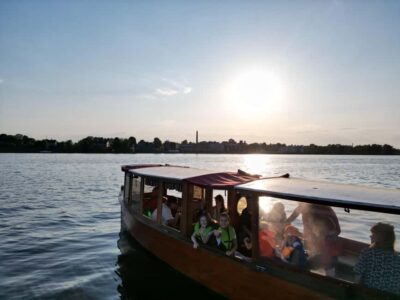
Riga Package: Canal Boat Tour + Drink & Old Town Audio Guide
Read our review →
Canal Boat Tour with Welcome Drink & Audio Guide
Read our review →