
Reviewed · HISTORICAL TOURS
Riga’s Jewish Heritage: A 2 h Walking Tour in a small group
Riga’s past is written in its streets. This two-hour walk follows Jewish life in Latvia from the 17th century to today, linking religious buildings, the former ghetto area, the Ghetto Museum, and an old Jewish cemetery. I like that the tour treats Jewish history as a living subject, not only a story about wartime destruction. I also like the chance to visit Peitav Shul, Latvia’s only working synagogue, when it is open. The main drawback is the pace: the route can feel long in hot weather, and some stops may be closed on holidays or Saturdays.
The meeting point at the House of the Black Heads is easy to find in Town Hall Square, and the $47 price is fair if you want a guide to connect scattered places and explain their meaning. Guide Gunta has earned especially strong praise for her warm, personal approach and for answering questions about Riga beyond the Jewish subject. Still, guide style can vary, so I would book this for its subject and route rather than expect the same person every time.
In This Review
- Key points to know before you book
- Starting at the House of the Black Heads
- Jewish life in Latvia from the 17th century onward
- The Old Choral Synagogue and Riga’s Jewish architecture
- Peitav Shul, Riga’s surviving working synagogue
- The former ghetto territory and Ghetto Museum
- The old Jewish cemetery and the mark left behind
- How much walking and how difficult is it?
- Is $47 a fair price?
- Guide quality and the human side of the walk
- Practical booking advice for Riga
- Who should book this two-hour walk?
- Should you book Riga’s Jewish Heritage walking tour?
- FAQ
- Where does the tour begin?
- How long does the tour last?
- What language is available?
- How many people can join?
- Is an audio system provided?
- Does the tour visit a working synagogue?
- Are museum entrance tickets included?
- Is transportation included?
- Is the tour suitable for people with mobility impairments?
- Can I cancel for a refund?
Key points to know before you book
- Peitav Shul is the tour’s most important living site: Built in 1905, it is Latvia’s only surviving Jewish prayer house and the main meeting place for the country’s Jewish community.
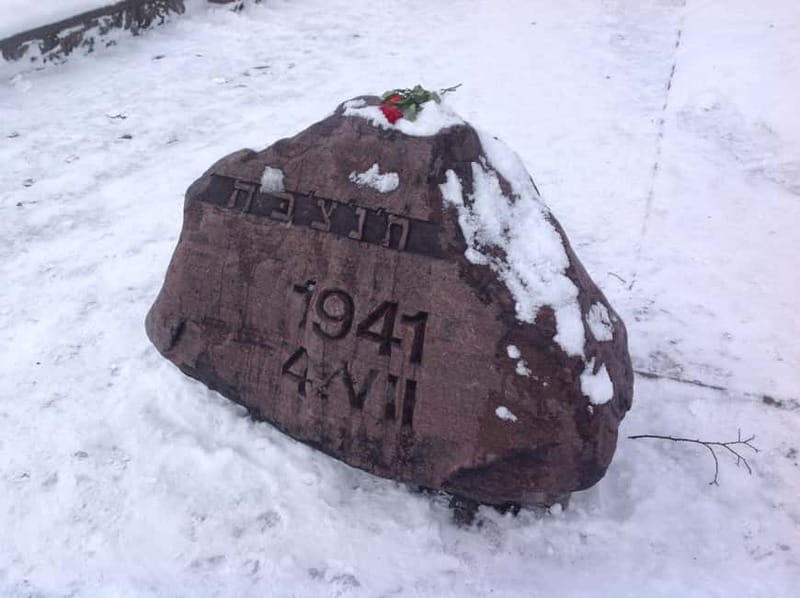
- The former ghetto area is now a park: A large stone bearing the Star of David is the main visible reminder of what happened there during the Nazi occupation.
- The route covers centuries in two hours: You move from Jewish settlement in Latvia during the 17th century to the present day.
- Saturday timing matters: The synagogue visit is not available on Saturday, and religious holidays may also affect access to the synagogue or museum.
- This is walking, not a museum-only talk: You need comfortable shoes and enough stamina for a route that one participant found tiring on a hot day.
- The group stays fairly small: There are usually between three and 20 participants, with an audio system provided when more than 12 people join.
Starting at the House of the Black Heads
The tour begins at the Smile Line office in the House of the Black Heads, Town Hall Square 7. This is a useful starting point because you are already in central Old Riga, surrounded by some of the city’s most decorative historic buildings.
Before the walk begins, make sure you have the right language confirmed. English is available, while French, Spanish, Italian, and other languages can be arranged if requested at least three days ahead. Bring a charged phone, some cash, a camera if you use one, and shoes that can handle a proper city walk.
The group size is limited to 20, with a minimum of three people required for the tour to operate. That is small enough for questions to be practical, though a group of 20 will feel less intimate than a private walk. If more than 12 people attend, the guide provides an audio system to make the commentary easier to hear.
That small detail matters in Riga. Streets can be noisy, and the subject calls for concentration. A guide speaking about Jewish life, persecution, and survival should not have to compete with traffic or a large group spreading across the pavement.
More walking tours in Riga:
- Riga: Guided Old Town Walking Tour
★ 4.8 · 1,049 reviews - Riga: Old Town Walking Tour with Art Nouveau Highlights
★ 4.7 · 332 reviews - Riga Old Town walking tour
★ 4.5 · 304 reviews
Jewish life in Latvia from the 17th century onward
The tour’s time span is one of its best features. You are not given only a short account of the Holocaust and then sent away. Instead, the guide places Jewish life in Latvia within a longer story, beginning in the 17th century and continuing through the present.
That broader view helps you understand that Jewish communities existed in Latvia long before the Second World War. It also keeps the tour from reducing Jewish history to tragedy alone. You learn about religious life, community buildings, changing political conditions, wartime destruction, Soviet rule, and the situation of the Jewish community today.
I would pay close attention to the guide’s personal knowledge of Riga as well as the formal history. Gunta, one of the guides associated with this experience, has been praised for speaking naturally rather than simply reciting a prepared script. She also answered questions about Soviet occupation and wider Latvian life, which can make the walk useful even if your interests extend beyond Jewish heritage.
That flexibility is valuable. A two-hour tour cannot explain every period in equal depth, but a guide who welcomes questions can help you follow the parts that matter most to you.
The Old Choral Synagogue and Riga’s Jewish architecture
The Old Choral Synagogue is one of the key points on the route. Here, the focus shifts from broad history to the physical signs of Jewish life in Riga.
The tour also introduces you to highly decorative and intellectual architectural styles connected with the city. You should expect the guide to explain buildings and spaces as historical evidence, not simply as attractive backdrops for photographs. The architectural details help show the scale and presence of Jewish life in the city before the upheavals of the 20th century.
The name Old Choral Synagogue can cause some confusion, especially if you expect every stop to function as a regular house of worship. Ask the guide what remains, what changed, and how the building fits into the history of Riga’s Jewish community. The value here is not just seeing a structure. It is understanding what the structure represented and what happened to the community around it.
The tour description refers to the Riga synagogue visit as unavailable on Saturday. Access can also be affected by holidays. Plan with some flexibility, and do not assume that every interior will be open at the exact time of your walk.
Peitav Shul, Riga’s surviving working synagogue
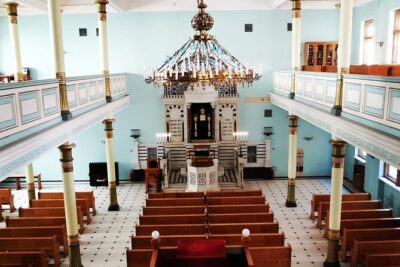
Peitav Shul is likely to be the emotional center of the walk. Built in 1905, it is described as the only surviving Jewish prayer house in Latvia and the only working synagogue in the country.
It also serves as the main meeting place for a Jewish community of about 7,000 people. That gives the building a role beyond its architecture. You are not simply looking at a preserved historic site. You are learning about a place that still supports religious and communal life.
The synagogue’s survival carries special weight. Its sacred scrolls and other treasures were hidden and escaped destruction. The building itself was not burned during the Holocaust because it stood close to other houses in Old Riga. The reason is grimly practical, but it explains why this site remains such an important part of the city’s Jewish story.
I appreciate that the tour includes this present-day connection. It gives you a chance to see continuity, not just loss. At the same time, access is not guaranteed every day. The visit is not available on Saturday, and a holiday previously caused both a synagogue and Holocaust Museum closure for one participant. If entering Peitav Shul is essential to you, check the date carefully and ask the provider before booking.
Dress and behave with the care expected at a religious site. The supplied information does not give a formal dress code, but the synagogue is an active place of worship, not merely a tourist stop.
More history tours in Riga:
- Riga: Canal & Daugava Cruise on a Historic Wooden Boat
★ 4.4 · 496 reviews - Old Riga in Italian: History&Legends
★ 4.8 · 125 reviews - Riga: 2-Hour History of Art Nouveau Walking Tour
★ 4.8 · 118 reviews - Riga: Jewish History and Heritage Tour
★ 4.9 · 25 reviews
The former ghetto territory and Ghetto Museum
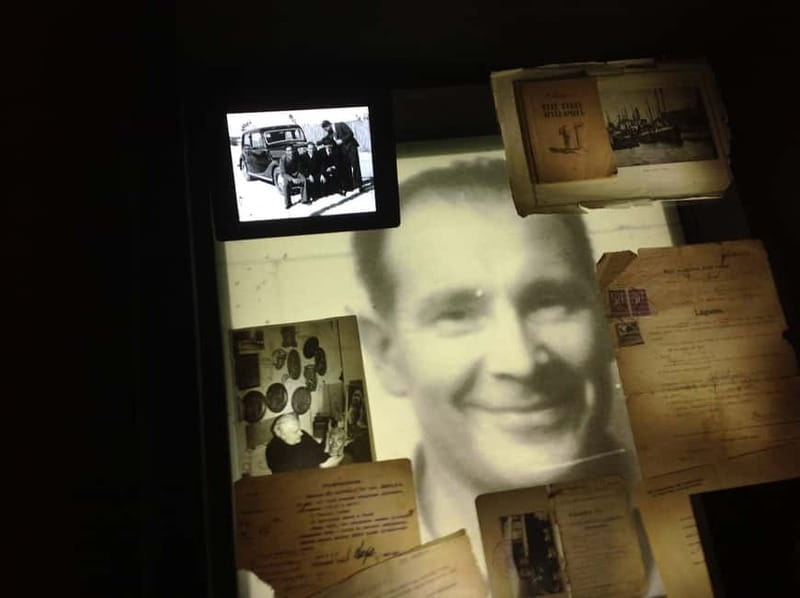
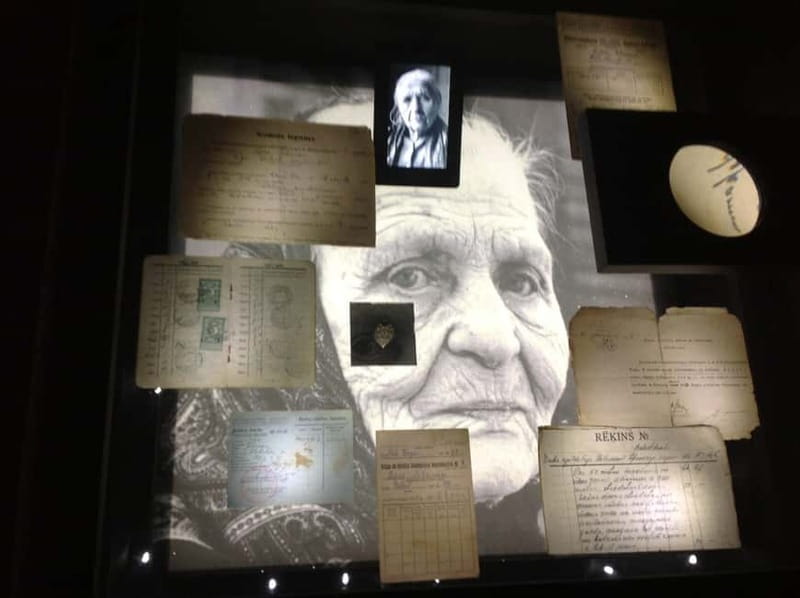
The route then moves into one of the most difficult sections: the former ghetto territory connected with the Nazi occupation.
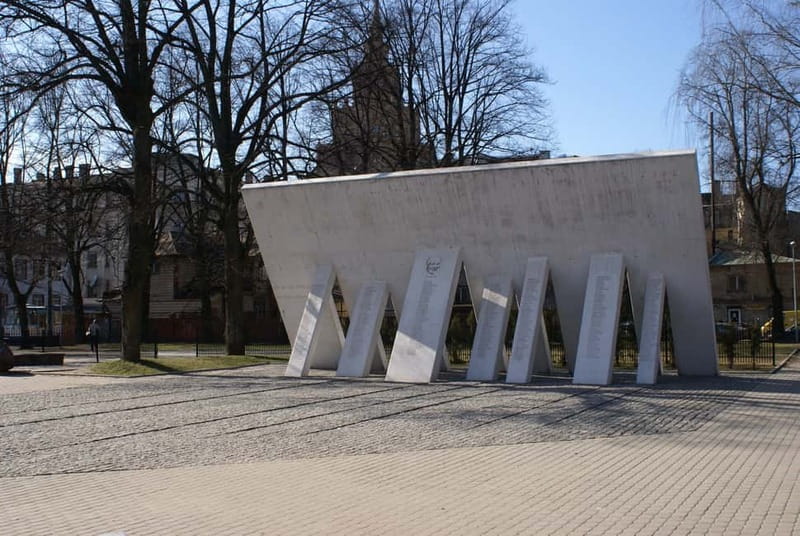
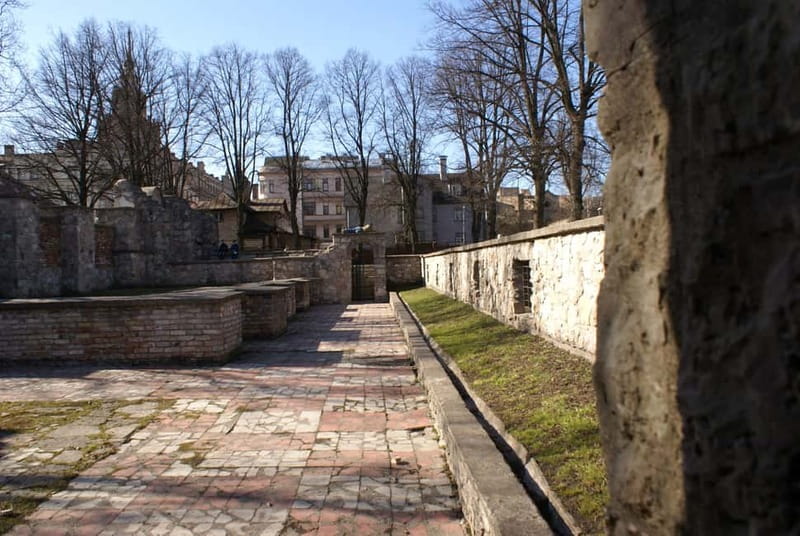
After the war, Soviet authorities took control, and the area was turned into a park. Today, the main visible sign of its former purpose is a large stone marked with the Star of David. That absence of physical evidence is part of what makes the stop so powerful. You are asked to understand a place whose original use has been almost erased from the streetscape.
The Ghetto Museum adds more context, but entrance tickets are not included in the $47 tour price. This means you should budget separately if you want to go inside. The museum may also have its own opening hours and holiday closures, so ask whether the guided walk includes an interior visit or only an explanation from outside.
The tour is especially useful here because a guide can point out how ordinary urban space became part of a system of confinement and persecution. Without context, a park and a stone can seem easy to pass. With context, the same place demands more attention.
Expect this part of the tour to be serious. It is not designed as a light sightseeing stroll, and the guide’s tone matters. Most of the available feedback praises empathy and care, but one account raised concerns about odd comments and an unsympathetic manner. That does not define the experience, but it is a fair reminder that a sensitive subject requires a respectful guide.
The old Jewish cemetery and the mark left behind
The old Jewish cemetery is another important stop. It was part of the Jewish ghetto during the Nazi occupation. After the war, under Soviet rule, it was turned into a park.
The transformation shows how political power can reshape public memory. The cemetery’s original purpose is no longer obvious from the setting, and the large Star of David stone provides the main visible clue. For you, the stop is less about grand monuments and more about absence, memory, and the difficulty of recovering what was destroyed or repurposed.
This is also where the tour’s walking format earns its price. A guide can connect the cemetery to the ghetto, the war, Soviet policy, and modern remembrance in a way that a quick solo visit may not. You do not need a long lecture at each point, but you do need someone to explain why an apparently ordinary park matters.
Bring water in warm weather. One person found the walk especially long on a very hot day, and the route includes several outdoor sections. Riga’s central streets may look easy on a map, but two hours on foot can feel demanding when the sun is strong or the pavement is uneven.
How much walking and how difficult is it?
The experience lasts two hours and is entirely described as a walking tour. There is no transport included, and transportation tickets are not part of the price.
The route is not suitable for people with mobility impairments. That warning should be taken seriously. Even if you normally enjoy city walks, the combination of distance, outdoor stops, weather, and the emotional weight of the subject can make the time feel more demanding than a standard Old Riga orientation walk.
You should wear comfortable shoes and avoid planning a tight appointment immediately afterward. The stated duration is two hours, but you may want extra time for questions, finding the next stop, or visiting the museum independently.
The tour does not allow bikes, and alcohol or drugs are prohibited. Those rules are ordinary, but they reinforce the tone of the experience. This is a serious cultural and historical walk, not a casual bar crawl with a few old buildings added.
Is $47 a fair price?
At $47 per person, this is not the cheapest way to walk around Riga. You can see many city streets without paying anything, and museum admission costs extra.
The value comes from the route and the explanation. Jewish heritage sites in Riga are spread across different areas, and several important places are not self-explanatory. The guide helps you connect Peitav Shul, the former ghetto territory, the cemetery, the Old Choral Synagogue, and the wider story of Latvia.
I would consider the price reasonable if you have a real interest in Jewish history, Holocaust remembrance, religious buildings, or Latvia’s 20th-century past. It is also a good choice if you prefer asking questions rather than reading plaques on your own.
The value is less clear if you want a relaxed architectural walk or a general introduction to Old Riga. In that case, the city’s standard Old Town walking tour may fit better, while a canal boat trip would involve much less walking. For a fuller Jewish history experience, Riga also offers a half-day Jewish history tour, which may suit you better if two hours feels too compressed.
Guide quality and the human side of the walk
The guide can make or break a subject this sensitive. The strongest accounts describe Gunta as friendly, empathetic, extremely well informed, and willing to discuss both Jewish history and Soviet occupation. One person described the experience as feeling like a walk with a local friend who had spent years learning the city.
That is exactly what I would want here. The best guide does not treat the Holocaust as a collection of dates. They help you understand how buildings, neighborhoods, faith, politics, and daily life fit together.
Still, the experience is not completely predictable. One assessment described service as unfriendly and questioned the guide’s sympathy toward Jewish people. Because the tour may not always be led by the same person, you should allow for some variation in tone and presentation.
If you feel that a comment is inappropriate, ask for clarification rather than letting the moment pass. The subject deserves care, and a good guide should be able to explain the historical point clearly and respectfully.
Practical booking advice for Riga
Book at least three days ahead if you want French, Spanish, Italian, or another language. The listed language is English, and you should specify your preferred language when reserving.
Avoid Saturday if visiting a synagogue is important to you. Also check for Jewish and national holidays, since the synagogue and museum may be closed even when the walking route itself can continue.
The tour allows free cancellation up to 24 hours before the start for a full refund. Starting times vary, so check availability for your date rather than assuming a fixed departure.
Before leaving, bring:
- Comfortable walking shoes
- A charged smartphone
- Cash for personal expenses and museum admission
- Water in hot weather
- A camera, if you want to record architectural details
The provider asks you not to bring bikes, alcohol, or drugs, and the tour is not designed for barefoot walking or similar casual beachwear.
Who should book this two-hour walk?
I would choose this tour if you want a focused introduction to Jewish Riga without committing half a day. It suits people who value historical context, active religious sites, and honest discussion of the Holocaust and Soviet period.
It is also a good fit if you want to ask questions. The strongest guide experiences here seem to come from conversation, especially when the discussion moves from Jewish history into Latvia’s wider past.
I would hesitate if you have limited walking ability, dislike serious subjects, or need guaranteed access to every interior. Museum tickets cost extra, synagogue entry depends on the day, and the route may feel strenuous in hot weather.
Should you book Riga’s Jewish Heritage walking tour?
Yes, if Jewish history is one of your reasons for visiting Riga. The route gives you a clear introduction to centuries of Jewish life, then brings that story into the present through Peitav Shul and the modern community.
The most important practical step is choosing your date carefully. Do not book for Saturday if the synagogue visit matters, and check holiday closures before you pay. I would also keep the afternoon open enough to visit the Ghetto Museum separately if it is closed or rushed during the walk.
At $47, the tour is best viewed as a guided history lesson on foot. It will not show every Jewish site in Riga, and it cannot fully explain such a large subject in two hours. But it gives you the places, context, and questions needed to understand a part of the city that is easy to miss when you stick to the main Old Town sights.
FAQ
Where does the tour begin?
It begins at the Smile Line office in the House of the Black Heads, Town Hall Square 7, in central Riga.
How long does the tour last?
The walking tour lasts two hours.
What language is available?
English is available. French, Spanish, Italian, and other languages may be arranged if requested at least three days before the tour.
How many people can join?
The minimum group size is three people, and the maximum is 20 participants.
Is an audio system provided?
An audio tour guide system is provided if more than 12 participants join.
Does the tour visit a working synagogue?
It offers the opportunity to visit Peitav Shul, the only working synagogue in Latvia. The synagogue visit is not available on Saturday.
Are museum entrance tickets included?
No. Entrance tickets to museums are not included in the tour price.
Is transportation included?
No. The experience is a walking tour, and transportation tickets are not included.
Is the tour suitable for people with mobility impairments?
No. The tour is not suitable for people with mobility impairments.
Can I cancel for a refund?
Yes. You can cancel up to 24 hours in advance for a full refund.
New on the site around Riga
- Vilnius Day Trip or Airport Transfer★ 5.0 · 2 reviews
- Wooden Riga on foot -Ķīpsala★ 5.0 · 2 reviews
- Ultimate Art Nouveau Experience in Riga – Private Tour★ 5.0 · 4 reviews
- The Best Of Riga Walking Tour★ 5.0 · 2 reviews
- Tour from Riga to Vilnius: Bauska Castle, Rundale Palace and The Hill of Crosses★ 5.0 · 3 reviews
- Private Transfer to anywhere in Riga Center★ 5.0 · 2 reviews
- Neigbourhoods of Riga: Honest tour through most beautiful and most unusual areas★ 5.0 · 2 reviews
- Taste Riga – Private Tour of Latvian Flavour★ 5.0 · 5 reviews
Historical Tours, compared.

Canal & Daugava Cruise on a Historic Wooden Boat
Read our review →
Flavours of Riga: Food, History & Hidden Gems Tour
Read our review →
All Inclusive Honest History Tour – Āraiši, Cēsis, Līgatne, Sigulda
Read our review →Browse the lists this tour appears in