Reviewed · RIGA TOURS
Neigbourhoods of Riga: Honest tour through most beautiful and most unusual areas
Riga reveals itself beyond the postcard center. This private tour is an excellent way to see the city as a collection of very different neighborhoods, from ornate Art Nouveau streets and wealthy garden suburbs to Soviet apartment blocks, market halls, and small urban gardens. I especially like the maximum group size of four, which gives you room to ask questions and shape the day around your interests.
I also like the way the tour connects sightseeing with everyday Riga. You will taste food at the Central Market, see where locals grow vegetables on Lucavsala, and finish in Āgenskalns, an older suburb with wooden houses and cafés. The main consideration is the length: eight to ten hours in a private vehicle is a full day, and some stops, especially Ziepniekkalns, will appeal more to visitors interested in architecture, Soviet-era life, and urban history than to anyone seeking nonstop pretty views.
In This Review
- Key points to know before booking
- Why this private Riga tour is different
- Art Nouveau Riga starts the story
- Mežaparks brings villas and forest together
- Riga Central Market is the day’s most useful stop
- The Academy of Sciences shows Riga from 65 meters up
- Lucavsala puts small gardens in the middle of the city
- Ziepniekkalns explains Soviet Riga
- Āgenskalns finishes with wooden houses and cafés
- Timing, transport, and the full-day rhythm
- Who will get the most from this tour
- Should you book the Neighbourhoods of Riga tour?
- FAQ
- How long does the tour last?
- How many people can join the private tour?
- Where does the tour start and end?
- Is lunch included?
- Is hotel pickup available?
- What is the cancellation policy?
Key points to know before booking
- Art Nouveau is only the beginning: The tour moves far beyond Riga’s famous decorative center.
- A private group of up to four: You can request adjustments instead of following a fixed large-group schedule.
- Central Market includes food: Samples and lunch are part of the day, with choices depending on the season.
- The Soviet side of Riga is treated seriously: Ziepniekkalns offers a look at panel housing, occupation, industry, and daily life.
- You see Riga from several angles: The Academy of Sciences observation deck, Lucavsala, Mežaparks, and Āgenskalns each show a different side of the city.
- Guide Harijs has earned strong praise: A previous booking specifically highlights his ability to explain Riga and adjust the route.
Why this private Riga tour is different
Most first visits to Riga focus on the Old Town and perhaps a quick walk through the Art Nouveau district. Those areas deserve attention, but they do not explain how the city works today. This tour takes you across the Daugava and through districts with very different origins, incomes, architecture, and daily rhythms.
The private format matters here. With only your group participating, you can ask for more time in a neighborhood that interests you or request a modest adjustment. One booking found that customizing the route was easy, which is useful if you have already seen the Old Town or want to focus on architecture, food, Soviet history, or local life.
The tour costs $141.20 per person. That is not a budget sightseeing ride, but the comparison is not simply with a public bus ticket. The price includes private transport, hotel pickup when arranged, a guide for a full day, market food samples, lunch, and the flexibility of a group capped at four people. For a small group, the cost can be reasonable because you are paying for a private city overview rather than several separate visits and taxi rides.
The trade-off is that the tour covers a lot of ground. You will not spend a long, quiet stretch in any one district. Think of it as a guided introduction to Riga’s broader character, with enough context to decide where you want to return later.
Other Riga days to weigh up
- Riga: Canal Boat Sightseeing Tour With Audio guide
★ 4.5 · 1,827 reviews - Riga: Entrance Ticket – House of the Black Heads
★ 4.6 · 1,096 reviews - Riga: Guided Old Town Walking Tour
★ 4.8 · 1,049 reviews
Art Nouveau Riga starts the story
The morning begins at the Latvian National Museum of Art, with the Art Nouveau district as the first major stop. You get about an hour here, and admission is free.
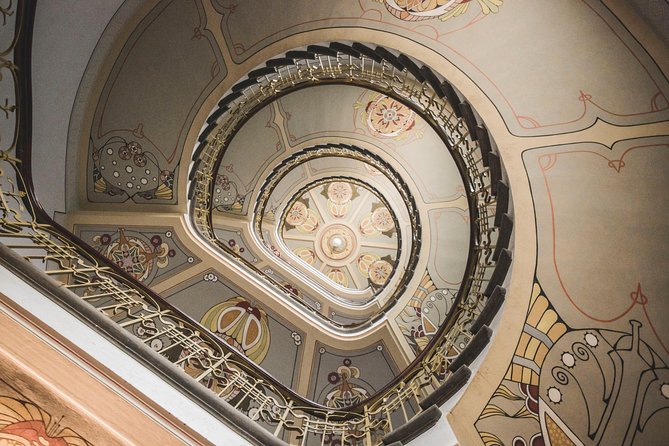
Riga’s Art Nouveau streets are famous for their elaborate façades, but this visit aims to show more than the grandest examples. You will see highly decorated buildings, simpler artistic designs, and local combinations that bring Latvian folk details into an international style. That last point is important. Riga was not merely copying what was fashionable elsewhere. Its buildings also reflect local taste and identity at the turn of the 19th and 20th centuries.
I like this as the opening stop because it gives you a clear starting point for understanding modern Riga. The city’s growth, wealth, and confidence are visible in stone, plaster, ornament, and street planning. A guide can also help you notice details that are easy to miss when you walk alone, especially on façades that look less dramatic at first glance.
One hour is enough for an introduction, though it will not cover every important Art Nouveau building. If this is the main reason you came to Riga, you may want to return later for a longer walk or museum visit.
Mežaparks brings villas and forest together
The next hour is spent in Mežaparks, whose name means Forest Park. The district grew from an early 20th-century idea: combine the advantages of city living with access to nature.
Mežaparks became a home for wealthy Riga residents, who built Art Nouveau and Eclectic villas among trees and open space. It later gained a Song Festival Bandstand and a zoo. Today it remains one of Riga’s wealthier areas, but it is also a popular summer place for local people because of the lakeside setting and outdoor activities.
This stop gives the tour a welcome change of pace. After the formal streets of central Riga, you see how the city’s upper classes sought space, air, and greenery without leaving town. The area also helps explain why Riga is more than its dense historic core.
The drawback is simple: the tour description gives you an hour, but not a detailed walking route or list of villas. If you want a close architectural study, ask your guide how much time will be spent outside the vehicle and which buildings you will see. Still, for a broad city tour, Mežaparks is a smart inclusion.
Riga Central Market is the day’s most useful stop
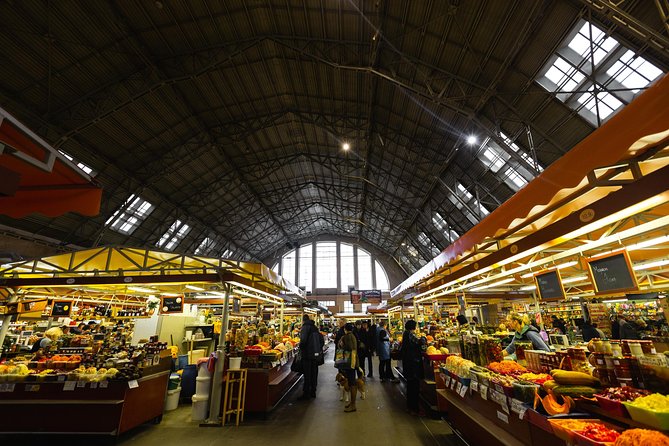
The Central Market receives about an hour, and this is one of the tour’s strongest sections. It is presented as a working grocery market, not a row of souvenir stalls dressed up for sightseeing.
That distinction matters. You can see what people in Riga actually buy, from everyday foods to seasonal products, and get a practical introduction to Latvian cooking. Food samples are included, and lunch is provided later in the day. The exact samples depend on the season, so you should expect the food experience to change across the year.
The guide also explains how the market was built and how it has continued operating despite the growth of supermarkets. The market’s enormous former aircraft hangars are part of its character, but the value is not just visual. You are seeing a place that still serves a basic city function.
I would treat this as a good chance to ask questions about ingredients and local eating habits. If you find something you like, you can also buy products to take home, provided your luggage, destination rules, and the nature of the food allow it. Since the visit is only about an hour, you may need to choose between browsing, tasting, shopping, and listening closely to the history.
A different sort of day out of Riga altogether:
- From Riga: Hill of Crosses and Jelgava Gems Tour
★ 4.8 · 1,040 reviews - From Riga: Hill of Crosses & Jelgava Guided Tour
★ 4.9 · 685 reviews - Riga Package: Canal Boat Tour + Drink & Old Town Audio Guide
★ 4.3 · 659 reviews - Riga: Canal Boat Tour with Welcome Drink & Audio Guide
★ 4.5 · 565 reviews
The Academy of Sciences shows Riga from 65 meters up
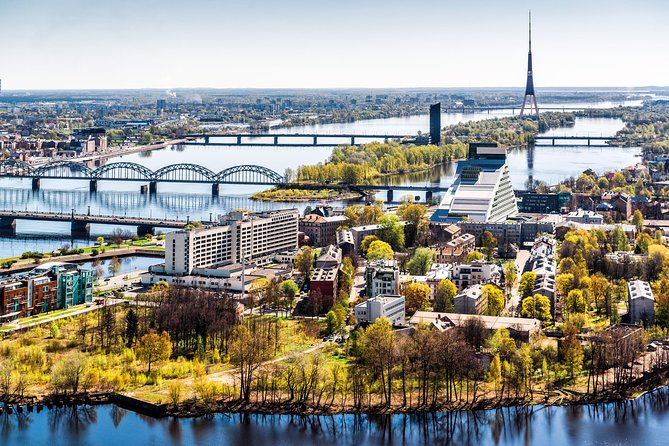
The Panorama Riga stop takes about 30 minutes and includes admission to the observation deck of the Latvian Academy of Sciences. The deck is 65 meters high and offers a view that differs from the usual Old Town viewpoints.
From here, you can see the medieval center and the Daugava, but also the Central Market and less developed parts of Riga. That wider view is the point. Instead of seeing only church towers and attractive rooftops, you get a sense of how the city spreads, where the market sits, and how different districts relate to one another.
The observation deck is in the Moscow Suburb, south of the Old Town. The district takes its name from the historic road linking Riga with Moscow. Nearby, you can see remnants of older wood-only architecture alongside postwar Soviet monumental buildings sometimes described as Stalin’s Baroque.
Thirty minutes is a sensible amount of time for the viewpoint. It keeps the day moving while giving you a useful map in your head. If you dislike heights, this may be the least comfortable stop, but the tour provides a varied set of viewpoints rather than relying only on this one.
Lucavsala puts small gardens in the middle of the city
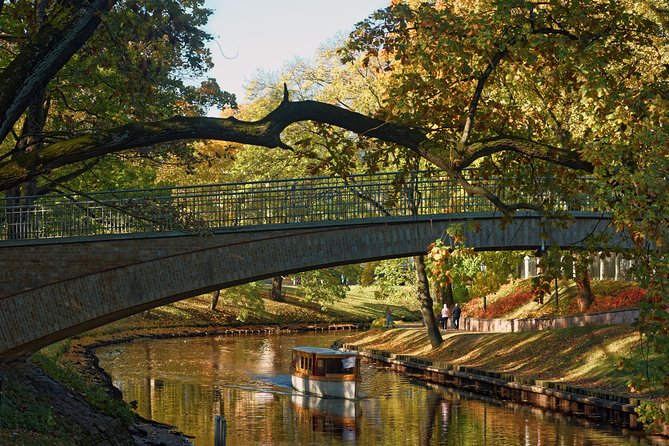
Lucavsala takes about half an hour and offers a very different picture of urban Riga. Part of this island is covered with small gardens, where people grow vegetables and herbs, relax, or gather for a barbecue.
This tradition reaches back centuries, and the modern version brings together older residents, younger people, casual gardeners, and those who grow enough to sell produce at the market. The gardens are a reminder that city life does not always mean giving up direct contact with soil and food.
I like this stop because it is ordinary in the best sense. It is not a grand monument. It shows how people use a piece of city land for leisure, food, and community. The visit is brief, so you should not expect a long garden walk or a formal presentation. Its value is in the contrast with the city center and in the glimpse of a local habit that many visitors would not find alone.
Ziepniekkalns explains Soviet Riga
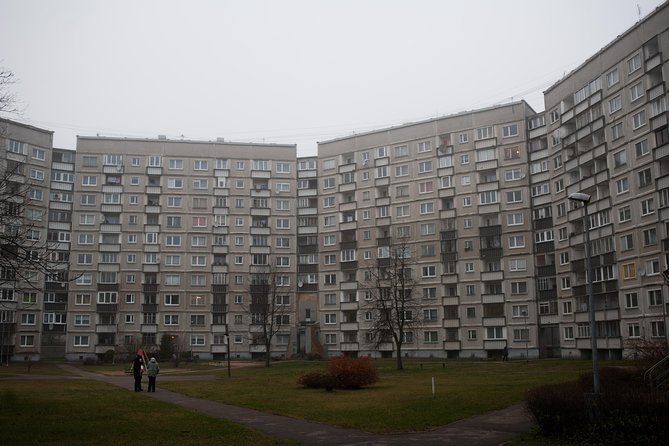
Ziepniekkalns is the most challenging stop, and also one of the most important. You spend about an hour and a half here, including lunch in an authentic Soviet setting.
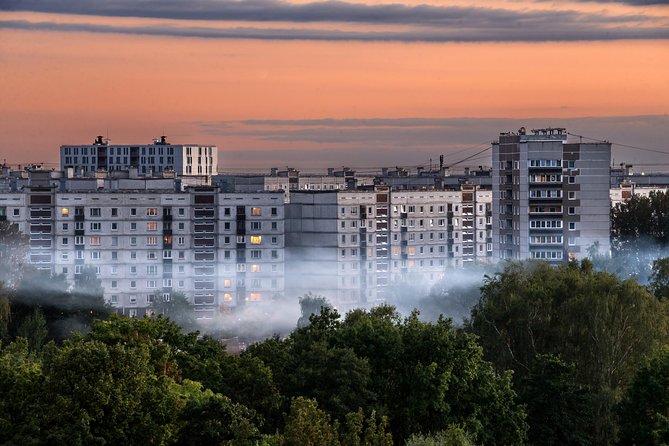
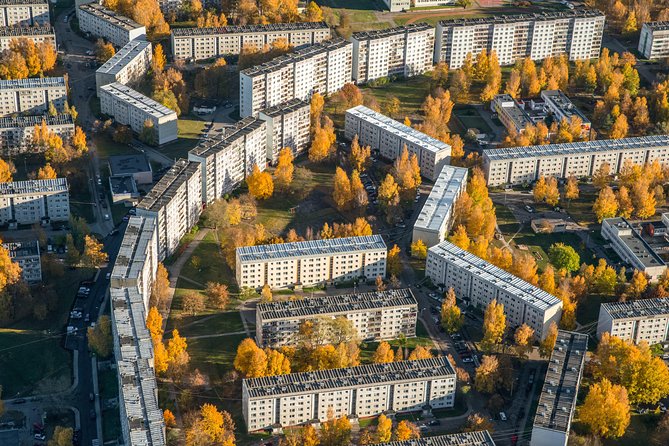
The district is known for rows of concrete panel apartment blocks, built according to Soviet urban planning principles. The longest building in Riga is found here: almost half a kilometer long, with close to 400 identical apartments in one gray structure.
This is not a pretty stop, but it is valuable. The buildings open a discussion about the Soviet occupation of Riga, industry, housing, living conditions, and everyday life. If you have never seen a former Soviet residential district, this gives you a direct visual reference. If you have visited similar areas elsewhere, you can compare how Riga handled large-scale housing and city expansion.
Lunch adds a useful human element. The meal is described as authentic Soviet food served in an authentic Soviet setting, so you should expect something tied to the period rather than a polished modern restaurant experience. Specific dishes are not provided, and food preferences or dietary needs are not explained, so ask about these before booking if they are important to you.
Some people will find this part fascinating. Others may feel that an hour and a half is too long among repetitive apartment blocks. The private format helps because you can discuss what you are seeing instead of simply taking photographs from a bus window.
Āgenskalns finishes with wooden houses and cafés

The final neighborhood is Āgenskalns, one of Riga’s oldest suburbs and one of its more fashionable districts today. The tour allows about an hour here before returning you to the starting point or another location in Riga of your choice.
You will see the grand Latvian National Library, walk among wooden houses, and pass small cafés. After the Art Nouveau center, the forest villas, the market, the Soviet blocks, and the island gardens, Āgenskalns brings the day back to a human scale.
It is a fitting final stop because the district connects old and new Riga. Wooden homes point to earlier suburban life, while cafés and renewed interest in the area reflect the city’s present-day changes. The tour’s final message is not that one neighborhood is the real Riga. It is that Riga contains many different cities layered beside each other.
The end point is flexible within Riga, which is helpful if you want to continue your evening in Āgenskalns or return to your hotel. The stated meeting point is the Latvian National Museum of Art, and the start time is 9:00 a.m. Pickup is offered, but confirm the arrangement when booking rather than assuming it applies to every address.
Timing, transport, and the full-day rhythm
The advertised duration is roughly eight to ten hours. That range makes sense because the tour covers seven stops spread across Riga, with private vehicle transport between them. The schedule includes several one-hour visits, a 90-minute Ziepniekkalns section, and shorter stops at the observation deck and Lucavsala.
You should wear comfortable shoes, even though much of the day is by vehicle. Art Nouveau Riga, the market, and Āgenskalns all work best with some walking. The tour is near public transportation, but the private vehicle means you do not need to plan connections between districts.
The day begins at 9:00 a.m. and normally returns to the starting point. Since the end can be changed to another Riga location, you have some control over what happens afterward. A hotel pickup option is also offered, but the details should be confirmed before the day.
This experience is designed for most participants, and service animals are allowed. It is not presented as a specialist walking tour, yet you should still tell the provider about any mobility concerns, food restrictions, or other needs before departure.
Who will get the most from this tour
I would recommend this tour to you if you have already seen the Old Town or if you want a first visit that explains more than Riga’s prettiest streets. It suits people interested in architecture, food markets, city planning, Soviet history, and the way local residents use their neighborhoods.
It is also a good choice for couples, families, or a small group of friends who prefer a private day. The group limit of four makes conversation easier and gives the guide a realistic chance to adjust the route.
I would hesitate if you want a relaxed half-day or a tour focused only on monuments. The schedule is long, the districts are widely spread, and Ziepniekkalns is intentionally plain. You should also be comfortable with a mixed day that includes food tasting, urban history, viewpoints, residential blocks, and short walks.
The strongest praise centers on the guide, Harijs. A booking that included him described the day as informative, enjoyable, and easy to customize, with a strong overview of Riga’s different parts. Since the tour depends heavily on explanation, the guide makes a real difference here.
Should you book the Neighbourhoods of Riga tour?
Book it if you want to understand how Riga fits together beyond the medieval center. For $141.20 per person, the value is strongest when you have a small group of up to four, use the private transport, eat at the market and during lunch, and take advantage of the guide’s flexibility.
Do not book it expecting a gentle sightseeing loop filled with famous buildings. This is a full day with some rough edges, including Soviet housing and a fast-moving schedule. Those are also the reasons I find it worthwhile. You get Art Nouveau beauty, working-market food, local gardens, broad city views, and a frank look at Riga’s 20th-century housing and politics in one carefully connected day.
You can cancel for a full refund if you do so at least 24 hours before the 9:00 a.m. start. Changes or cancellations inside that period are not accepted for a refund.
FAQ
How long does the tour last?
The tour lasts approximately eight to ten hours, starting at 9:00 a.m.
How many people can join the private tour?
The private tour is limited to four travelers, and only your group participates.
Where does the tour start and end?
It starts at the Latvian National Museum of Art, Jaņa Rozentāla laukums 1, Riga. It normally ends back at the meeting point, but the guide can take you to another location in Riga.
Is lunch included?
Yes. Lunch is served during the Ziepniekkalns stop, and food samples are provided at the Central Market. The samples depend on the season.
Is hotel pickup available?
Pickup is offered. The listed meeting point is the Latvian National Museum of Art, so confirm the pickup details for your accommodation when booking.
What is the cancellation policy?
You can cancel for a full refund up to 24 hours before the experience start time. Cancellations or changes made less than 24 hours in advance are not accepted for a refund.
New on the site around Riga
- Vilnius Day Trip or Airport Transfer★ 5.0 · 2 reviews
- Wooden Riga on foot -Ķīpsala★ 5.0 · 2 reviews
- Ultimate Art Nouveau Experience in Riga – Private Tour★ 5.0 · 4 reviews
- The Best Of Riga Walking Tour★ 5.0 · 2 reviews
- Tour from Riga to Vilnius: Bauska Castle, Rundale Palace and The Hill of Crosses★ 5.0 · 3 reviews
- Private Transfer to anywhere in Riga Center★ 5.0 · 2 reviews
- Taste Riga – Private Tour of Latvian Flavour★ 5.0 · 5 reviews
- Sunrise at Kemeri National Park – Small Group★ 5.0 · 5 reviews
Riga Tours, compared.


Riga Package: Canal Boat Tour + Drink & Old Town Audio Guide
Read our review →
Canal Boat Tour with Welcome Drink & Audio Guide
Read our review →