
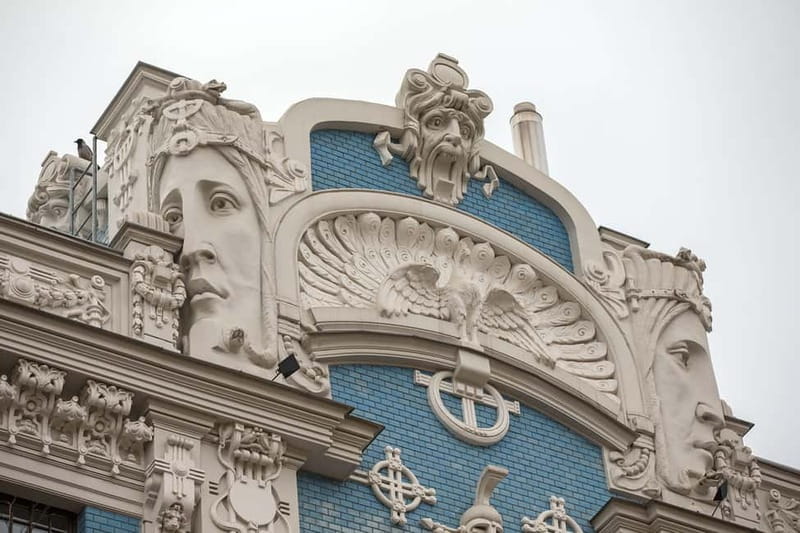
Reviewed · ART NOUVEAU TOURS
Riga’s Old Center and Art Nouveau Tour
Riga rewards a closer look. I like this tour for its smart pairing of medieval Old Town streets with the grand Art Nouveau buildings around Alberta Street. I also like that it is a private three-hour walk, so the experience can feel more personal than a large group outing. The main consideration is the $94 price per person, which is easier to justify for a private tour than for a quick orientation walk.
The route covers major sights including the House of the Blackheads, St. Peter’s Church, the Dome Cathedral, Riga Castle, Swedish Gate, and Powder Tower. I would wear good walking shoes and plan a café stop afterward, since coffee is not included. Guide Eva has earned especially warm praise for her friendly manner, local pride, and generous use of time.
In This Review
- Key points to know before booking
- Why this Riga walking tour makes sense
- Town Hall Square and the House of the Blackheads
- Narrow lanes through medieval Riga
- St. Peter’s Church, Swedish Gate, and Powder Tower
- From medieval walls to Art Nouveau Riga
- Alberta Street and the embassy district
- What the private format adds
- Is three hours enough?
- The value of the $94 price
- Who should book this experience?
- Should you book Riga’s Old Center and Art Nouveau Tour?
- FAQ
- How long is Riga’s Old Center and Art Nouveau Tour?
- What language is the tour conducted in?
- Is the tour private?
- Where does the tour begin?
- Is hotel pickup included?
- What should I bring?
Key points to know before booking
- Two sides of Riga in three hours: You move from medieval Hanseatic lanes to the ornate façades of the central Art Nouveau district.
- A private English-language tour: The private format can make it easier to ask questions and set the pace around your interests.
- Starts at Town Hall Square: This historic square gives you an immediate introduction to Riga’s civic and commercial past.
- Alberta Street is the Art Nouveau centerpiece: The street is one of the best places to see Riga’s dramatic early twentieth-century architecture.
- Hotel pickup is limited: Pickup is included only from hotels located in Riga Old Town.
- Strong guide feedback: Eva is singled out for being friendly, well-informed, kind, and proud of Latvia.
Why this Riga walking tour makes sense
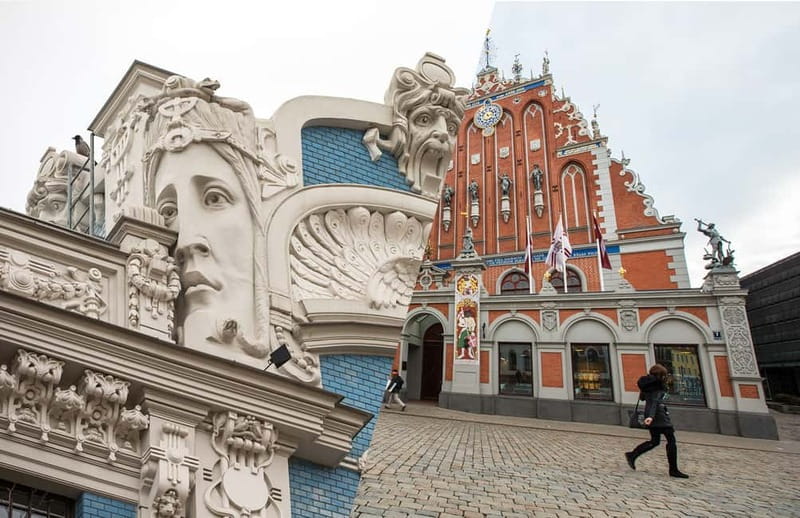
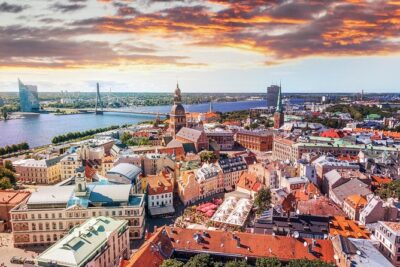
Riga can feel like two cities placed side by side. One is a medieval trading town of narrow lanes, churches, guild buildings, and defensive towers. The other is a grand nineteenth and early twentieth-century capital filled with elaborate façades, sculpted figures, sweeping lines, and decorative detail.
This three-hour tour links both areas in one outing. I like that approach because it gives you a useful frame for the city instead of treating Old Town and Art Nouveau Riga as unrelated sights. You begin with the historic center, then move toward the streets where Riga’s architectural ambition becomes almost theatrical.
The tour costs $94 per person. That is not a bargain-priced city walk, but the private format changes the value calculation. You are paying for an English-speaking guide, a focused route, and the chance to ask questions as you go. If you are traveling alone, the cost may feel high. For a couple or a small private group, it can be a practical way to get a strong introduction to Riga in one morning or afternoon.
The rating is 4.9 from 11 reviews, and the most consistent praise centers on the guides. Eva receives particular approval for her warmth, punctuality, generosity with her time, and pride in Latvia. The tour provider is Discover Latvia Tours.
More Art Nouveau walks in Riga:
- Riga: Old Town Walking Tour with Art Nouveau Highlights
★ 4.7 · 332 reviews - Riga: 2-Hour History of Art Nouveau Walking Tour
★ 4.8 · 118 reviews - Riga Art Nouveau walking tour
★ 4.0 · 27 reviews
Town Hall Square and the House of the Blackheads
The walk begins at Town Hall Square, the center of Riga’s civic life from the thirteenth through the nineteenth century. That long period matters. This was not simply an attractive open space, but a place tied to the city’s government, trade, and public identity.
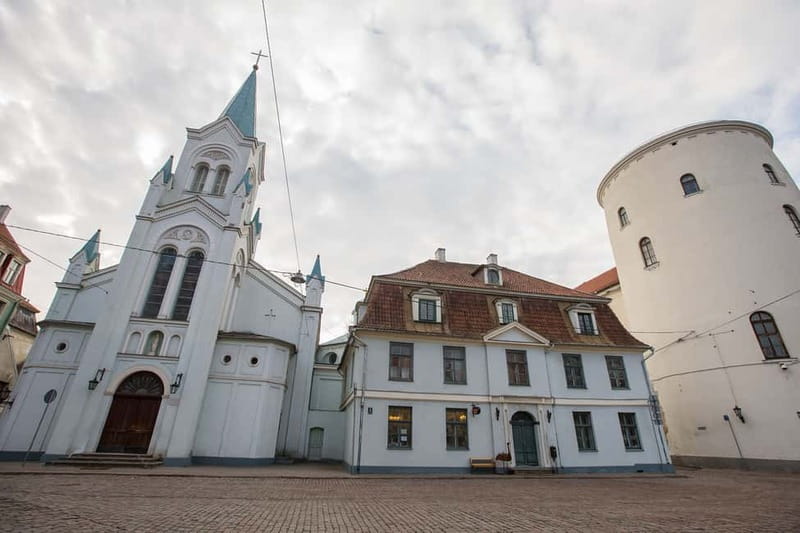
The square’s key visual treat is the House of the Blackheads. Its Gothic appearance makes it one of the most memorable buildings in central Riga, with a façade designed to catch your eye from across the square. Your guide can help you read the building as more than a pretty backdrop by explaining its place in Riga’s commercial and social life.
I think this is a strong starting point because it puts the city’s past in front of you right away. You do not begin with a general lecture or a distant viewpoint. You begin among the buildings and public spaces where Riga’s story took shape.
Town Hall Square can also be a busy place, so do not expect a quiet first stop. The benefit of a guide here is practical: you can focus on the most important details instead of trying to work out what matters from a sign or map.
Narrow lanes through medieval Riga
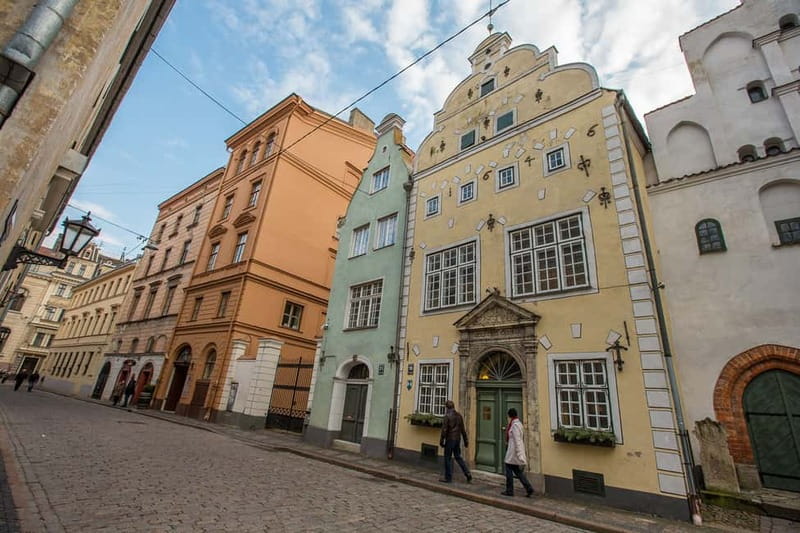
From the square, the tour follows the narrow streets of the medieval Hanseatic Old Town. The word Hanseatic points to Riga’s role in the northern European trading network known as the Hanseatic League. You will not see the full city from these lanes, but you will get a clear sense of its older street pattern and compact scale.
This section is best enjoyed at walking pace. Look above street level, where historic façades and rooflines often tell you more than the pavement does. The narrow lanes also help explain why Riga’s Old Town feels intimate even though it contains some very large and important buildings.
The Dome Cathedral is one of the major stops. Its size and presence give the Old Town a strong focal point, and it helps show the religious importance of Riga across the centuries. The tour also includes the Old Guild house, another useful reminder that trade and civic organizations helped shape the city.
Riga Castle adds a different note. It connects the Old Town to Latvia’s political past and gives the route another large-scale landmark after the tighter medieval streets. I appreciate the mix: churches, guild buildings, public squares, and a castle each reveal a different part of the city.
St. Peter’s Church, Swedish Gate, and Powder Tower
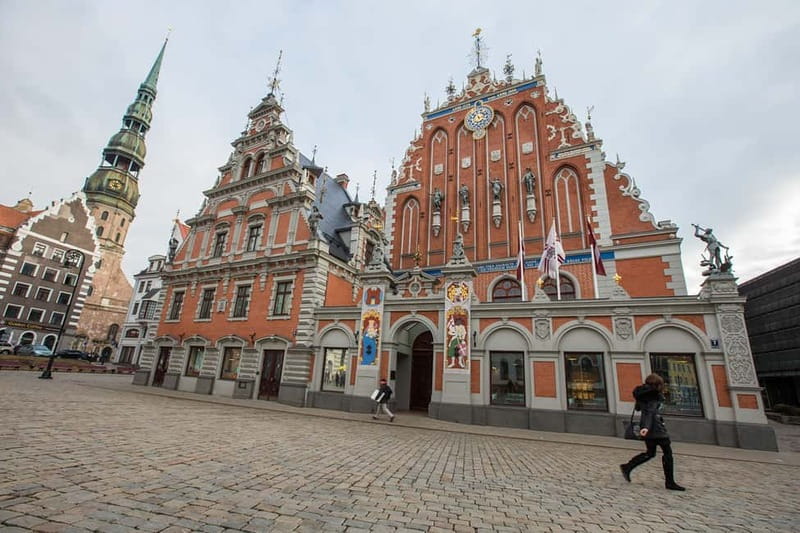
The route also takes in St. Peter’s Church, Swedish Gate, and Powder Tower. These are not filler stops. Together, they help you understand Riga’s religious, defensive, and urban development.
St. Peter’s Church is one of the city’s best-known historic landmarks. Its presence in the Old Town gives you another chance to compare monumental architecture with the smaller buildings along the side streets. Ask your guide how the church fits into the wider story of Riga and Latvia, rather than only taking a photograph and moving on.
Swedish Gate is a reminder that Riga once had defensive walls and controlled entrances. It is easy to walk past a gate without thinking about why it was built. A guide makes the place more useful by connecting it to the city’s changing political and military setting.
Powder Tower offers another glimpse of Riga’s defenses. The name itself points to its military purpose, and the structure helps turn the Old Town from a collection of attractive buildings into a city that once needed protection.
I would not expect every stop to receive the same amount of time. A three-hour route has to balance major landmarks with walking between them. If one building matters especially to you, mention it early and use the private format to ask for more explanation.
Other Riga days to weigh up
- Riga: Canal Boat Sightseeing Tour With Audio guide
★ 4.5 · 1,827 reviews - Riga: Entrance Ticket – House of the Black Heads
★ 4.6 · 1,096 reviews - Riga: Guided Old Town Walking Tour
★ 4.8 · 1,049 reviews - From Riga: Hill of Crosses and Jelgava Gems Tour
★ 4.8 · 1,040 reviews
From medieval walls to Art Nouveau Riga
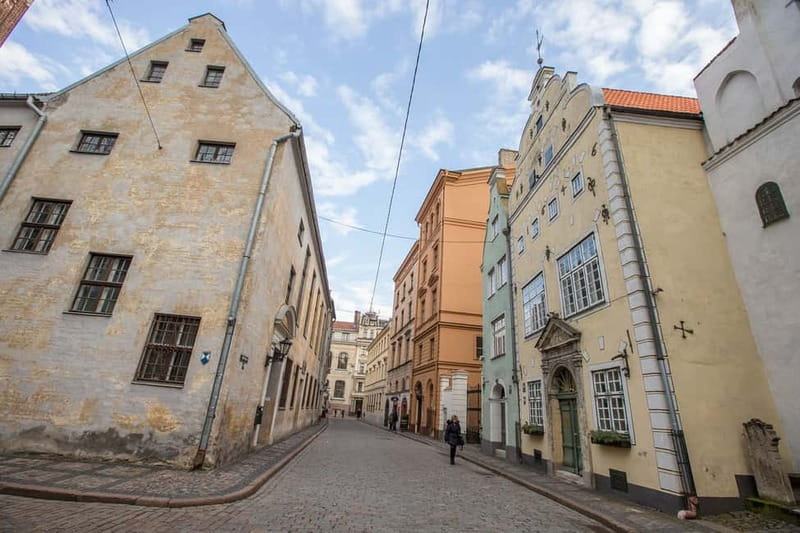
The tour’s second half shifts toward central Riga and its Art Nouveau architecture. This change is the reason I would choose this experience over a standard Old Town walk.
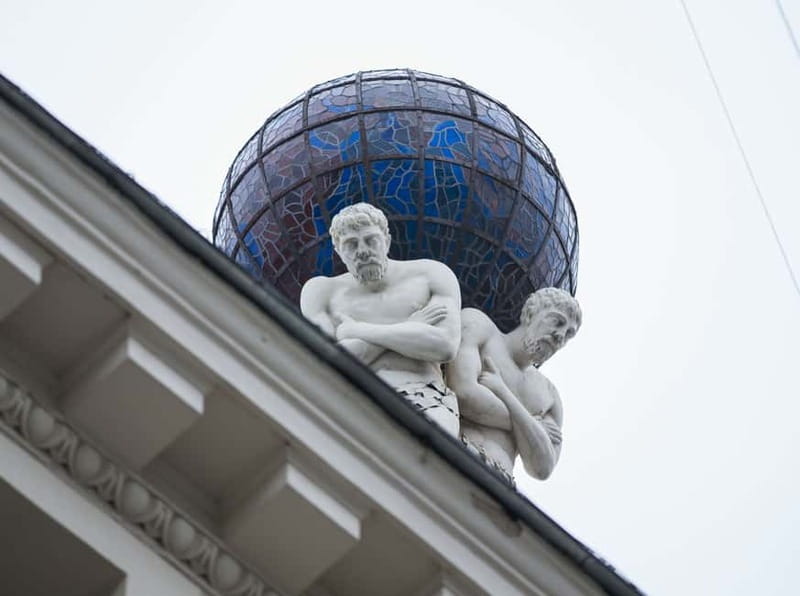
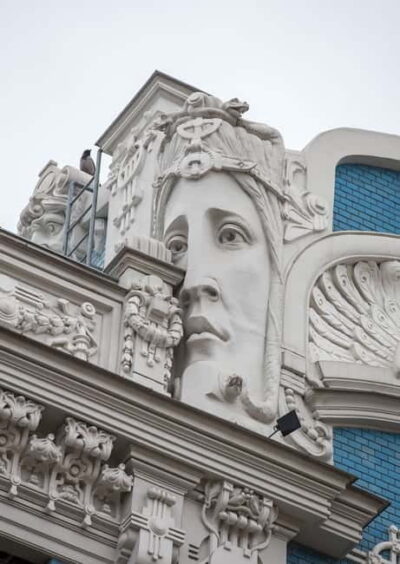
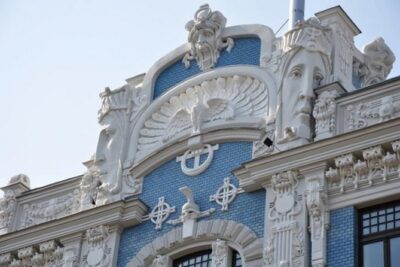
About 30 percent of the buildings in Riga’s center are Art Nouveau, a remarkably high share for a European city. The style appears in many forms, but Riga is especially known for bold façades, ornamental figures, strong vertical lines, and elaborate decoration around windows and entrances.
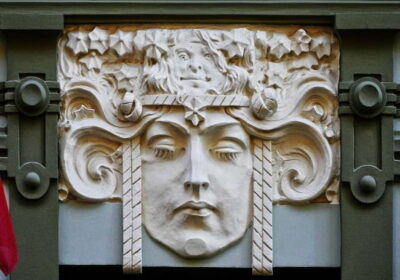
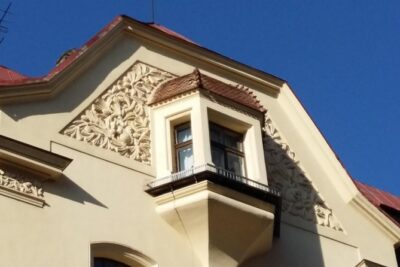
The architecture can be easy to admire without understanding. A guide helps you notice the choices behind the decoration. Look at the way façades use symmetry, sculptural detail, curves, and dramatic ornament. The buildings are not just decorated boxes. Their surfaces were designed to express status, modernity, and artistic ambition.
This part of the walk also changes your sense of scale. The Old Town feels compact and layered. The central Art Nouveau district feels more open and formally planned. That contrast gives you a better understanding of how Riga developed beyond its medieval core.
The historic center, wooden buildings, and Art Nouveau architecture are protected as part of a UNESCO World Heritage Site. That designation is useful context, but the buildings themselves are the real reason to pay attention. You can see why preservation matters when an entire district has such a strong visual character.
Alberta Street and the embassy district
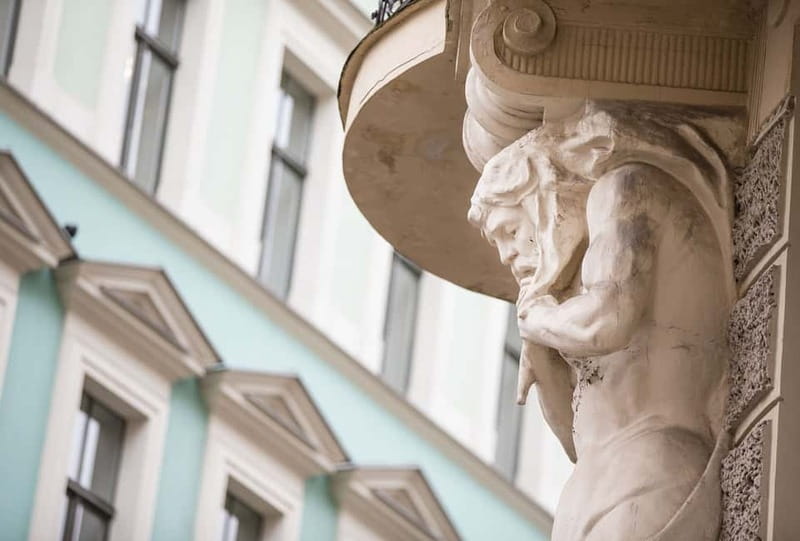
Alberta Street is the Art Nouveau highlight. It is one of the areas where the style appears most lavishly, and it gives you a concentrated look at the architecture that made Riga famous with art and architecture specialists.
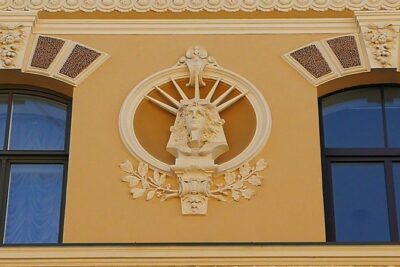
I would slow down here and look at individual façades rather than trying to photograph the whole street at once. Notice the faces, masks, columns, plants, geometric patterns, and other details that can disappear when you view the buildings as a single wall of decoration.
The nearby embassy district adds to the appeal. The area is known for its Art Nouveau buildings and formal urban setting, making it a natural extension of the Alberta Street visit. This is a good place to ask your guide which features are typical of Riga and which are especially unusual.
The drawback is that architectural interest depends partly on your curiosity. If you only want famous monuments with a clear historical event attached, this section may feel less direct than the Old Town. If you enjoy design, city planning, and the small details of façades, it may be the most rewarding part of the tour.
What the private format adds
A private group is the strongest practical feature here. You are not tied to the interests of a large crowd, and you can ask for clarification without worrying that you are holding up twenty other people.
The tour is conducted in English. That makes the experience useful for visitors who want more than a quick photo stop but do not speak Latvian. The guide’s role is especially important on an architecture tour, since the value comes from understanding what you are seeing.
The available information does not promise a specific guide for every booking. Still, Eva is a name worth noting because she receives repeated praise for her friendly, kind, committed approach and her pride in her native Latvia. If Eva is assigned to your tour, expect a guide who may add personal warmth to the historical material.
Hotel pickup is included from hotels in Riga Old Town only. If you stay elsewhere, you should not assume pickup is available. The supplied details do not name a transport service, so the practical focus is the walking route itself.
Is three hours enough?
Three hours is a good length for a first look at Riga, but it is not enough for a detailed visit inside every landmark. The route covers a lot: Town Hall Square, the House of the Blackheads, St. Peter’s Church, the Dome Cathedral, the Old Guild house, Riga Castle, Swedish Gate, Powder Tower, Alberta Street, and the nearby Art Nouveau district.
That list tells you what kind of tour this is. It is a guided overview with architectural and historical explanation, not a museum-heavy day. You will gain a map of the city and a sense of how its districts fit together.
I like the duration for an arrival day. You can use the tour to get oriented, then return later to the places that caught your attention. It also fits neatly into a day when you have other plans.
Wear comfortable shoes. The route uses city streets and narrow Old Town lanes, and the tour is long enough that poor footwear will become a distraction. A coffee stop is not included, so I would save time afterward for a café if you want a break.
The value of the $94 price
At $94 per person, this is a premium walking tour. The price makes the most sense when you value private guiding and focused attention.
For a small group, the cost can compare well with booking several separate activities. You get three hours with an English-speaking guide and a route that joins two major parts of Riga. You also avoid spending your first hours in the city trying to decide which streets and buildings deserve your time.
For a solo visitor, the calculation is harder. A standard group walk could offer a lower per-person cost, but this experience gives you privacy and flexibility. I would choose it if you care about architecture, want to ask plenty of questions, or have limited time in Riga.
Free cancellation up to 24 hours before the tour and the option to reserve now and pay later add useful flexibility. These policies do not make the tour cheaper, but they reduce the risk of fixing your plans too early.
Who should book this experience?
I would recommend it to first-time visitors who want both Riga’s medieval center and its Art Nouveau district in one guided walk. It is also a good fit for architecture fans, couples, private groups, and anyone who prefers conversation over a large scheduled group.
It suits people who want historical context but do not need a long museum visit. The route gives you recognizable sights, street-level details, and a clear explanation of Riga’s development.
You may want something else if you dislike walking, want extensive interior visits, or are mainly looking for a food stop. The tour does not include food or coffee, and the supplied details do not promise entry into each landmark. Its strength is the city street experience.
Should you book Riga’s Old Center and Art Nouveau Tour?
Book it if you want an efficient introduction to Riga that combines the medieval Old Town with the city’s famous Art Nouveau streets. The route is well chosen, the private format adds real value, and the strongest praise goes to the guides, especially Eva.
I would skip it if $94 feels too high for a three-hour walk or if you prefer exploring at your own speed with a guidebook. For everyone else, this is a focused way to understand why Riga’s historic center feels so varied: medieval trade, civic power, religious buildings, defensive walls, and daring Art Nouveau design all sit within one walk.
FAQ
How long is Riga’s Old Center and Art Nouveau Tour?
The tour lasts three hours.
What language is the tour conducted in?
The live tour guide speaks English.
Is the tour private?
Yes. The experience is offered for a private group.
Where does the tour begin?
The walking tour starts at Town Hall Square.
Is hotel pickup included?
Yes, pickup is included from hotels located in Riga Old Town only.
What should I bring?
Bring comfortable shoes for the three-hour walking route.
New on the site around Riga
- Wooden Riga on foot -Ķīpsala★ 5.0 · 2 reviews
- Vilnius Day Trip or Airport Transfer★ 5.0 · 2 reviews
- Ultimate Art Nouveau Experience in Riga – Private Tour★ 5.0 · 4 reviews
- The Best Of Riga Walking Tour★ 5.0 · 2 reviews
- Tour from Riga to Vilnius: Bauska Castle, Rundale Palace and The Hill of Crosses★ 5.0 · 3 reviews
- Private Transfer to anywhere in Riga Center★ 5.0 · 2 reviews
- Taste Riga – Private Tour of Latvian Flavour★ 5.0 · 5 reviews
- Neigbourhoods of Riga: Honest tour through most beautiful and most unusual areas★ 5.0 · 2 reviews
Art Nouveau Tours, compared.
Old Town Walking Tour with Art Nouveau Highlights
Read our review →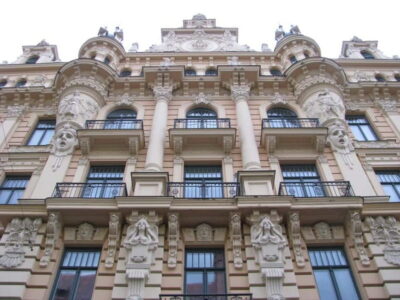
Walking Tour of Riga’s Beautiful Art Nouveau Architecture
Read our review →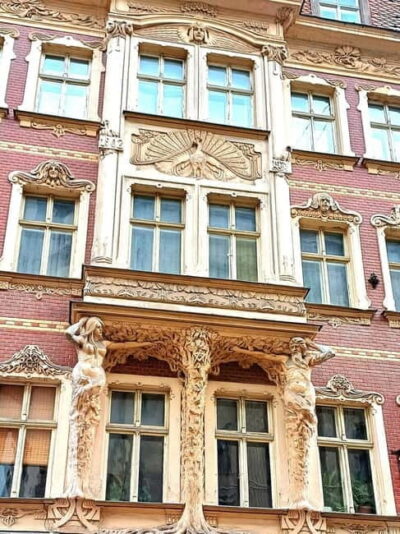
Ultimate Art Nouveau Experience in Riga – Private Tour
Read our review →Browse the lists this tour appears in