
Reviewed · SOVIET HISTORY TOURS
Private Soviet Riga tour
History gets personal here. This private Riga walking tour connects Soviet-era monuments, deportations, the KGB, and Latvia’s independence movement in a clear two-hour route through central Riga. I especially like the small private format, which lets you ask questions as the story unfolds, and the guide’s use of family experience to make difficult subjects feel real rather than distant.
I also like that the tour shows Riga beyond its pretty medieval streets. You will see the Freedom Monument, the former Hotel Latvia, Soviet apartment architecture, and the KGB building while learning how ordinary life changed from Stalin’s rule through Gorbachev and independence. The main drawback is pace: ten stops in about two hours means the walk is brisk, with some locations receiving only ten minutes.
In This Review
- Key points to know before booking
- Why Soviet Riga adds another layer to your visit
- Starting at Latviešu strēlnieku laukums
- Deportations at the Museum of the Occupation area
- The 1991 barricades at Barikazu Laukums
- Following the Baltic Way
- The Freedom Monument and Latvia’s identity
- Religion and the Nativity of Christ Cathedral
- Hotel Latvia and the KGB’s watchful city
- Brivibas Iela, from Lenin Street to Freedom Street
- The KGB Building and the machinery of fear
- Finishing at the Daile Theatre
- Is $180.62 good value for a private Riga walk?
- Pace, comfort, and who should book
- Should you book the Private Soviet Riga tour?
- FAQ
- How long does the Private Soviet Riga tour last?
- Where does the tour start?
- Where does the tour finish?
- How much does the private tour cost?
- Is the tour offered in English?
- Are admission tickets included?
- Is hotel pickup included?
- Is this a private activity?
- Can I cancel for a full refund?
Key points to know before booking
- The route covers ten major sites, beginning at Latviešu strēlnieku laukums and ending at the Daile Theatre.
- The private price is $180.62 per group of up to 15, which can be good value for a family or larger party.
- Guide Edvards is a major part of the experience, bringing strong subject knowledge and personal family connections to the story.
- All stops are viewed without admission charges, so the cost goes toward the guide and private format rather than entry tickets.
- The tour moves through Riga on foot, finishing about 15 minutes from the Old Town.
- The subject matter is serious, including deportations, surveillance, interrogation, religious restrictions, and the struggle for independence.
Why Soviet Riga adds another layer to your visit
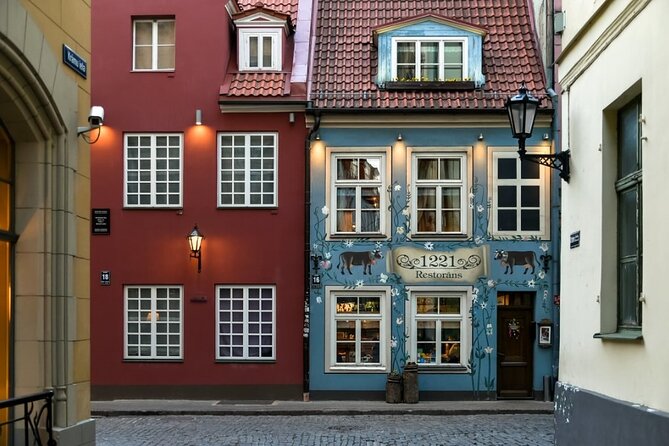
Riga is easy to admire at street level. You can stroll through the Old Town, admire Art Nouveau façades, and stop for coffee. But those pleasures explain little about the country’s modern identity. Latvia’s Soviet period shaped family life, language, religion, housing, travel, work, and public memory.
This tour gives you a useful timeline. It begins with the Soviet system and its cultural symbols, moves through repression and resistance, then finishes with the collapse of Soviet rule. That structure matters because the stops are not random photo points. Each one adds a piece to the same question: how did Latvia remain itself under a government that tried to control so much of daily life?
I like the fact that the tour handles both official monuments and personal experience. The Latvian red riflemen monument, for example, opens a discussion about how Soviet authorities used earlier historical figures for their own purposes. The KGB building then brings the subject down to the level of fear, questioning, recruitment, and surveillance.
Because this is a private activity, you can ask about subjects that matter to you. If your family has a connection to the Soviet Union, the Baltic states, migration, religion, or the Second World War, that flexibility is useful. Several tour comments praise Edvards for answering questions during the walks between stops, not just delivering a fixed speech at each site.
More Soviet-era history tours in Riga:
- Riga: Behind the Iron Curtain 3.5-Hour Communism Tour
★ 4.9 · 36 reviews - Riga: Stories of Soviet Riga Guided Walking Tour
★ 4.9 · 33 reviews - Private Day Tour to Sigulda, Turaida Castle and Soviet Bunker
★ 4.5 · 8 reviews
Starting at Latviešu strēlnieku laukums
The tour begins at Latviešu strēlnieku laukums, or Latvian Riflemen Square. This is a sensible opening point because the guide first explains the broad Soviet timeline, from Stalin to Khrushchev, Brezhnev, and Gorbachev.
The square’s monument to the Latvian red riflemen introduces a complicated subject. Latvian riflemen played a role in the Russian revolutionary period, and their later use in Soviet cultural memory helped support the story the Soviet state wanted to tell about Latvia. You will not get a simple good-versus-bad explanation here. Instead, the monument helps show how public symbols can be given new meanings by changing governments.
The opening discussion lasts about 15 minutes. That is enough time to set the dates and themes without turning the first stop into a classroom lecture. If you are new to Baltic history, pay attention here. The later stops make more sense once you understand the basic political shifts.
Deportations at the Museum of the Occupation area
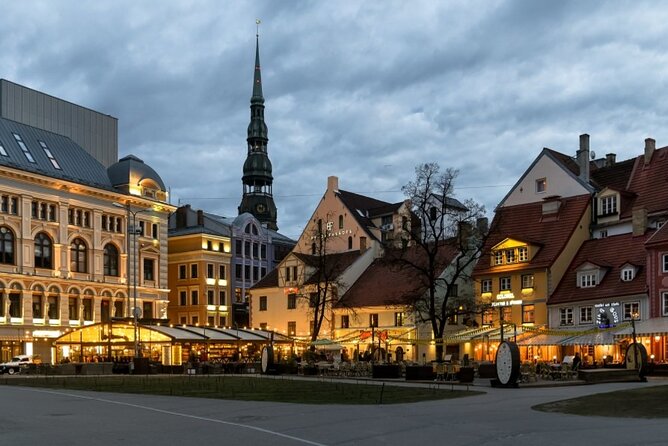
The next stop is near the Museum of the Occupation of Latvia. The tour discusses deportations to Siberia, including why they took place, their scale, and their effect on Latvian families.
This is one of the heavier sections of the walk. The subject is not treated as an abstract statistic. The important point is how deportation affected the social fabric of the country, removing people from their homes and leaving fear behind for those who stayed. The guide also places the deportations within the wider Soviet system rather than treating them as an isolated event.
The stop is scheduled for about ten minutes. That may feel short for such a large topic, but the limited time keeps the tour moving. If you want to visit the museum itself, remember that this walking tour does not include admission or an internal museum visit. The stop is an outdoor history discussion, and all listed stops have free admission.
The 1991 barricades at Barikazu Laukums
At 1991 Barikazu Laukums, the story moves from repression to open resistance. This stop explains the barricades, the final major stage of Latvia’s fight for independence.
The barricades were not simply a political event happening in parliament buildings. They involved ordinary people protecting key sites during a tense period when Latvia was trying to break away from the Soviet Union. Hearing about the practical side of the barricades helps you understand the mood of the time: people had to decide how much risk they were willing to accept for an independent state.
I find this stop especially useful because it links political change to physical space. You are standing in the city where events unfolded, not reading about them from a distance. The tour allows roughly ten minutes here, so ask questions as you walk if you want more detail.
Other Riga days to weigh up
- Riga: Canal Boat Sightseeing Tour With Audio guide
★ 4.5 · 1,827 reviews - Riga: Entrance Ticket – House of the Black Heads
★ 4.6 · 1,096 reviews - Riga: Guided Old Town Walking Tour
★ 4.8 · 1,049 reviews - From Riga: Hill of Crosses and Jelgava Gems Tour
★ 4.8 · 1,040 reviews
Following the Baltic Way
The Baltic Way Footprint Monument marks one of the most memorable acts of nonviolent protest in modern European history. The tour explains how people across Latvia, Estonia, and Lithuania formed a human chain in 1989.
The guide covers the logistics, the mood, and the political effect. That practical angle is valuable. Organizing a demonstration across three countries required planning, communication, and a shared sense of purpose. The event also showed the Soviet government and the outside world that opposition to Soviet rule was broad and public.
This is a good point in the tour to understand why symbolism mattered so much. A human chain could not defeat an army by force, but it made unity visible. The monument gives the story a physical marker in Riga, while the guide supplies the wider Baltic context.
The Freedom Monument and Latvia’s identity
Riga’s Freedom Monument is the city’s best-known symbol, and the tour spends about ten minutes explaining its meaning and how it survived the Soviet period.
The monument carries an obvious message of national independence, which made its survival under Soviet rule important. Its continued presence did not mean that the Soviet government accepted the ideas it represented. Instead, it became a place where Latvian identity remained visible in the middle of an officially Soviet city.
I like this stop because it brings earlier subjects together. The riflemen monument reflects Soviet cultural messaging. The Freedom Monument represents a different Latvian memory and a different political hope. The contrast helps you read Riga’s public spaces with more care.
The monument is also a natural landmark for first-time visitors, so this tour gives you historical context that you might otherwise miss while taking photos. The drawback is that the short stop cannot cover every layer of the monument’s story. Still, it provides a strong explanation in a small amount of time.
Religion and the Nativity of Christ Cathedral
The Nativity of Christ Cathedral introduces the role of religion under Soviet rule. The guide discusses how religious institutions were treated during the Soviet period, using the Orthodox cathedral as a place to consider the relationship between faith and state power.
This stop is useful because Soviet history is often reduced to political parties, borders, and police agencies. Religion adds another part of daily life. The state’s attitude toward religious practice affected communities, buildings, clergy, and private belief.
You should not expect a long interior visit. The schedule allows about ten minutes for discussion, and the tour does not list admission to the cathedral as part of the experience. The value is in the explanation of the building’s role and the broader treatment of religion, not in a guided church tour.
Hotel Latvia and the KGB’s watchful city
The former Hotel Latvia, now the Radisson Blu Latvija Conference & Spa Hotel, is one of the more unusual stops. During the Soviet period, it was the only hotel in Riga where Western tourists were allowed to stay. Its rooms were famously bugged by the KGB.
That detail gives you a quick sense of the divided world of Soviet Riga. A hotel that welcomed Western visitors also allowed the authorities to monitor them. The building was part hospitality venue, part controlled space, and part window into the outside world.
The guide discusses the hotel’s role and the surveillance connected with it. You will probably find this stop memorable because it turns an ordinary modern hotel into evidence of how tightly movement and information were controlled.
The scheduled time is ten minutes. The tour does not include a hotel room visit or a special interior tour, so think of this as an exterior and historical stop. It is still a strong example of how the Soviet system operated through institutions that looked ordinary on the surface.
Brivibas Iela, from Lenin Street to Freedom Street
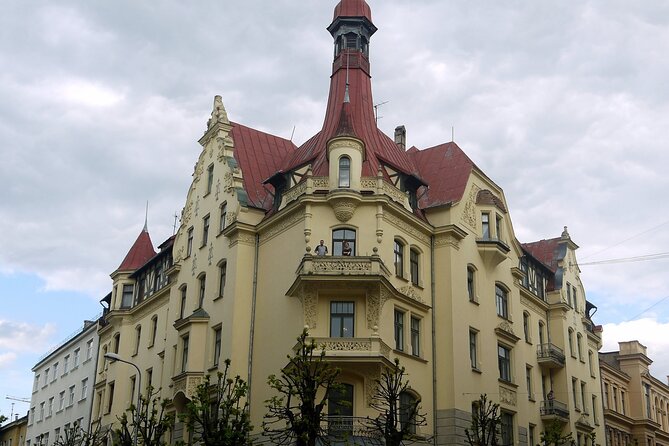
Brivibas Iela, or Freedom Street, was formerly Lenin Street. The name change alone tells you something about the political shift after independence, but the street also offers examples of Soviet residential architecture and the former Rigas Modes fashion house.
This is one of the best walking sections because it connects ideology with normal city life. Soviet architecture was not limited to government buildings. Apartment blocks, shops, clothing, and street names all reflected the system in which people lived.
Rigas Modes adds a social and consumer angle. Fashion could be a small form of self-expression, especially in a system where Western goods and styles were not always easy to obtain. The guide uses the street to discuss what Soviet Latvia looked and felt like beyond official monuments.
The walk between sites also gives the tour room to breathe. Past participants especially appreciated being able to ask Edvards more questions while moving through the city. This is where the private format pays off most clearly. You can stop the flow with a question instead of waiting for a group of strangers to catch up.
The KGB Building and the machinery of fear
The KGB building is the tour’s most sobering stop. It served as the headquarters of the Soviet secret police in Latvia, and the guide discusses recruitment, interrogation methods, and the organization’s role in the country.
The building’s reputation does much of the emotional work, but the guide’s explanation should help you understand how fear operated. Secret police power was not only about dramatic arrests. Recruitment, informants, questioning, and the threat of surveillance could influence behavior even when no one was visibly being detained.
The description of the building as Riga’s highest point, with the dark joke that you could see all the way to Siberia, reflects the grim humor often attached to places of oppression. Take that line as a way of expressing the building’s reach, not as a literal view across the continent.
This is another ten-minute stop, which is enough for an introduction but not a full examination of every event connected with the building. If you want a longer KGB experience, you may need a separate visit or museum program. For this tour, the building works as the clearest symbol of Soviet state control.
Finishing at the Daile Theatre
The final stop is the Daile Theatre on Brivibas iela. Its Soviet-era architecture provides a fitting setting for the discussion of the Soviet Union’s collapse.
Ending here gives the route a clear arc. You begin with the political symbols of the Soviet period, pass through repression and resistance, and finish with the system breaking apart. The theatre itself adds a cultural dimension, showing that Soviet architecture was not just housing and official offices. Public arts buildings also expressed the style and values of the period.
The tour ends at the theatre after about two hours. From there, it is approximately a 15-minute walk to Riga’s Old Town. That makes the finish practical: you can continue sightseeing, find lunch, or return toward the center without arranging transport.
Is $180.62 good value for a private Riga walk?
The price is $180.62 per group, with up to 15 people included. That is not a cheap solo walking tour, but it can be fair value for a family, group of friends, or larger party that wants a guide focused only on them.
The price includes a professional local guide, the private tour, and local taxes. There are no separate admission charges at the listed stops. Since the experience is built around outdoor explanations and city walking, the main thing you are paying for is interpretation and conversation.
For two people, the cost is harder to justify than for ten. For a group of six or more, the per-person price drops quickly, and the chance to ask questions becomes more attractive. I would compare it with the cost of several individual audio guides or a standard group tour, but the private format is the key benefit here.
The tour is offered in English and uses a mobile ticket. Hotel pickup and drop-off are not included, so you need to reach Latviešu strēlnieku laukums yourself and make your own way back from the Daile Theatre.
Pace, comfort, and who should book
This is a walking tour with ten stops packed into approximately two hours. The route includes about 15 minutes at the first stop, ten minutes at most locations, and 15 minutes at the theatre. You should be ready to walk between central Riga sites without expecting long breaks.
I would choose comfortable shoes and allow extra time before the start so you can find the meeting point. Because the tour is outdoors and moves between locations, your experience will be better if you dress for the weather.
The subject matter suits adults and older children who can engage with serious twentieth-century history. Children must be accompanied by an adult. Most people can participate, service animals are allowed, and the meeting area is near public transportation.
I would book this tour if you want context, questions answered, and a personal guide rather than a quick list of dates. I would skip it if you mainly want interior visits, museum time, or a relaxed sightseeing walk with little political discussion.
The tour has a small review record, but the praise is consistent: Edvards is described as passionate, engaging, easy to follow, and able to tailor the walk to the group. The strongest feature is not simply the number of stops. It is the way the guide connects public places with family experience and everyday life.
Should you book the Private Soviet Riga tour?
Book it if you want to understand why modern Latvia cares so deeply about independence, memory, and national identity. The route is short but focused, and it covers the main subjects well: Soviet power, deportations, surveillance, religion, public protest, the Baltic Way, and the 1991 barricades.
I think it is best value for a group rather than a solo visitor. The private setting also makes it a strong choice if you enjoy asking questions or want the tour adjusted to your interests.
The main caution is time. Ten stops in two hours means the tour offers a guided introduction, not an exhaustive study. Still, for a clear, personal, and serious look at Riga’s Soviet past, it is a worthwhile addition to a city visit.
FAQ
How long does the Private Soviet Riga tour last?
The tour lasts approximately two hours.
Where does the tour start?
It starts at Latviešu strēlnieku laukums in central Riga.
Where does the tour finish?
The tour finishes at the Daile Theatre, at Brīvības iela 75. It is approximately a 15-minute walk from there to the Old Town.
How much does the private tour cost?
The price is $180.62 per group of up to 15 people.
Is the tour offered in English?
Yes. English is the listed tour language.
Are admission tickets included?
The listed stops have free admission, and the tour does not include paid entry tickets.
Is hotel pickup included?
No. Hotel pickup and drop-off are not included.
Is this a private activity?
Yes. Only your group participates in the tour.
Can I cancel for a full refund?
Yes, if you cancel at least 24 hours before the experience start time. Cancellations or changes made less than 24 hours before the start time are not refunded or accepted.
New on the site around Riga
- Vilnius Day Trip or Airport Transfer★ 5.0 · 2 reviews
- Wooden Riga on foot -Ķīpsala★ 5.0 · 2 reviews
- Ultimate Art Nouveau Experience in Riga – Private Tour★ 5.0 · 4 reviews
- The Best Of Riga Walking Tour★ 5.0 · 2 reviews
- Tour from Riga to Vilnius: Bauska Castle, Rundale Palace and The Hill of Crosses★ 5.0 · 3 reviews
- Private Transfer to anywhere in Riga Center★ 5.0 · 2 reviews
- Neigbourhoods of Riga: Honest tour through most beautiful and most unusual areas★ 5.0 · 2 reviews
- Taste Riga – Private Tour of Latvian Flavour★ 5.0 · 5 reviews
Soviet History Tours, compared.
Behind the Iron Curtain 3.5-Hour Communism Tour
Read our review →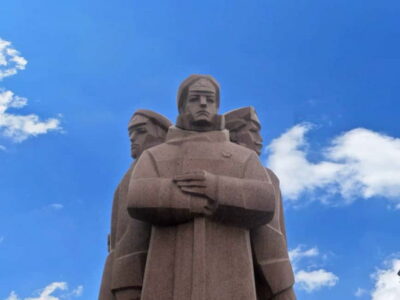
Private Day Tour to Sigulda, Turaida Castle and Soviet Bunker
Read our review →
Full-Day Private Trip to Nuclear Missile Base and Secret Soviet Bunker
Read our review →
Soviet Bunker, Seaside Fortress + Authentic BBQ lunch
Read our review →Browse the lists this tour appears in