
Reviewed · SOVIET HISTORY TOURS
Riga: Stories of Soviet Riga Guided Walking Tour
Riga keeps its Soviet story close. This two-hour walk links the Occupation Museum, memorials, monuments, and grand Soviet-era buildings with the personal memories of an English-speaking local guide. I like the focus on lived experience, and I like that the route deals with both sorrow and daily life rather than treating the period as a set of cold dates.
The price is $47 per person, which feels fair if you want context instead of a quick exterior-only look. The main consideration is the minimum of three participants, since a smaller party may need to confirm that the tour will run.
- Personal stories from Communist-era Riga: The guide shares memories and private experiences of life under the Soviet regime.
- A serious route with clear landmarks: See the Occupation Museum, Latvian Rifleman monument, Deportation memorial, Academy of Sciences, and Nativity of Christ Cathedral.
- A Blackheads House starting point: Meet at the Smile Line office beside the main entrance, with a blue SmileLine bike box to help you find it.
- A compact two-hour format: The tour gives you a focused introduction without taking up half your day.
- Small groups, from three to twenty: Larger groups receive an audio guide system to make the commentary easier to hear.
- Flexible booking terms: You can cancel up to 24 hours before the tour for a full refund, or reserve now and pay later.
In This Review
- Starting beside Riga’s House of the Blackheads
- Why the personal stories matter
- The Occupation Museum and Riga’s difficult memory
- The Monument of the Latvian Rifleman
- The Deportation memorial and the human cost
- Soviet architecture from monuments to grand institutions
- How the two-hour pace works
- Group size, sound, and the private-tour possibility
- Is $47 a fair price for this Riga walk?
- Who will get the most from this experience?
- Final verdict: book it for context, not just landmarks
- FAQ
- How long does the Stories of Soviet Riga tour last?
- How much does the tour cost?
- What language is the tour conducted in?
- Where does the tour meet?
- How many people are required for the tour to operate?
- Is an audio system provided?
- Is hotel pickup and drop-off included?
- Can I cancel the booking for a refund?
- What should I bring, and are umbrellas available?
Starting beside Riga’s House of the Blackheads
The tour begins in one of Riga’s easiest places to find: the House of the Blackheads in the old town. Head toward the main entrance, then look for the Smile Line office on the left. A blue SmileLine bike box is another useful marker.
That location creates an interesting contrast. The House of the Blackheads is tied to Riga’s older mercantile and civic life, while this walk turns toward the 20th century and the years when Soviet ideas shaped the city. You begin among ornate historic facades, then shift your attention to monuments and buildings connected with occupation, repression, ideology, and public memory.
The meeting point is central, but hotel pickup and drop-off are not included. Plan to reach the office on your own and arrive with enough time to locate the door. Since this is a walking tour, wear shoes that are comfortable for two hours on city streets.
Why the personal stories matter
A tour about Soviet Riga can easily become a parade of dates, leaders, and political slogans. This one aims for something more human. The guide explains how Riga once looked, spoke, and thought under Communist rule, then connects those broad changes to private memories.
That personal angle is the strongest reason to book. The English-speaking guide does not simply identify a monument and move on. You hear how the period affected ordinary life, which gives the buildings and memorials a more direct meaning.
The tone can be serious. Riga’s Soviet past includes happiness, fear, compromise, and sorrow, and the route does not pretend those feelings fit into one simple story. If you want only pretty streets and light sightseeing, this may feel heavy. If you want to understand why certain places matter, the emotional weight is part of the value.
Personal storytelling also depends on the individual guide. The experience is designed around private memories, and the strongest version will come when the guide connects those memories clearly to the places you are seeing. Feedback about the tour has praised exactly this feature, including a guide who shared her own experiences and created a moving exchange with the group.
More Soviet-era history tours in Riga:
- Riga: Behind the Iron Curtain 3.5-Hour Communism Tour
★ 4.9 · 36 reviews - Private Soviet Riga tour
★ 5.0 · 8 reviews - Private Day Tour to Sigulda, Turaida Castle and Soviet Bunker
★ 4.5 · 8 reviews
The Occupation Museum and Riga’s difficult memory
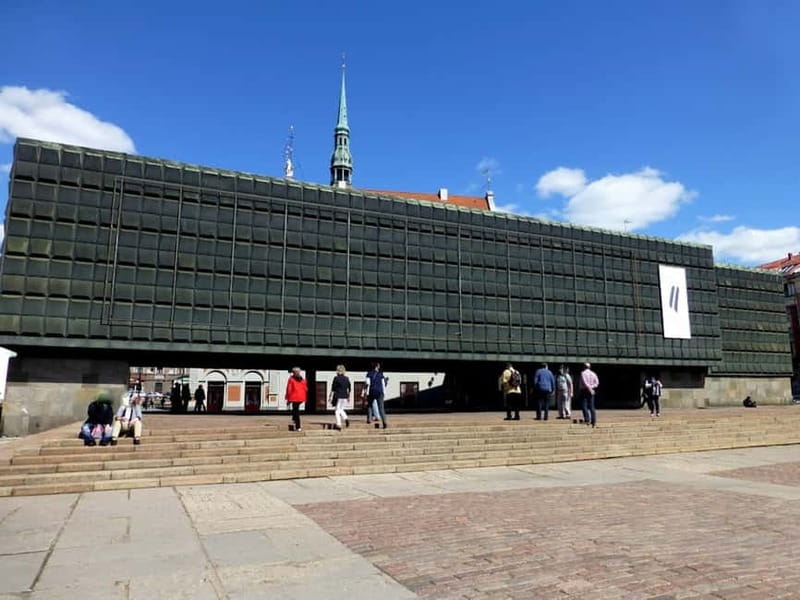
The Museum of the Occupation is one of the key stops and gives the tour its political framework. You should expect the guide to use it as a place for understanding how Riga’s people lived through occupation and Soviet rule, rather than as a simple photo stop.
The museum helps explain why the city’s public symbols can be difficult to read at first glance. A monument may look grand or official, yet carry very different meanings for people with different family memories. The guide’s job is to help you notice those layers.
The available information does not promise an extended indoor museum visit or admission to exhibitions. Treat the museum as part of the walking route and ask your guide how much time is planned there. If you want to tour the museum thoroughly on your own, allow separate time before or after this experience.
That limitation is worth noting. A two-hour guided walk can give you context, but it cannot replace a long museum visit. Its advantage is that it places the museum beside other Riga landmarks, so you can see how public memory works across the city rather than inside one building alone.
The Monument of the Latvian Rifleman
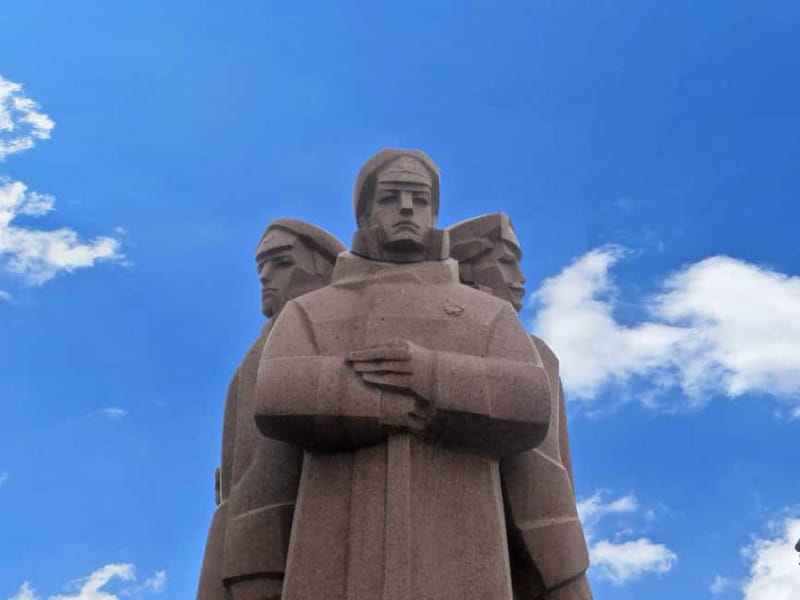
The Monument of the Latvian Rifleman is another major stop. Its presence gives the guide a chance to explain how soldiers, political movements, and public symbols were presented during the Soviet period.
You will get more from this monument if you pay attention to its setting as well as its shape. The tour presents it as one of the surviving symbols of Soviet-era Riga, so the surrounding streets and nearby buildings become part of the lesson.
This is a good example of why a guide helps. A monument can be admired as architecture while its history remains unclear. The commentary supplies the political and personal context needed to understand why it remains important.
Do not expect every stop to be cheerful or picturesque. This is a history-focused walk, and the purpose is not to turn difficult events into decoration. The reward is a clearer view of how Riga’s public spaces were shaped by the ideas of the time.
The Deportation memorial and the human cost
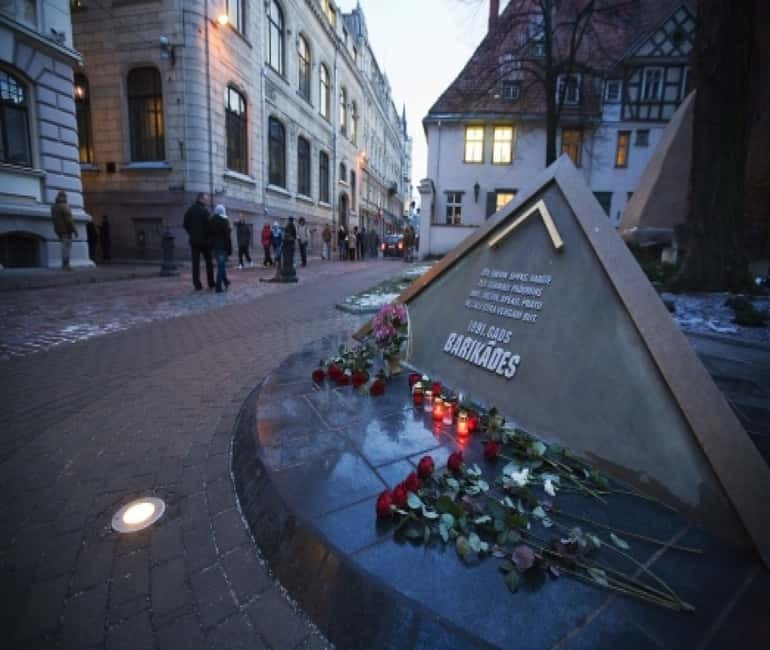
The Deportation memorial brings the tour’s subject down to its most painful level. Rather than focusing only on official buildings and public ideology, the memorial points toward people who suffered because of Soviet policies.
This stop matters because it gives the tour a human center. Architecture can show what a government wanted to project. A deportation memorial reminds you what those policies could mean for families.
Expect the guide to speak in a respectful and serious way here. The experience is not built around shock or spectacle. Its strength is the chance to pause, listen, and connect the city’s political past with individual lives.
If you are traveling with children, think about their age and interest in difficult historical subjects. The tour is not described as a children’s activity, and the themes include occupation, repression, and deportation. Older children and teenagers who are studying European history may find it especially useful.
More walking tours in Riga:
- Riga: Guided Old Town Walking Tour
★ 4.8 · 1,049 reviews - Riga: Old Town Walking Tour with Art Nouveau Highlights
★ 4.7 · 332 reviews - Riga Old Town walking tour
★ 4.5 · 304 reviews - Riga: Old Town Walking Tour in a Small Group or Private
★ 4.7 · 254 reviews
Soviet architecture from monuments to grand institutions
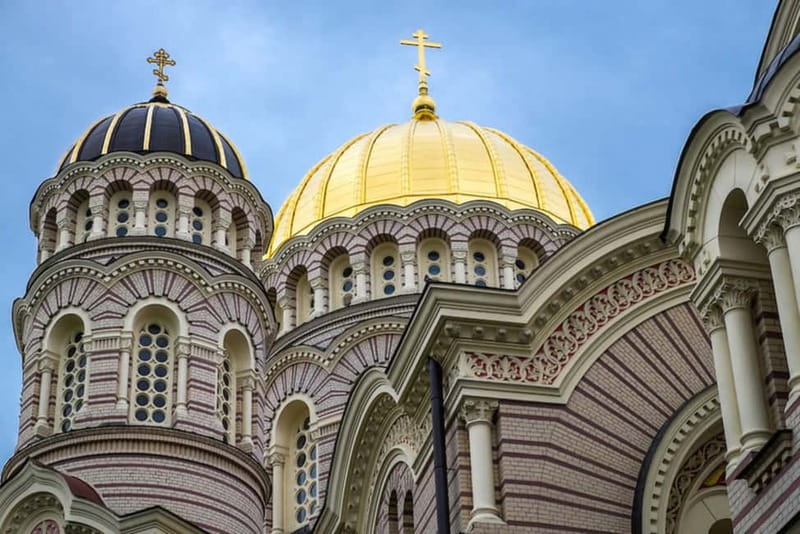
The route also takes in the Academy of Sciences and the restored Cathedral of the Nativity of Christ. These buildings show two different sides of Riga’s 20th-century story.
The Academy of Sciences represents the imposing, decorative style associated with Soviet power. Its scale and ornament are not quiet. They were meant to communicate authority, progress, and the importance of the state.
The Cathedral of the Nativity of Christ adds another layer. During the Soviet period, the building was used as a planetarium. Today it has been restored as a cathedral, so the site shows how Riga’s buildings can change function as political and religious life changes.
I like this architectural focus because it keeps the tour from becoming only a memorial walk. You are also looking at design, symbols, and the way public buildings express an era. The style is highly decorative and intellectual, with grand ideas built into stone, facades, and civic spaces.
Still, the architecture will mean more to you if you already enjoy city design or modern European history. Someone looking for a conventional old-town tour may find the Soviet buildings less immediately charming than Riga’s medieval streets and Art Nouveau facades.
How the two-hour pace works
Two hours is a useful length for this subject. You get enough time to move among several important places, yet the tour does not consume a full morning or afternoon.
The route appears designed for steady walking and outdoor explanation, with stops at monuments, memorials, and buildings. Since the exact route can change, you should allow for some variation in the order or length of individual stops.
The compact format also means you should not expect a long pause at every site. The guide must keep the group moving, and some locations will receive more explanation than others. If one particular landmark matters most to you, mention it during the tour so you can make the most of the available time.
Bad weather does not automatically cancel the walk. Umbrellas are offered if conditions turn wet, which is a useful touch in Riga. You should still dress for a two-hour outdoor activity, since an umbrella solves rain but not cold, wind, or uncomfortable shoes.
Group size, sound, and the private-tour possibility
The normal group size ranges from three to twenty people. Three is the minimum needed for the tour to operate, so a solo booking or a pair should confirm that enough participants are scheduled before relying on the tour.
A group of twenty is still fairly manageable for a city walk, but it will not feel as personal as a party of four or six. If the group reaches more than twelve people, an audio guide system is provided to improve audibility.
That system matters. Streets can be noisy, and a larger group can spread out around a monument. It is a practical measure that helps you hear the guide instead of guessing at the back.
There is also a chance the tour may operate as a private experience when only a small number of people book. That can be a pleasant surprise, but it is not something to assume in advance. If you are specifically seeking a private tour, confirm the arrangement before booking.
Is $47 a fair price for this Riga walk?
At $47 per person, this is not the cheapest way to walk around Riga. You are paying for a live English-speaking guide, a planned route, historical interpretation, and personal stories that you would not get from simply locating the monuments on a map.
The value is strongest for first-time visitors who want to understand the city beyond its attractive center. The Occupation Museum, Deportation memorial, Latvian Rifleman monument, Academy of Sciences, and cathedral are more useful when someone explains the connections between them.
The price is less compelling if you already know Soviet Latvian history, have researched each site, or prefer exploring at your own pace. You may get more from an independent walk followed by a full museum visit.
I would judge the cost by your interest in interpretation. If your main goal is photographs, there are cheaper ways to see the exteriors. If you want a human account of how Riga changed under Communist rule, the guide’s presence makes the fee easier to justify.
Who will get the most from this experience?
I would recommend the tour to you if you want to:
- Understand Riga’s Soviet period through places and personal memories
- See serious historical sites in a short amount of time
- Hear an English-speaking local guide explain difficult subjects
- Compare Soviet public buildings with Riga’s older architecture
- Add political and social context to a wider city visit
The tour may not suit you if you want a relaxed sightseeing stroll with little discussion of conflict or repression. It is also not ideal if you have limited mobility, since the supplied information describes a walking tour but does not provide accessibility details.
Bring cash, as requested by the operator. Alcohol and drugs are not allowed, and littering is prohibited. Those rules are simple, but the more useful preparation is mental: arrive ready for a thoughtful walk rather than a light city sampler.
Final verdict: book it for context, not just landmarks
I would book this tour if you want Riga’s Soviet past explained by someone with a personal connection to it. The strongest feature is the blend of public places and private memories, especially at the Occupation Museum and Deportation memorial.
Choose it early in your Riga stay if you want historical context for the rest of your sightseeing. Skip it if your time is too short for a serious subject, or if you would rather spend two hours inside museums at your own pace.
For $47, the tour earns its value through interpretation. You are not simply checking off monuments. You are learning why those monuments remain in the city, and why Riga’s past can still feel present.
FAQ
How long does the Stories of Soviet Riga tour last?
The walking tour lasts two hours.
How much does the tour cost?
The price is $47 per person.
What language is the tour conducted in?
The live tour guide speaks English.
Where does the tour meet?
Meet at the Smile Line office by the main entrance of the House of the Blackheads. The office is on the left, and you can also look for the SmileLine blue bike box.
How many people are required for the tour to operate?
At least three participants are required. The maximum group size is twenty people.
Is an audio system provided?
Yes. An audio tour guide system is provided when more than twelve people are in the group.
Is hotel pickup and drop-off included?
No. Hotel pickup and drop-off are not included.
Can I cancel the booking for a refund?
Yes. You can cancel up to 24 hours in advance for a full refund.
What should I bring, and are umbrellas available?
You should bring cash. Umbrellas are offered in case of bad weather. Alcohol and drugs are not allowed, and littering is prohibited.
New on the site around Riga
- Vilnius Day Trip or Airport Transfer★ 5.0 · 2 reviews
- Wooden Riga on foot -Ķīpsala★ 5.0 · 2 reviews
- Ultimate Art Nouveau Experience in Riga – Private Tour★ 5.0 · 4 reviews
- The Best Of Riga Walking Tour★ 5.0 · 2 reviews
- Tour from Riga to Vilnius: Bauska Castle, Rundale Palace and The Hill of Crosses★ 5.0 · 3 reviews
- Private Transfer to anywhere in Riga Center★ 5.0 · 2 reviews
- Neigbourhoods of Riga: Honest tour through most beautiful and most unusual areas★ 5.0 · 2 reviews
- Taste Riga – Private Tour of Latvian Flavour★ 5.0 · 5 reviews
Soviet History Tours, compared.
Behind the Iron Curtain 3.5-Hour Communism Tour
Read our review →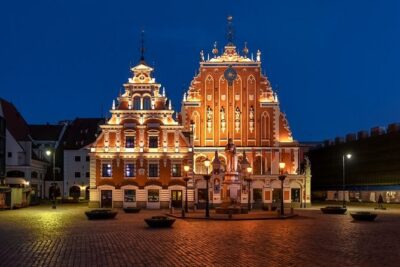
Private Day Tour to Sigulda, Turaida Castle and Soviet Bunker
Read our review →
Full-Day Private Trip to Nuclear Missile Base and Secret Soviet Bunker
Read our review →
Soviet Bunker, Seaside Fortress + Authentic BBQ lunch
Read our review →Browse the lists this tour appears in