
Reviewed · CANOES & KAYAKS
Kayak at the Latvian-Lithuanian border, biggest inland dune
Two countries, one calm river, plenty to see. This outing combines a peaceful kayak trip on the Latvia-Lithuania border with a walk across an international bridge, Latvia’s biggest inland dune, and optional local stops that most Riga day trips miss. I especially like the gentle river, which suits beginners, and the personal scale of the trip with guide Maarten. The main drawback is the drive from Riga, so you should expect this to be a full half-day outing rather than a quick city excursion.
I also like the mix of nature and local character. You may see water lilies, reeds, storks, and other birds from the kayak, then visit a woodcarver’s unusual life work or explore the Skaistkalne sinkholes if arranged ahead. You must be able to swim, carry a passport or ID card, and accept that the exact duration can range from 3.5 to 5 hours.
In This Review
- Key points at a glance
- From Riga to Skaistkalne and the border bridge
- Launching from Lithuania in a one-person kayak
- The river’s quiet rhythm and birdlife
- Historic sights downstream from the launch
- Skaistkalne sinkholes and a protected natural area
- Latvia’s biggest inland dune
- Juri’s Garden of God and carved oak figures
- How the timing and group size affect value
- Who should book this border kayak trip
- Final verdict: a quiet, unusual day from Riga
- FAQ
- Where does the experience start?
- How long does the experience take?
- Do I need a passport or ID card?
- Do I need to know how to swim?
- Is the river suitable for beginners?
- What should I bring?
- Can I visit the sinkholes or Garden of God?
Key points at a glance
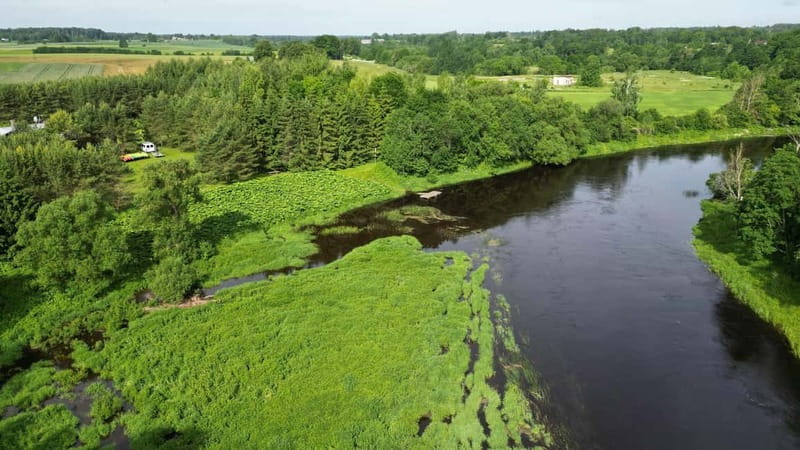
- Paddle between Latvia and Lithuania: The river forms the international border, and the kayak launch is on the Lithuanian side.
- A calm route for beginners: You use a one-person kayak, with life jacket, paddle, seat, waterproof storage, and a luggage net supplied.
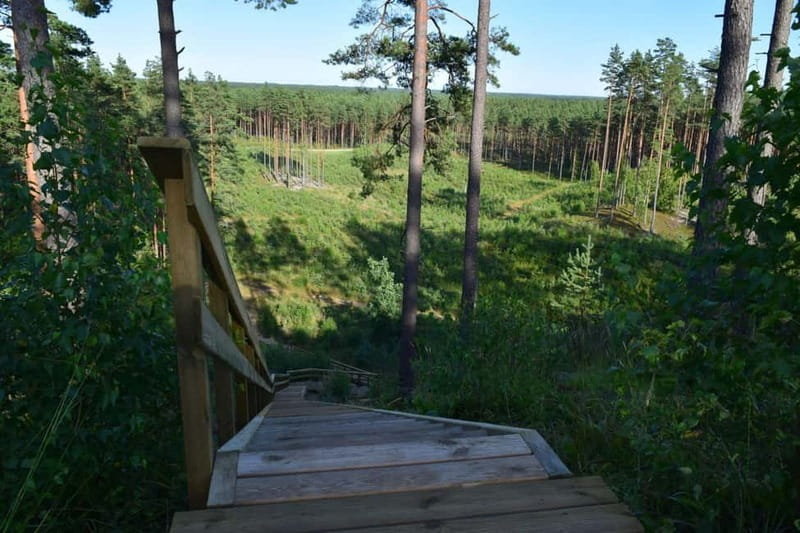
- Latvia’s biggest inland dune: A short walk and staircase lead to a photo point level with the tops of the opposite trees.
- Skaistkalne adds more than kayaking: The route includes a bridge, historic watermill, school, and one of Latvia’s largest Catholic churches.
- Optional local encounters: Arrange a sinkhole visit or a stop at Juri’s carved-wood Garden of God before the outing.
- Small-group attention: The usual setup is limited to two participants, with other arrangements possible for groups booked in advance.
From Riga to Skaistkalne and the border bridge
The day begins in Riga, usually at the pastry shop Briedisi 17. The location is reachable by tram 10, using the Satiksmes iela stop. Pickup can also be arranged from selected gas stations, bus stations, train stations, and shops, but confirm the exact point before setting out.
From Riga, you drive toward Skaistkalne in southern Latvia. The journey matters because the kayaking area is not in the capital’s immediate surroundings. I would treat the drive as part of the day’s rural outing, not as a minor transfer between attractions.
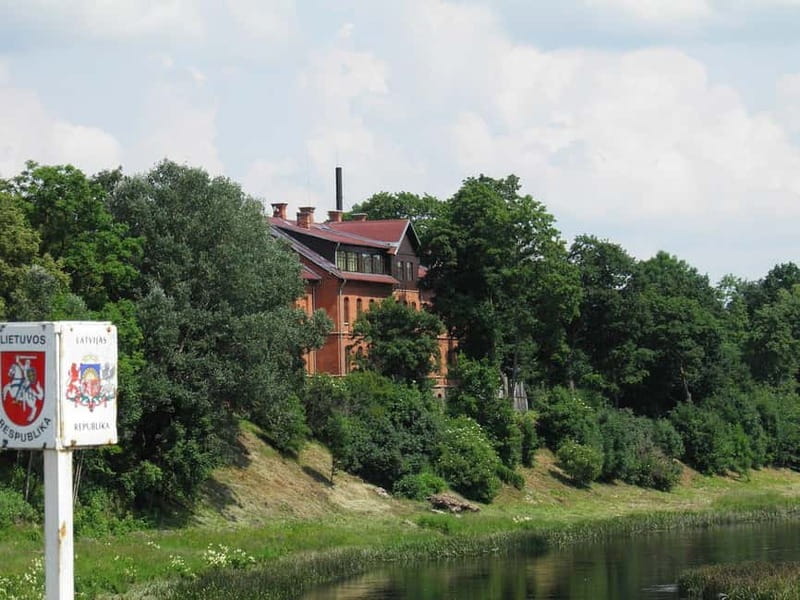
Skaistkalne is the first proper stop. You have time to use the local shops for food or drinks, then walk across the bridge to Germaniskis in Lithuania. This is a simple but memorable border crossing. You are not merely looking at a sign or taking a bus through a checkpoint. You cross on foot, with the river and two countries connected beneath you.
Bring your passport or national ID card. Crossing an international border is central to the experience, and the required documents are not optional. Pack them somewhere safe but easy to reach.
The bridge also provides a photo stop and a useful orientation point. You can see where the river separates the two countries, and you will later return to the Latvian side by kayak. The attraction here is not grand architecture or a long guided lecture. It is the small thrill of moving between countries in a quiet corner of the Baltic region.
Worth keeping open while you plan Latvia:
- Riga: Canal Boat Sightseeing Tour With Audio guide
★ 4.5 · 1,827 reviews - Riga: Entrance Ticket – House of the Black Heads
★ 4.6 · 1,096 reviews - Riga: Guided Old Town Walking Tour
★ 4.8 · 1,049 reviews
Launching from Lithuania in a one-person kayak
After the border stop, the drive continues to the launch point on the Lithuanian side. While the guide prepares the boats, you can take a short walk to the Devil’s Cave, provided the walk is open and suitable for you.
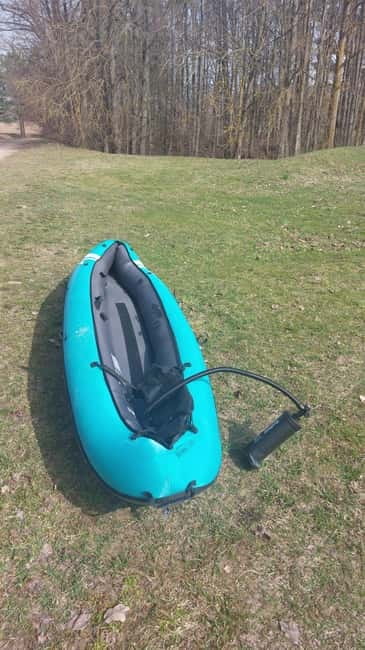
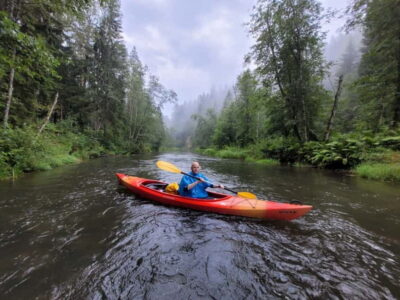
The kayak equipment is practical rather than fancy. You receive a one-person kayak, seat, paddle, life jacket, waterproof storage, and luggage net. The river is described as calm and easy to navigate, making this a good introduction if you have never handled a kayak before.
You still need basic water confidence. Swimming is required even though the activity does not involve swimming. That rule makes sense: a calm river can still be a serious problem if you fall in and cannot stay afloat.
Latvian law requires life jackets during watersports, so you must wear the jacket supplied by the guide. Bring comfortable clothes, comfortable shoes, a towel, and rain gear. You may stay dry, but weather on the river can change the feel of the outing quickly.
The guide can either kayak with you or let you paddle independently. This choice affects the group setup. For up to three people, the guide can join you on the river. With four people, the usual arrangement is for the group to kayak without the guide, while larger groups require advance planning and extra logistics.
That flexibility is useful, but you should explain your preference before the day begins. If you want instruction, company, or reassurance on the water, say so early. If you prefer a quiet paddle at your own pace, independent kayaking is also possible.
The river’s quiet rhythm and birdlife
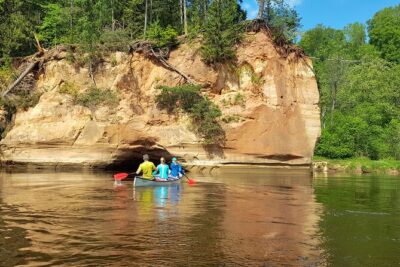
The strongest part of the outing is the river itself. The route passes through reeds and water lilies, with calm water and little sense of urban life. You might see storks and other birds overhead, and the slow pace gives you time to notice details that vanish from a moving car.
I would not choose this activity expecting rapids, thrills, or a demanding workout. Its appeal is the opposite. You paddle through a peaceful setting, with the border as a memorable bit of geography rather than a source of drama.
The water is reported to be free of bugs once you are on the river. In summer, apply insect repellent just before launching, especially if you visit the sinkholes. You are unlikely to need much on the water itself, but the advice is worth taking seriously when you are standing still near vegetation.
The guide adds a human layer to the quiet scenery. Maarten has been praised for being friendly and attentive, and for sharing stories about life in Latvia and Lithuania. That kind of conversation can make the route feel less like equipment rental and more like a personal introduction to the border region.
You should keep your expectations realistic. The guide’s role includes safety, logistics, and local context, but the exact amount of storytelling can vary with the group and the pace of the day. The natural setting does most of the work.
Historic sights downstream from the launch
As you paddle downstream, the route passes a historic watermill, a school, and one of Latvia’s largest Catholic churches. These sights give the river trip some structure. You are not simply paddling from one access point to another, but moving through a settled countryside with traces of work, education, and religious life.
The watermill is especially suited to a slow river journey. A mill belongs beside moving water, so seeing one from the kayak gives the stop a natural sense of place. The school and church help show how communities formed along the river and border.
The route finishes just before the Skaistkalne bridge. That ending keeps the paddle manageable and returns you to a recognizable point near the start of the day. The listed kayaking portion lasts about 105 minutes, although the whole experience can take 3.5 to 5 hours depending on the selected option, driving, and optional visits.
A short break in Skaistkalne follows. This is a good time for food or drinks if you did not buy supplies earlier. Meals and drinks are not included, and the experience may stop at a restaurant only when that is part of the arrangement.
A different sort of day out of Latvia altogether:
- From Riga: Hill of Crosses and Jelgava Gems Tour
★ 4.8 · 1,040 reviews - From Riga: Hill of Crosses & Jelgava Guided Tour
★ 4.9 · 685 reviews - Riga Package: Canal Boat Tour + Drink & Old Town Audio Guide
★ 4.3 · 659 reviews - Riga: Canal Boat Tour with Welcome Drink & Audio Guide
★ 4.5 · 565 reviews
Skaistkalne sinkholes and a protected natural area
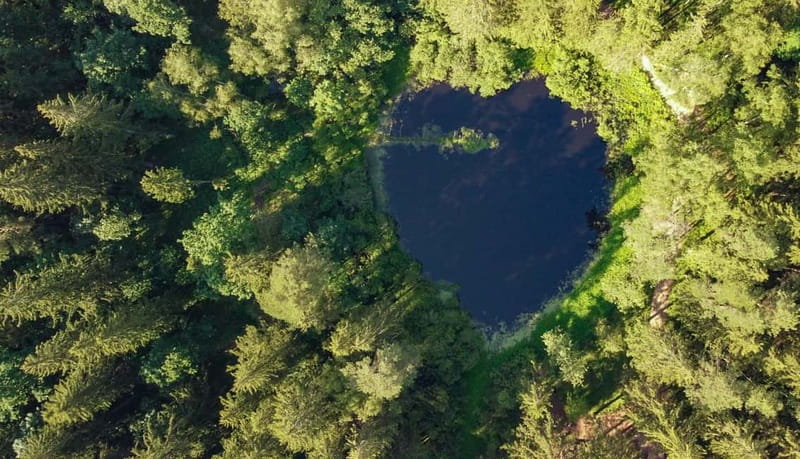
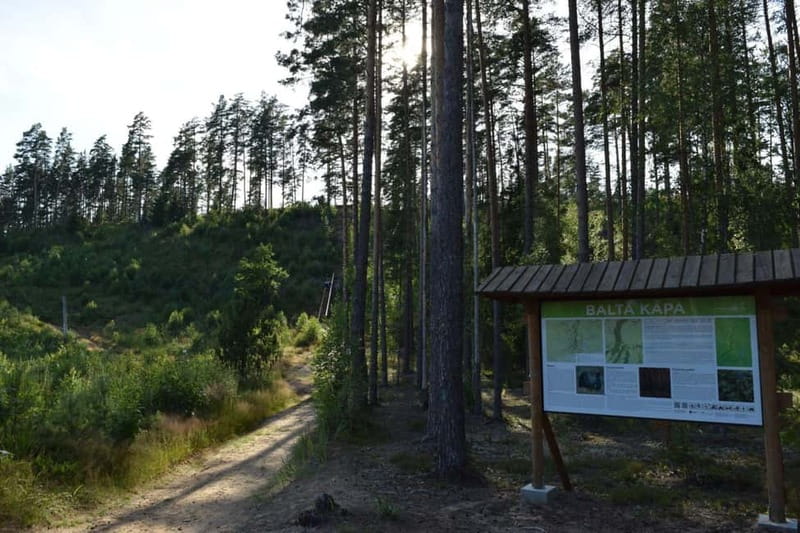
Across the river on the Latvian side are the Skaistkalne sinkholes, described as a geological and geomorphological natural monument. The protected area covers 100 hectares and is included in the Natura 2000 network of European protected areas.
This is an appealing addition if you enjoy geology and short walks more than polished attractions. Sinkholes give the countryside a different character from the river, and the visit adds a clear natural-science element to the day.
You cannot simply assume this stop is included at the last minute. A local guide must be arranged before the activity begins. Ask about it when booking if the sinkholes are a priority, since the main guide may need to coordinate the visit.
Bug spray is more useful here than on the river, particularly in summer. Wear shoes that you do not mind using on a country walk, and bring rain gear because the wider outing is weather dependent.
Latvia’s biggest inland dune
On the way back toward Riga, you visit Latvia’s biggest inland dune. This is one of the most unusual parts of the day because a sandy dune far from the coast makes an unexpected change after the river and forest scenery.
A staircase leads up to the viewpoint. From the top, you are about level with the trees across from you, creating a strong photo angle. The climb is short enough to fit naturally into the return journey, but anyone with limited mobility should ask about the stairs before booking.
The dune is not presented as a long hiking area. Think of it as a brief walk, a viewpoint, and a chance to see a distinctive Latvian natural feature. It works well as a contrast to the low, horizontal river route.
I would save some energy for this stop. After paddling, even an easy staircase can feel more demanding than expected. Comfortable shoes will help, especially if the ground is damp.
Juri’s Garden of God and carved oak figures
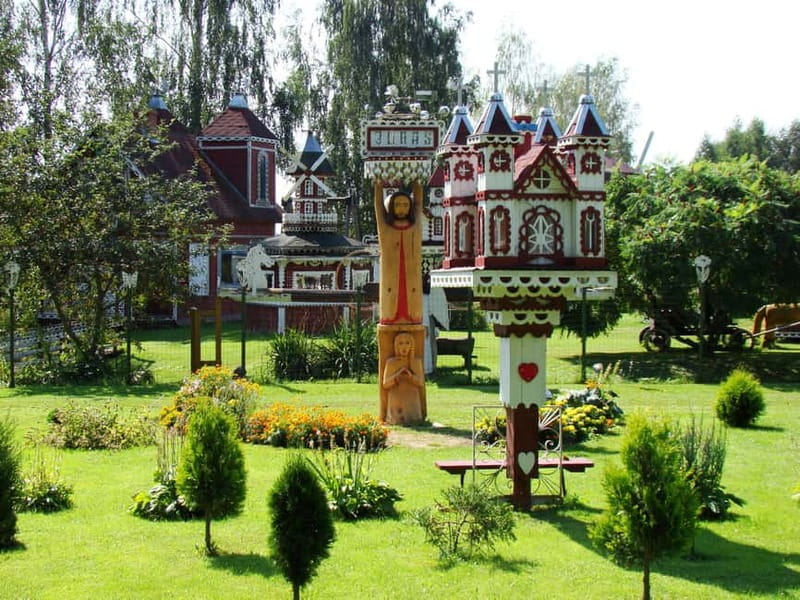
Another optional stop is the Garden of God, the life work of Juri. He has carved religious figures from oak and also made carousels, with a small museum on the property.
This is the sort of personal attraction that can make a rural day memorable. It is not a standard museum with a large staff and formal displays. It is a local creative project built over many years, with the maker’s personality at the center.
Juri usually plays a small game during the visit, and his apples are said to be especially good. Those details give the stop a warm, homemade feel. You should arrange this visit before the activity starts, rather than expecting it to be added spontaneously.
The Garden of God will suit you if you enjoy handmade work, odd local sights, and meeting people connected to the place. If you prefer a tightly timed nature tour, you may want to choose the dune and sinkholes instead, or keep the optional stops limited.
How the timing and group size affect value
The experience lasts 3.5 to 5 hours, with starting times shown according to availability. That range reflects the drive, bridge walk, preparation, kayaking, breaks, and optional visits. Leave room in your Riga schedule rather than placing another fixed appointment immediately afterward.
No price is provided here, so I cannot judge the exact fare. The value depends on what is included in your selected arrangement. You are paying for transport from Riga, equipment, life jacket, guiding, border access, a river route, and additional stops that would be difficult to combine independently in one morning or afternoon.
The value is strongest for a small group that wants a personal outing rather than a large commercial paddle. The usual limit of two participants should mean less waiting and easier communication. Larger groups can be hosted, but only with advance planning and possibly additional logistical support.
Food and drinks cost extra. Since shops are available near the border, you can keep this simple by buying supplies before the kayak launch. Alcohol and drugs are not allowed, and alcohol would be a poor match for a watersports activity in any case.
Free cancellation up to 24 hours before departure and reserve-now, pay-later booking make the outing easier to fit around uncertain plans. Still, river activities depend on practical weather decisions, so keep your clothing flexible.
Who should book this border kayak trip
I would recommend it to adults and older children who can swim, enjoy quiet outdoor activities, and want to see a less familiar part of Latvia. Children under seven are not accepted, and babies under one year are not suitable for the activity.
It is a good fit if you like:
- Calm paddling rather than fast water
- Small groups and direct contact with a guide
- Local stories and handmade attractions
- Short walks mixed with a gentle river trip
- The novelty of visiting Lithuania from Latvia by kayak
It is less suitable if you want a full-day adventure, a strenuous paddle, or a city-based activity with almost no driving. The journey from Riga is the main time cost, and the optional attractions need advance coordination.
The activity is offered in English, Dutch, French, and German. That language choice is useful for mixed-language groups, but confirm your preferred language when arranging the tour.
Final verdict: a quiet, unusual day from Riga
Book this experience if you want to pair a calm river with a genuine border crossing and several small local discoveries. The most praised features are the peaceful water, reeds, lilies, birdlife, and the friendly guidance of Maarten. The biggest practical warning is simple: Riga is not next door, and you must plan for transport, weather, documents, and a possible 5-hour day.
I like the fact that the outing is not built around one famous sight. You cross the bridge, paddle between two countries, pass a mill and church, climb Latvia’s largest inland dune, and can add sinkholes or a woodcarver’s personal world. That mix gives you a more grounded picture of the region than a quick stop in a city center.
If you have the time, can swim, and prefer quiet scenery to high-energy activity, this is a strong choice. If your Riga schedule is tight, book it only when you can give the countryside the time it deserves.
FAQ
Where does the experience start?
The main meeting point is pastry shop Briedisi 17 in Riga. It is reachable by tram 10, using the Satiksmes iela stop.
How long does the experience take?
The activity lasts about 3.5 to 5 hours. Starting times depend on availability, and the duration can change with transport and optional visits.
Do I need a passport or ID card?
Yes. You must bring a passport or ID card because the route crosses the international border between Latvia and Lithuania.
Do I need to know how to swim?
Yes. Swimming ability is required, even though you do not swim during the activity.
Is the river suitable for beginners?
Yes. The river is calm and easy to navigate. A life jacket is provided and must be worn under Latvian watersports law.
What should I bring?
Bring comfortable clothes, comfortable shoes, a towel, rain gear, and your passport or ID card. Bug repellent is useful in summer, especially if you visit the sinkholes.
Can I visit the sinkholes or Garden of God?
Yes, but both visits must be arranged before the activity starts. The sinkholes require coordination with a local guide, while the Garden of God visit must be agreed in advance with Juri’s site.
New on the site around Latvia
- Vilnius Day Trip or Airport Transfer★ 5.0 · 2 reviews
- Wooden Riga on foot -Ķīpsala★ 5.0 · 2 reviews
- Ultimate Art Nouveau Experience in Riga – Private Tour★ 5.0 · 4 reviews
- The Best Of Riga Walking Tour★ 5.0 · 2 reviews
- Tour from Riga to Vilnius: Bauska Castle, Rundale Palace and The Hill of Crosses★ 5.0 · 3 reviews
- Private Transfer to anywhere in Riga Center★ 5.0 · 2 reviews
- Neigbourhoods of Riga: Honest tour through most beautiful and most unusual areas★ 5.0 · 2 reviews
- Taste Riga – Private Tour of Latvian Flavour★ 5.0 · 5 reviews
Canoes & Kayaks, compared.
Full-Day Scenic Gauja River Valley Kayaking Trip
Read our review →
Sunrise Kayak or SUP board Tour at Ķemeru tīrelis
Read our review →Browse the lists this tour appears in