
Reviewed · SIGULDA & TURAIDA TOURS
Group Tour: Sigulda and Turaida from Riga.
The Gauja Valley rewards a day away from Riga. This outing brings together medieval castles, forested river views, old legends, and the story of Latvia’s Livonian past without making you piece together distant sights on your own. I like the excellent mix of outdoor scenery and historic places, and I like that castle admissions and transportation are already covered. The main consideration is time: six to seven hours is enough for the highlights, but not for a slow, in-depth visit to every corner.
The small-group format, capped at 17 people, keeps the day more personal than a large coach excursion. Guides such as Maria and Erlens have received especially warm praise for making the history, facts, and local stories easy to follow. Food is not included, so you will need to budget for your own meal or snack.
In This Review
- Key points to know before you book
- Why Sigulda makes a strong day trip from Riga
- Emperor’s Chair and Emperor’s View
- Sigulda’s bobsleigh track brings a modern jolt
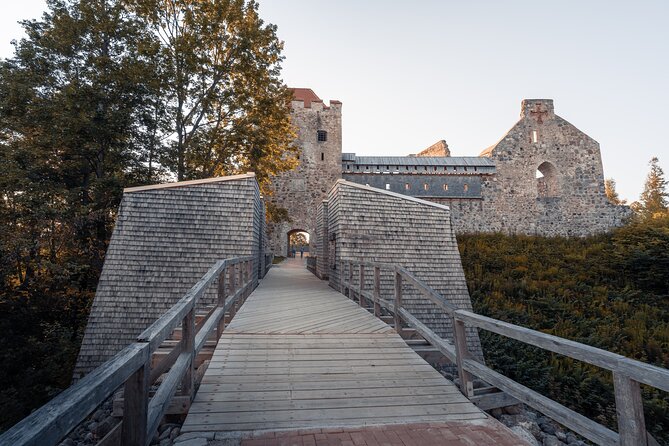
- Climbing through the Livonian Order Castle ruins
- Sigulda New Castle and its creative side
- Gutmanis Cave and the Rose of Turaida story
- Turaida Castle is the day’s main event
- Food, timing, and the real value of $139
- How the guide can shape the experience
- Who should book this Sigulda and Turaida tour
- Should you book it?
- FAQ
- Where does the tour start and finish?
- How long does the Sigulda and Turaida tour last?
- What is included in the $139 price?
- Are food and drinks included?
- How large is the tour group?
- Can I cancel for a full refund?
Key points to know before you book
- Two major castles in one outing: See the ruins of the Livonian Order Castle in Sigulda, then explore the restored sections of Turaida Castle.
- Gauja Valley views: The Emperor’s Chair and Emperor’s View offer one of the day’s best panoramas toward the river and Turaida Castle.
- Gutmanis Cave has a legendary past: The cave’s inscriptions and connection to the Rose of Turaida story add more than geological interest.
- A compact group of up to 17: This is more manageable than a full-size bus tour, though the day still follows a set schedule.
- Transport and museum admission included: The $139 price covers private transportation, taxes, and entrance fees, but not food or drinks.
- A full half-day from Riga: The tour begins at 9:00 a.m. at Herdera laukums 6 and returns there after roughly six to seven hours.
Why Sigulda makes a strong day trip from Riga
Riga is Latvia’s main cultural center, but the Gauja National Park area gives you a different sense of the country. Here, the focus shifts from urban streets and Art Nouveau buildings to river valleys, castle ruins, caves, and stories tied to Latvia’s medieval rulers and ancient tribes.
Sigulda and Turaida are close enough to visit in one day from Riga, yet they offer enough variety to keep the outing from feeling repetitive. You move from a high viewpoint to a historic sports track, then to castle ruins, a manor, a cave, and a major medieval fortress.
I find that variety important. A tour made up only of museums can feel heavy after several hours. This one gives you regular changes of pace. You will spend some time outside, some time among old stone walls, and some time hearing about local legends.
The tour starts at 9:00 a.m. from Herdera laukums 6 in central Riga. Transportation is included, and the activity ends back at the same meeting point. Since the group can include as many as 17 people, you get the convenience of a guided outing without the scale of a large sightseeing bus.
More Sigulda and Turaida trips:
- From Riga: Sigulda and Turaida Legends Tour
★ 4.9 · 89 reviews - Private Full-Day Trip to Turaida, Sigulda, and Cesis
★ 4.5 · 52 reviews - Full-Day Private Trip to Cesis, Sigulda and Turaida from Riga
★ 4.5 · 42 reviews
Emperor’s Chair and Emperor’s View
The first listed stop is a pair of viewpoints known as Keizarkresls un keizarskats, or Emperor’s Chair and Emperor’s View. These viewpoints were prepared in the high Beite cliffs for Tsar Alexander II’s visit to Sigulda in the second half of the 19th century.
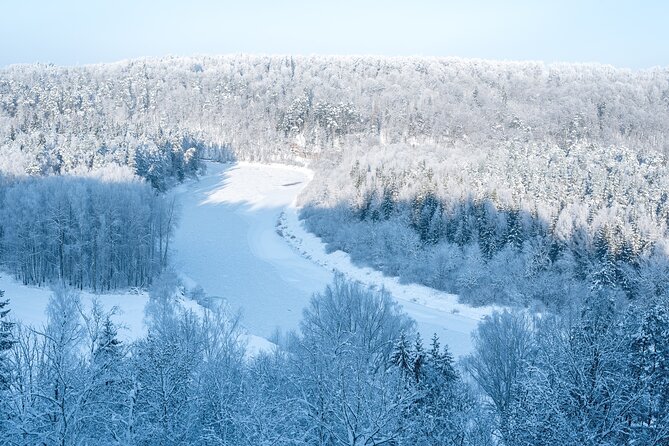
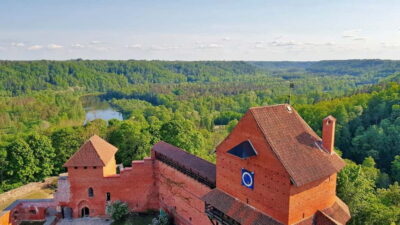
The reward is a wide view over the Gauja River valley, with Turaida Castle visible across the area. This is a useful opening stop because it gives you a sense of the region before you begin visiting individual sites. You can see how the river, cliffs, woods, and castles fit together rather than treating each place as an isolated attraction.
You get about 25 minutes here, and admission is free. That is enough for photographs and a quick look, but not a long walk or extended nature outing. If views are a major reason you are booking, keep your camera ready and pay attention to the weather forecast.
The viewpoint also adds a little imperial-era context. The name is not just a modern marketing label. It reflects the way Sigulda was presented as a scenic destination in the 19th century.
Sigulda’s bobsleigh track brings a modern jolt
The Sigulda Bobsleigh and Luge Track changes the mood completely. Instead of medieval stone and old legends, you see a working sports facility associated with bobsleigh, luge, and skeleton competitions and training.
The track measures 1,420 meters, has 16 curves, and includes a 200-meter braking section. Speeds can reach 125 kilometers per hour. It is one of only 18 such tracks worldwide, which makes it an unusual stop on a cultural day trip.
This is not presented as a guaranteed ride or a separate paid activity. The information provided says the track is accessible to visitors and tourists, and that it hosts international competitions. In practice, your stop is best understood as a look at a serious sports venue rather than a promise of a high-speed run.
I like the contrast. Latvia’s past is a major theme of the day, but Sigulda is not preserved only as an old town. The track shows that the area also has a modern sporting identity.
The schedule does not give a specific duration for this stop. That means the exact amount of time may depend on the day’s pace. If you have a strong interest in bobsleigh, ask your guide how much time is available when you meet.
Climbing through the Livonian Order Castle ruins
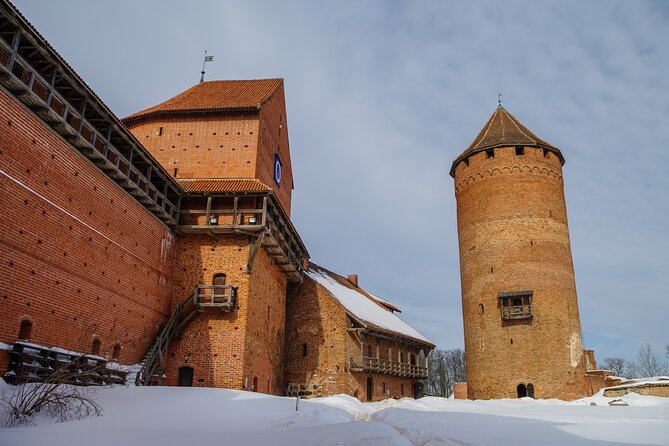
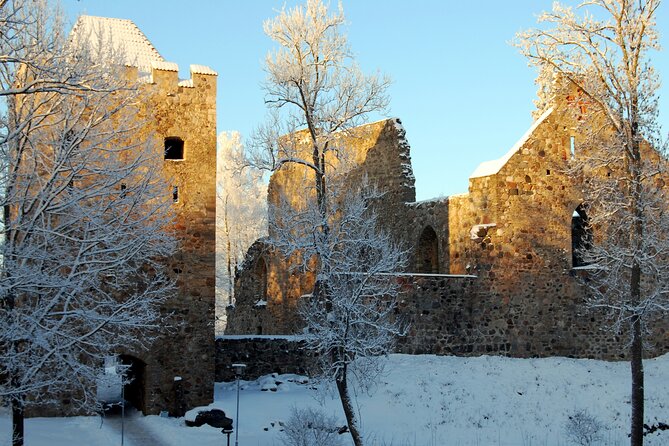
The Livonian Order Castle in Sigulda dates to 1207. It began as a Castella-type fortress and was later rebuilt in the style of a convent castle, reflecting changes in military design and the needs of the religious order that controlled it.
You receive about one hour here, with admission included. That is enough time to look through the remains and climb the northern and main gate towers. The towers are the key reason to pay attention to your footing and clothing. This is not simply a ground-level ruin where you glance at a few walls and leave.
From the castle, you can connect the old fortress to the wider Gauja region. The open-air stage in the center is also used for concerts and festivals, including the International Sigulda Opera Music Festival. That modern use gives the ruins a lived-in purpose instead of leaving them as a silent archaeological display.
The site will appeal most to you if you enjoy seeing how medieval buildings were arranged. It is less polished than a fully rebuilt castle, and some visitors may prefer Turaida’s more complete towers and interiors. Still, the partial remains make the age of the place easier to grasp.
The one-hour visit is a good compromise. You have time to explore, but the tour does not get stuck at one site while the rest of the day disappears.
Other Riga days to weigh up
- Riga: Canal Boat Sightseeing Tour With Audio guide
★ 4.5 · 1,827 reviews - Riga: Entrance Ticket – House of the Black Heads
★ 4.6 · 1,096 reviews - Riga: Guided Old Town Walking Tour
★ 4.8 · 1,049 reviews - From Riga: Hill of Crosses and Jelgava Gems Tour
★ 4.8 · 1,040 reviews
Sigulda New Castle and its creative side
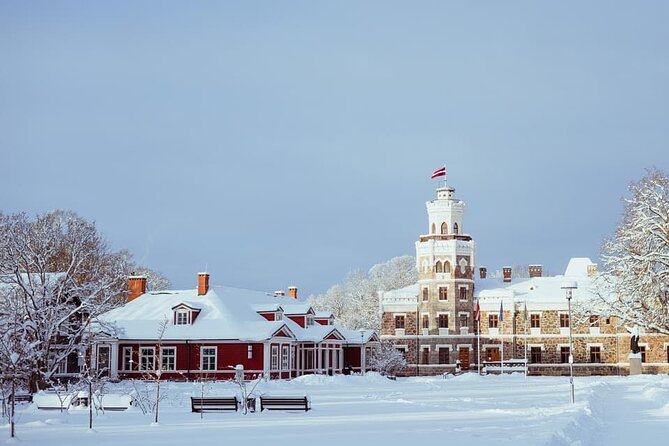
Sigulda New Castle offers a different chapter. The Knyaz Kropotkin family built it in 1878, and its exterior retains a neo-Gothic style. Its interior was changed in 1937, when it became associated with the Latvian Union of Writers and Journalists and took on a national romantic character.
The visit lasts about 20 minutes and admission is free. That is a short stop, so expect an overview rather than a long interior tour.
Today, the central manor buildings host workshops and salons for craftspeople and artists. You may find opportunities to see local skills being practiced or buy souvenirs connected with those activities. The site adds a social and artistic layer to the day, moving beyond castles as military structures.
I would treat this as a pleasant supporting stop rather than the main reason to book the tour. The Livonian castle and Turaida Castle receive more time and carry more historical weight. New Castle works well because it breaks up the sequence of medieval sites and shows how the property was used in later centuries.
Gutmanis Cave and the Rose of Turaida story
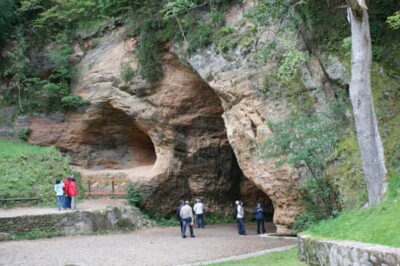
Gutmanis Cave is one of the most distinctive stops. It is described as the deepest internal erosion cave in the Baltic States, measuring 19 meters deep, 12 meters wide, and 10 meters high. It is also regarded as the largest cave in the Baltic countries and Latvia’s oldest tourist attraction.
Do not expect a giant cavern like the famous show caves of Central Europe. Gutmanis Cave is memorable because of its scale within the Baltic region, its location in the Gauja area, and the writing carved into its walls. Inscriptions dating to the 17th century connect the site with generations of visitors.
The cave also links directly to the legend of the Rose of Turaida. That story is part of the area’s cultural identity, and hearing it before visiting Turaida Castle gives the day a useful narrative thread. You are not just moving between unrelated monuments. The cave and castle belong to the same local tradition of love, betrayal, and memory.
You have about 30 minutes here, with no admission charge. That is plenty for a close look and a short explanation, though it is not enough for a long nature walk through the park.
Take care around the cave and its surrounding paths. The most worthwhile details are easy to miss if you only take a quick photograph. Look for the old markings and listen for the connection between the physical site and the Rose of Turaida legend.
Turaida Castle is the day’s main event
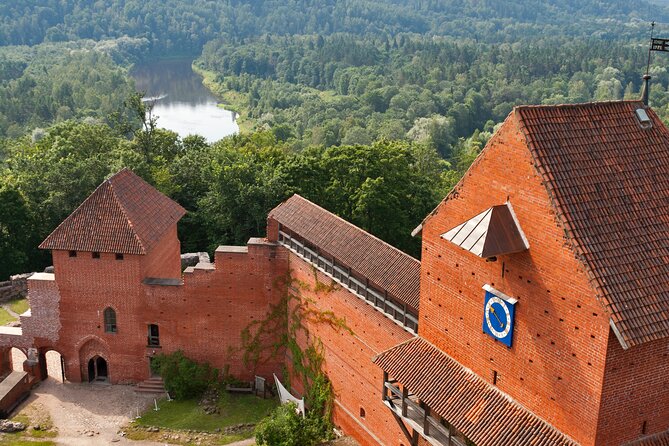
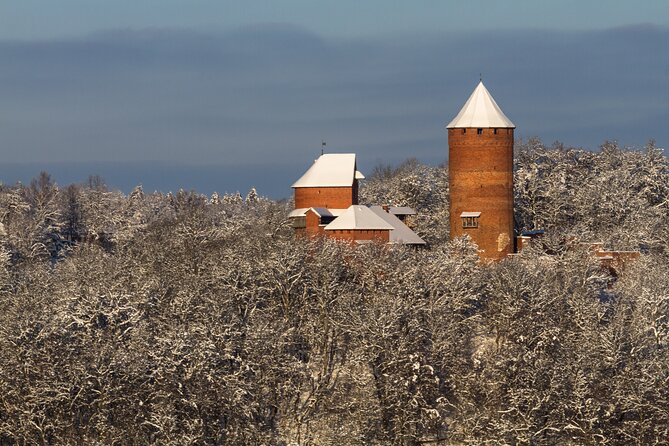
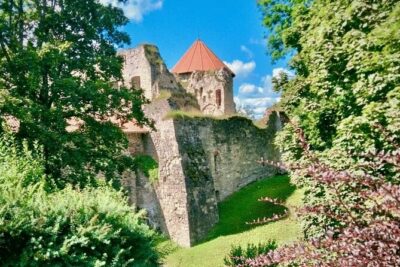
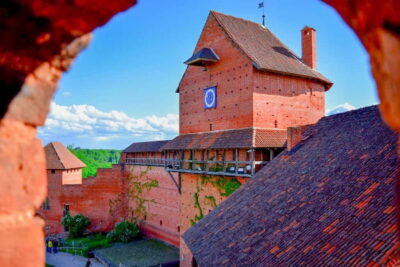
Turaida Castle is likely to be the strongest historical stop. Construction began in 1214 under Archbishop Albert of Riga, on the site of a wooden fortress associated with the Liv leader Kaupo. The castle was first called Fredeland before the name Turaida became established.
Over time, defensive towers, household buildings, and other structures were added. A fire in 1776 left the castle in ruins, and the site remained in that condition for a long period. Archaeological work and restoration have continued since 1976, bringing parts of the fortress back into view.
You have about one hour here, and admission is included. The main tower is the essential target because it provides views across the Gauja Valley and the Turaida Museum Reserve. If you have limited energy, prioritize the tower and the principal exhibitions before wandering through the rest of the grounds.
The restored sections and museum displays help explain the castle’s development. You can see how a defensive site changed over time and how its role connected with the people who lived in the surrounding region, including the Gauja Livs.
This is also where the earlier stops come together. From the viewpoint, you saw Turaida Castle in the distance. At Gutmanis Cave, you heard the story associated with Turaida. Here, you can place the castle at the center of the area’s history.
The one-hour limit is the main drawback. Turaida has enough to occupy a curious visitor for longer, especially if you want to read every display and spend time on the views. The guided schedule keeps the day practical, but you may leave wishing for another half-hour.
Food, timing, and the real value of $139
The price is $139 per person. That is not a bargain-basement day trip, but it covers private transportation, all taxes and fees, and museum entrances. Those inclusions matter because the route has several separated sites, and arranging transport independently would take planning.
You are paying for more than entry tickets. The value also comes from fitting Sigulda, Turaida, Gutmanis Cave, the viewpoints, and the other stops into one organized day from Riga. A guide adds context that would be difficult to gather quickly on your own, especially for the medieval sites and local legends.
Food and drinks are not included. The tour information notes good dining options with both traditional Latvian and modern cuisine, but it does not specify a particular restaurant or included meal. Plan to pay separately and ask about the day’s meal arrangements.
For me, the price makes the most sense if you want a structured day with transport and historical interpretation. It makes less sense if you prefer to spend hours at one castle, take a long hike, or control every departure time.
The 6 to 7 hour duration is efficient. You see a lot without giving up the entire evening in Riga. The tradeoff is a firm pace, particularly at Turaida Castle and the shorter viewpoint and New Castle stops.
How the guide can shape the experience
The strongest praise for this outing centers on the guiding. Erlens is described as keeping the day engaging with stories, facts, and legends. Maria is also singled out for showing the Sigulda and Turaida area in a warm and effective way.
That detail matters because these places benefit from explanation. A ruined castle wall is easy to understand as an old building, but a guide can connect it to the Livonian Order, the 1214 foundation of Turaida, the later fire, and the restoration work that followed.
The Rose of Turaida legend also gives the route an emotional thread. Without that story, Gutmanis Cave might feel like a short photo stop. With it, the cave becomes part of the cultural setting you encounter at Turaida.
The group maximum of 17 is another practical advantage. It is not a private tour for one family, but it is small enough to make questions more realistic and movement easier than in a large bus group. If having a very quiet, flexible day is important to you, remember that this remains a group outing with a planned route.
Who should book this Sigulda and Turaida tour
I would recommend this day trip if you want to see several of Latvia’s best-known Gauja Valley sights without renting a car or working out the connections yourself. It suits first-time visitors to Latvia, history fans, castle enthusiasts, and anyone who wants a countryside break from Riga.
It also works well for you if you like a mixture of stories and scenery. The viewpoints and cave provide outdoor interest, while the two castles supply the historical focus. The bobsleigh track adds an unexpected modern note.
You may want a different plan if you dislike scheduled sightseeing or need long periods at each attraction. Turaida Castle in particular could deserve more than its allotted hour for a visitor who reads every exhibit or wants a leisurely walk through the reserve.
The route also includes towers, castle grounds, and outdoor paths. Most people can participate, but you should consider your comfort with walking and climbing before booking. The tour information says it is near public transportation at the meeting point, though transportation during the activity is provided.
Free cancellation is available if you cancel at least 24 hours before the 9:00 a.m. start time. Cancellations within 24 hours are not refunded, and the activity requires a minimum number of participants. If that minimum is not met, you are offered another date or experience, or a full refund.
Should you book it?
Book this tour if you want the best variety in one Riga day trip: castles, a cave, river views, local legends, and a modern sports venue. The included transportation and admissions make the $139 cost easier to justify, while the small group and praised guides, especially Maria and Erlens, add real value.
Skip it if your ideal day means slow exploration, a serious hike, or complete control over meals and timing. For most visitors with limited time in Riga, though, this is a well-balanced way to reach Sigulda and Turaida and come away with a clearer sense of Latvia beyond the capital.
FAQ
Where does the tour start and finish?
The tour starts at Herdera laukums 6, Centra rajons, Riga, Latvia, at 9:00 a.m. It ends back at the same meeting point.
How long does the Sigulda and Turaida tour last?
The activity lasts approximately six to seven hours.
What is included in the $139 price?
The price includes private transportation, all fees and taxes, and museum entrances.
Are food and drinks included?
No. Food and drinks are not included, although the day offers dining options featuring traditional Latvian and modern cuisine.
How large is the tour group?
The activity has a maximum of 17 travelers.
Can I cancel for a full refund?
Yes, if you cancel at least 24 hours before the experience start time. Cancellations or changes made less than 24 hours before the start are not refunded or accepted.
New on the site around Riga
- Wooden Riga on foot -Ķīpsala★ 5.0 · 2 reviews
- Vilnius Day Trip or Airport Transfer★ 5.0 · 2 reviews
- Ultimate Art Nouveau Experience in Riga – Private Tour★ 5.0 · 4 reviews
- The Best Of Riga Walking Tour★ 5.0 · 2 reviews
- Tour from Riga to Vilnius: Bauska Castle, Rundale Palace and The Hill of Crosses★ 5.0 · 3 reviews
- Private Transfer to anywhere in Riga Center★ 5.0 · 2 reviews
- Taste Riga – Private Tour of Latvian Flavour★ 5.0 · 5 reviews
- Neigbourhoods of Riga: Honest tour through most beautiful and most unusual areas★ 5.0 · 2 reviews
Sigulda & Turaida Tours, compared.
Private Sigulda, Turaida, and Gauja National Park Tour
Read our review →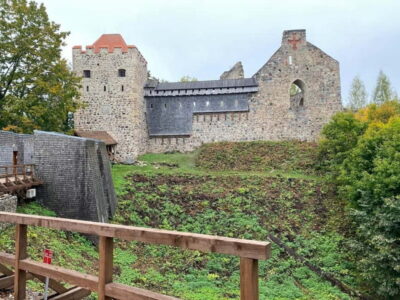
Private Full-Day Trip to Turaida, Sigulda, and Cesis
Read our review →
Full-Day Private Trip to Cesis, Sigulda and Turaida from Riga
Read our review →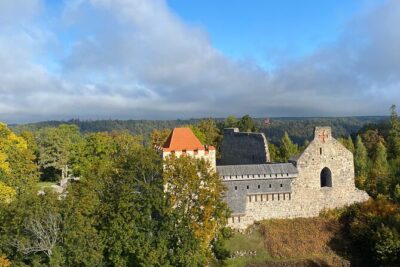
Discover Best of Sigulda and Gauja National Park In One Day
Read our review →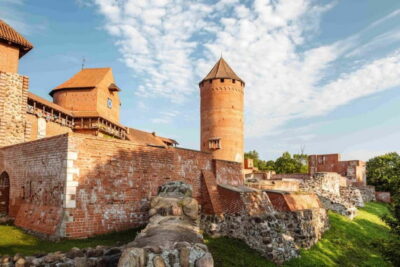
Day trip Riga – Sigulda, the ‘Switzerland of Latvia’
Read our review →Browse the lists this tour appears in